

Government funding runs out at the end of Dec. 11, and for the first time a Senate rule says senators' paychecks stop with it. Headlines in May said senators voted to nix their own pay. The two-page resolution actually tells the Secretary of the Senate to hold the money and hand it all back "as soon as practicable" once the government reopens.
When exactly does the money run out?
The stopgap now funding Washington is H.R. 6500, the Continuing Appropriations and Extensions Act, 2027, signed by President Trump on Sept. 2 as Public Law 119-103. Section 106 says the money lasts until a full-year bill passes or "December 11, 2026," whichever comes first. The Senate passed it 90-6 on Aug. 8 and the House agreed 370-48 on Sept. 1.
The Congressional Research Service's summary of the law says it funds all 12 regular spending bills at a rate "based largely" on fiscal 2026 levels, about $1.701 trillion a year by the Congressional Budget Office's estimate. A gap would begin Dec. 12. Tucked inside is Section 144, which blocks any cost-of-living raise for members of Congress, so their salary stays at $174,000.
What did the Senate pass in May?
Sen. John Kennedy, R-La., filed S. Res. 526 on Dec. 3, 2025, with Sens. John Cornyn, Ashley Moody, Katie Britt and Susan Collins. It cleared a procedural vote 99-0 on May 13 and was adopted by voice vote the next day. Because it is a Senate resolution, it needed no House vote and no presidential signature.
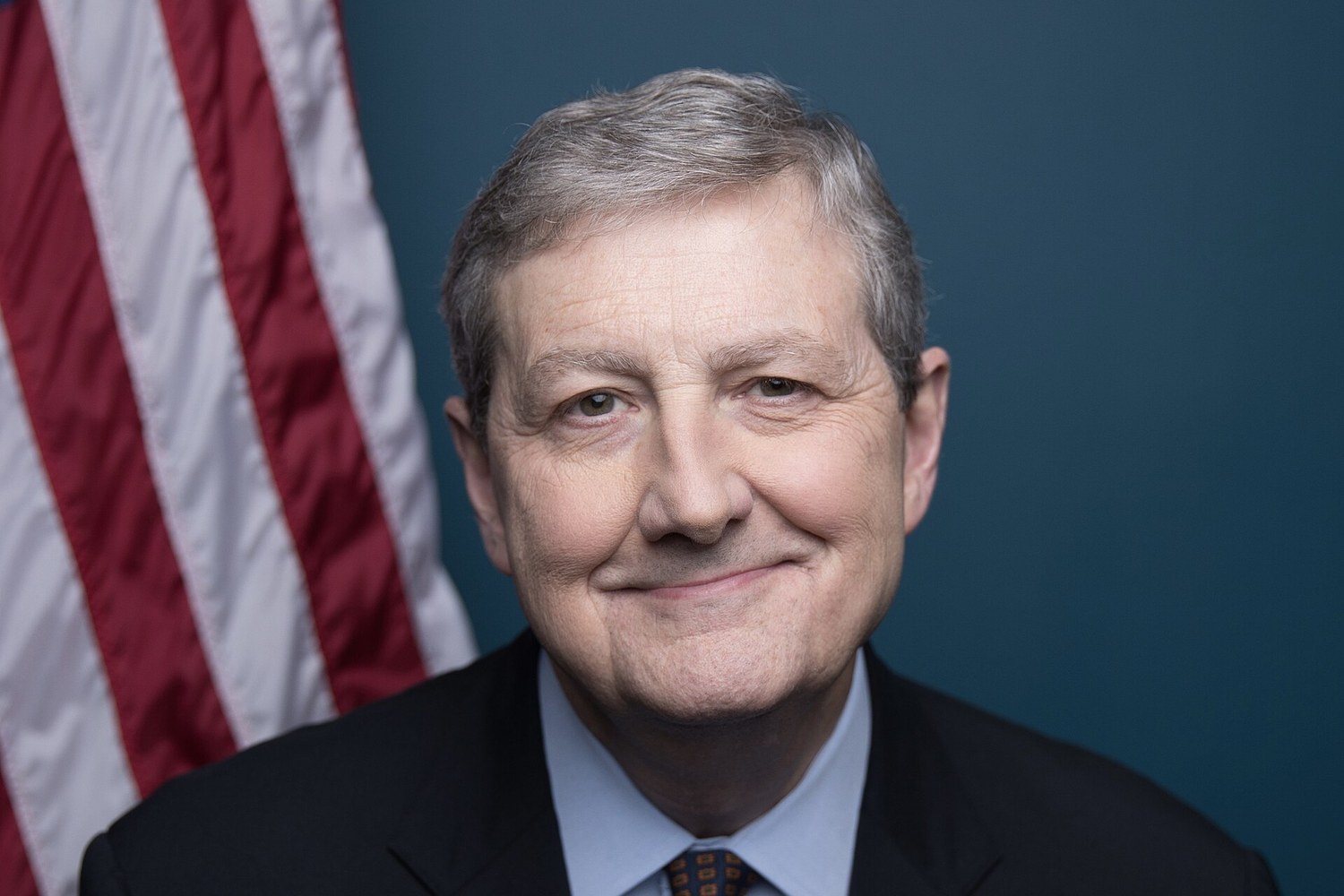
Sen. John Kennedy, R-La., sponsor of S. Res. 526. Official U.S. Senate portrait via Wikimedia Commons (public domain).
"Last October, we shut down government for 43 days. That is the longest shutdown in history," Kennedy said, according to his office's release. "This is about shared sacrifice. This is about putting our money where our mouth is."
Senate Democratic Leader Chuck Schumer backed it before the vote. "I'm going to vote for it," Schumer said, as reported by Fox News Digital on May 12. "And I think it has a lot of support." Majority Leader John Thune, who scheduled the vote, said in the same report that it might "provide an additional incentive" to keep "Senate Democrats in the future from shutting the government down again."
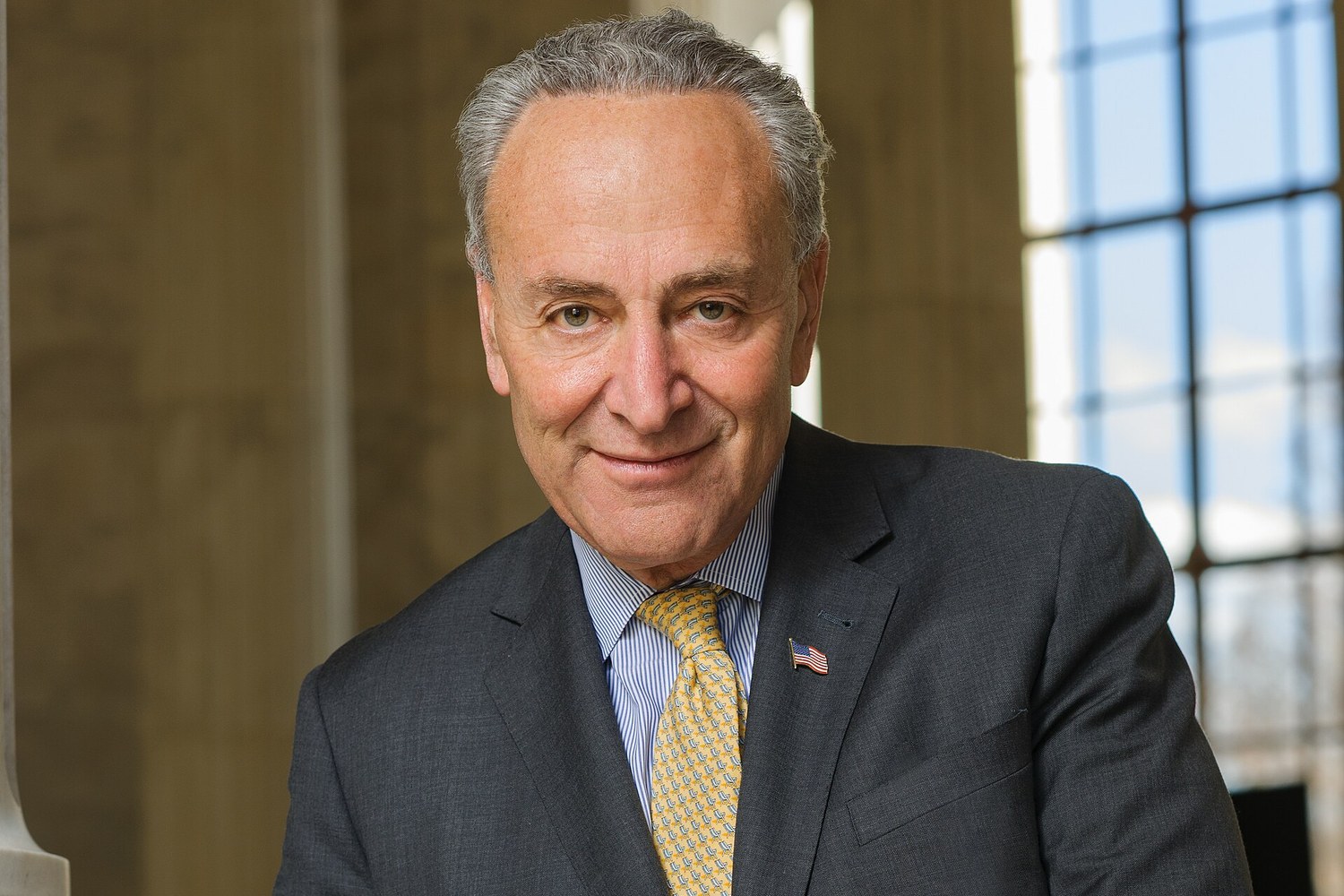
Senate Democratic Leader Chuck Schumer, D-N.Y. Official U.S. Senate photo by Jeff McEvoy via Wikimedia Commons (public domain).
Does the resolution actually take senators' pay?
No. It delays it. The text tells the Secretary of the Senate to "disburse and hold" each senator's pay during any lapse in funding for one or more agencies, then release every dollar after the shutdown ends. There is no forfeiture and no penalty. The 27th Amendment bars a change in congressional pay from taking effect before an election, so the rule was written to start the day after the Nov. 3 midterms. It is live now, and a Dec. 12 lapse would be its first test. It does not reach House members at all.
Official record
S. Res. 526, 119th Congress, "Withholding the pay of Senators if a Government shutdown occurs," agreed to May 14, 2026. Page 2 of the text as agreed to is shown below.
"The Secretary of the Senate shall release to each Senator any payments held under paragraph (1) with respect to a Government shutdown as soon as practicable after the date on which the Government shutdown ends." S. Res. 526, Sec. 1(b)(2)
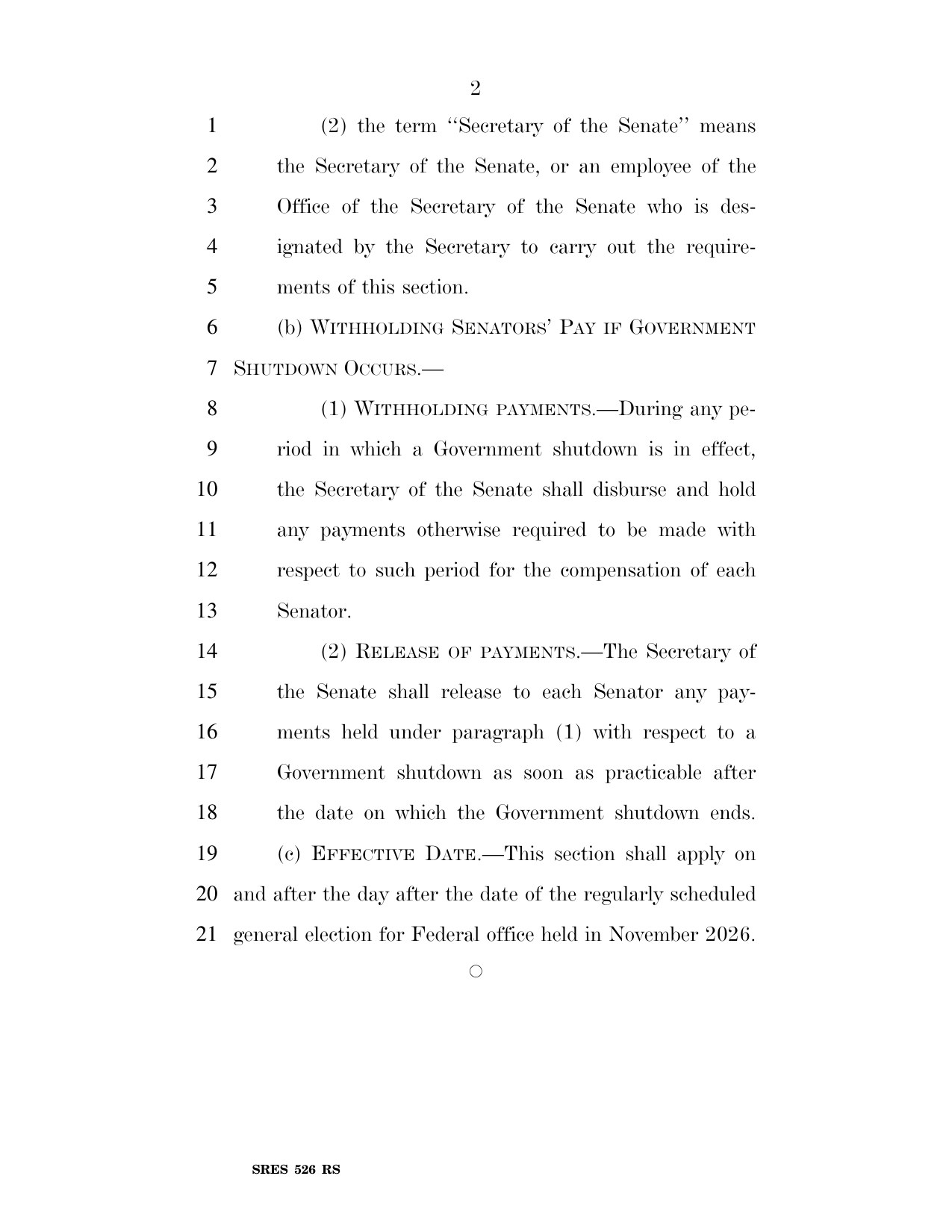
Read or download the full 2-page resolution (PDF) or view it on Congress.gov.
What would the Lankford-Hassan bill do?
Sens. James Lankford, R-Okla., and Maggie Hassan, D-N.H., introduced S. 4632, the Prevent Government Shutdowns Act of 2026, on May 21 with 20 cosponsors, 14 Republicans and six Democrats. In a June 4 Fox News op-ed, they wrote that if any spending bill is late, "an automatic Continuing Resolution (CR) kicks in," and that members and staff "would be required by law to remain in Washington, D.C., voting seven days a week."
The first half matches the text. Section 2 creates a standing stopgap that renews in 14-day blocks for as long as a lapse lasts, at the rate in the most recent stopgap or, if none passed that year, the prior year's full-year law. Federal programs keep running, so there is no furlough to fight over.
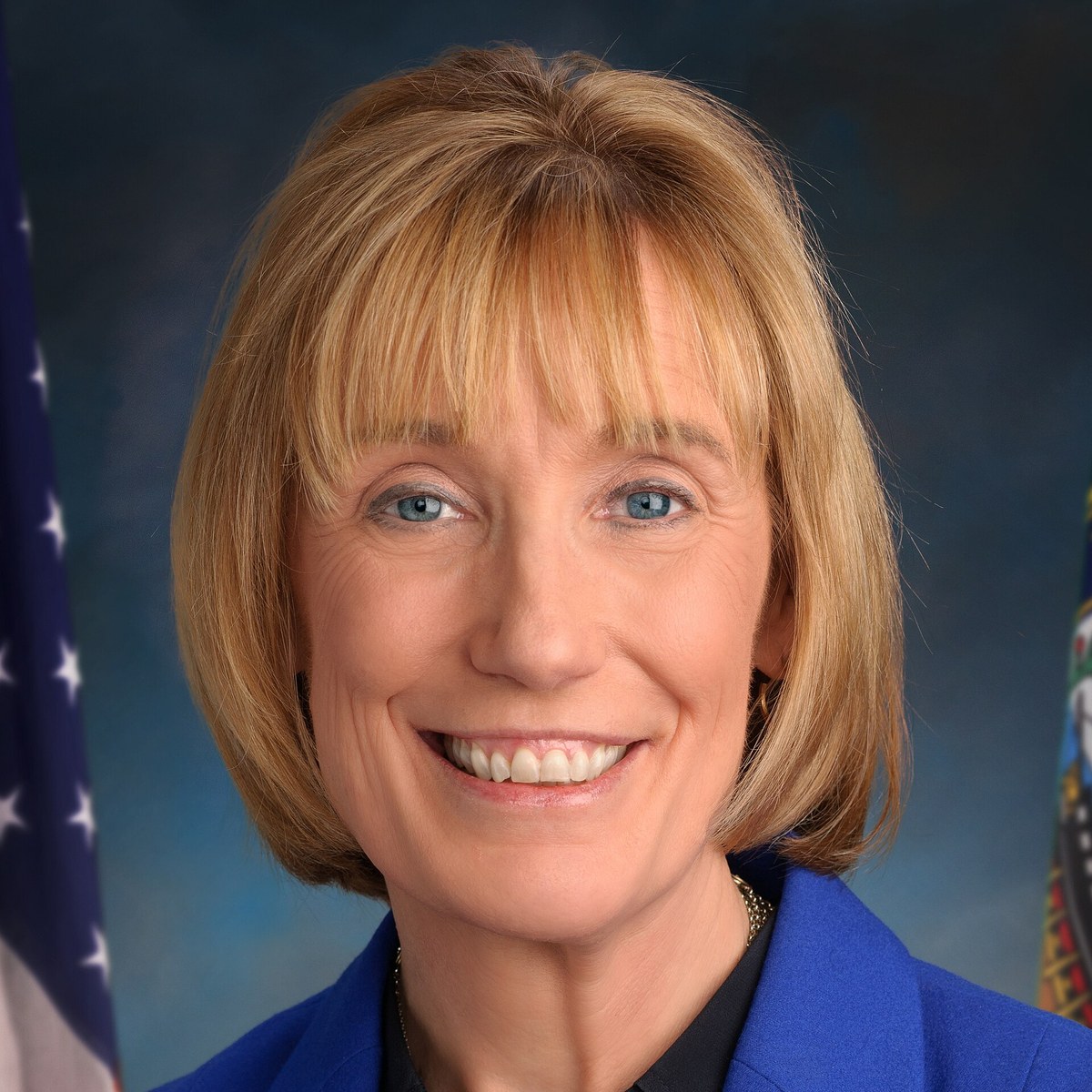
Sen. Maggie Hassan, D-N.H., the bill's lead Democratic sponsor. Official U.S. Senate portrait by Renee Bouchard via Wikimedia Commons (public domain).
Where does the op-ed go further than the bill?
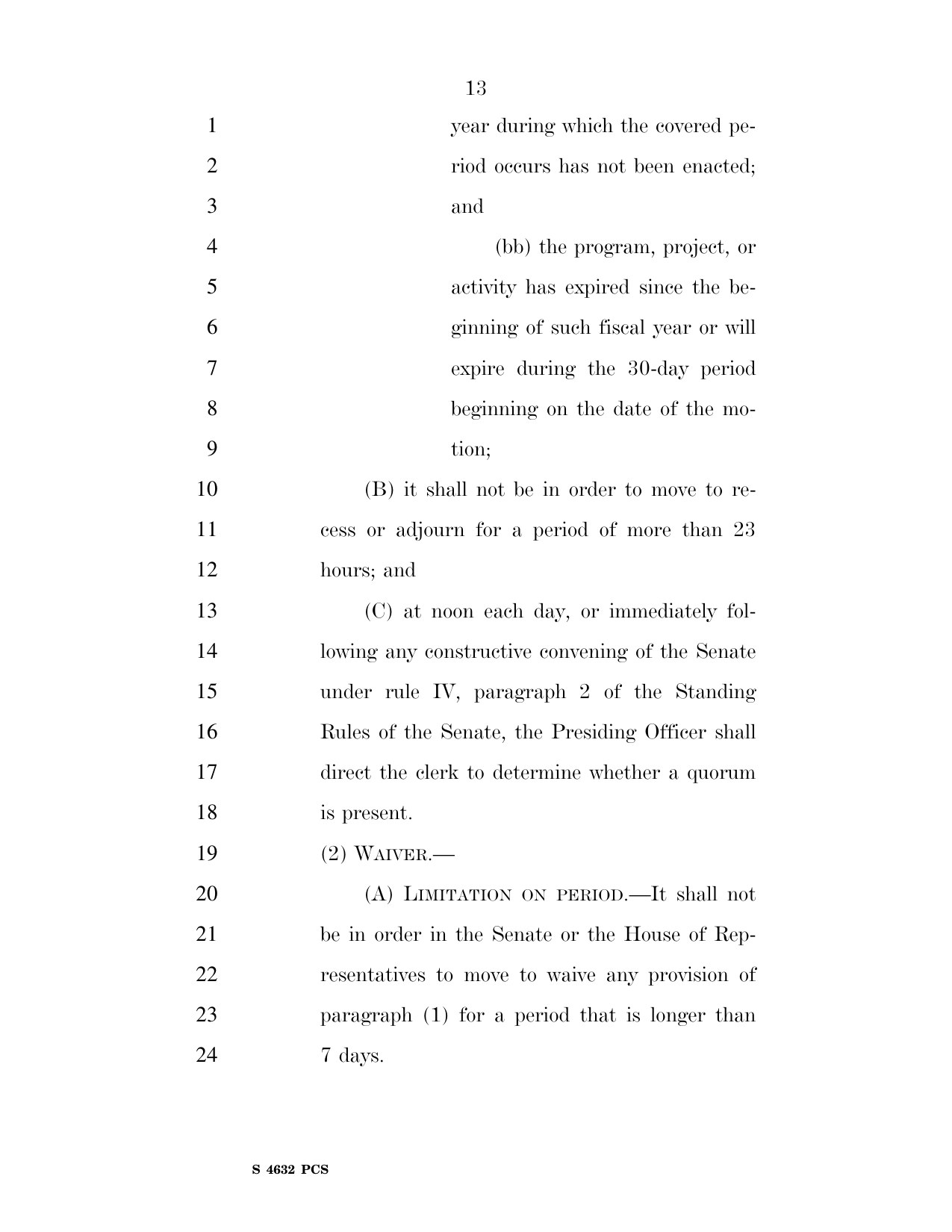
The bill never orders anyone to stay in Washington or to vote seven days a week. Section 3 cuts off taxpayer money for official travel by members, their staff and Office of Management and Budget employees, except one trip back to the capital, and bars campaign funds for official travel. Neither chamber could recess or adjourn for more than 23 hours, and the Senate would hold a quorum call at noon each day.
Floor time is not limited to spending bills alone, either. The text also allows quorum motions and debt-limit bills, and after 30 days, Cabinet-level and Supreme Court nominations plus clean extensions of expiring programs. Two-thirds of either chamber can waive the rules for up to seven days at a time. The bill says nothing about congressional pay.
Official record
S. 4632, 119th Congress, Prevent Government Shutdowns Act of 2026, as placed on the Senate calendar June 1, 2026 (Calendar No. 424). Page 13 is shown below.
"it shall not be in order to move to recess or adjourn for a period of more than 23 hours" S. 4632, Sec. 3(c)(1)(B)
Read or download the full 16-page bill (PDF) or view it on Congress.gov.
Lankford's office says an earlier version "came within three votes" of passing. This one has not moved. Lankford used Senate rules to skip committee and put it on the calendar June 1, and Congress.gov lists no action since. "First thing we need to do is make a motion to add a 13th month to the calendar," he joked to Fox News about the lame-duck workload.
Who is threatening a December shutdown?
Senate Democrats, over the Iran war. "I will not support a government funding bill unless it defunds this war," Sen. Chris Van Hollen, D-Md., posted on X on Nov. 10, as quoted by Townhall. He, Bernie Sanders, Michael Bennet and Tammy Duckworth said any short-term package must restrict war spending, The Hill reported. Sen. Tim Kaine, D-Va., said he would oppose a stopgap without that language. Kaine is a cosponsor of S. 4632.
Appropriations Vice Chair Patty Murray, D-Wash., said Tuesday, "We're going to look at every tool we have available," according to The Hill. Republican leaders have not named an end date. House Appropriations Chairman Tom Cole, R-Okla., said "a Republican Congress is not going to send bills to a Republican president that he's going to veto," Roll Call reported, adding that the White House is weighing a stopgap into March.
What happens if Dec. 11 passes without a deal?
Agencies shut down, and federal workers wait for back pay. Under S. Res. 526, senators wait too, but only as long as everyone else, and every held dollar comes back. House members keep getting paid on schedule. The bill that would end shutdowns outright is sitting on the Senate calendar with Schumer's and Thune's names nowhere on its cosponsor list. Thune controls the floor until January. If Republicans want shutdown pain to land on Congress instead of the public, a vote on S. 4632 starts with one motion to proceed.
Top photo: Sen. James Lankford, R-Okla., official U.S. Senate portrait by Dan Rios, via Wikimedia Commons (public domain).















