The Supreme Court voted 6-3 on Friday to switch the Trump administration's expanded SAVE citizenship check back on, letting states run voters against Social Security records again. The legal key the majority used is a 1996 immigration law signed by Bill Clinton. And a two-sentence footnote in the order points to the case that could decide whether states can clear noncitizens off their rolls right before an election.
Six Justices Put SAVE Back in Business
The case is Department of Homeland Security v. League of Women Voters, No. 26A308, decided September 25. The unsigned per curiam order stays Judge Sparkle Sooknanan's June 22 ruling, which had vacated the modified SAVE program, while the government's appeal runs its course. Justice Ketanji Brown Jackson dissented, joined by Justices Sonia Sotomayor and Elena Kagan.
SAVE dates to 1986 and was built to check whether immigrants qualified for public benefits. After President Trump's March 2025 Executive Order 14248, DHS linked it to Social Security Administration records and allowed bulk searches. The order describes what happens when the system can't confirm someone: the election office "is required to contact the individual" and ask for proof of citizenship.
That detail answers the loudest charge against the program. SAVE does not strike anyone from the rolls by itself. A flag starts a conversation with a human being at the county office.
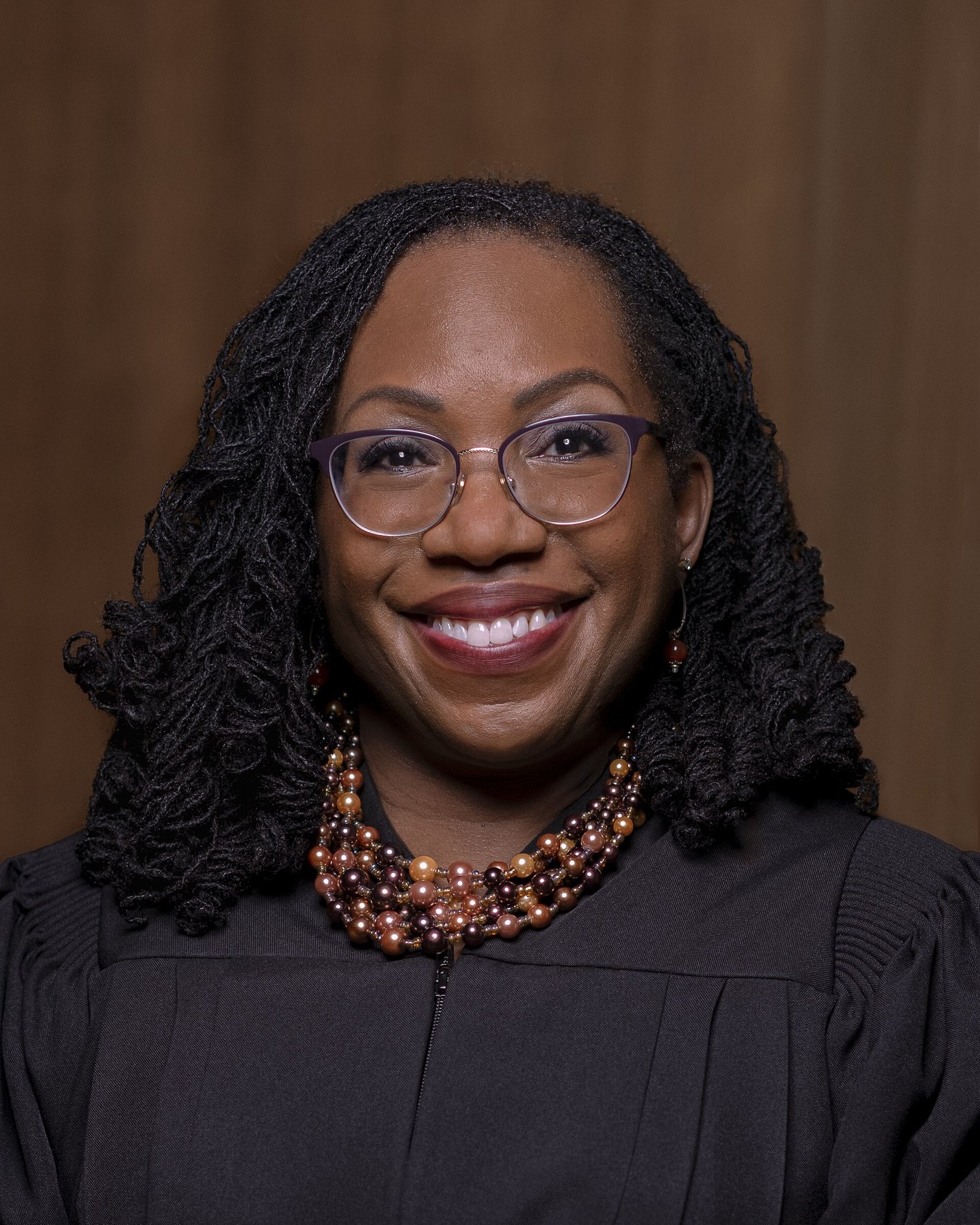
Justice Ketanji Brown Jackson, who wrote the 12-page dissent joined by Justices Sotomayor and Kagan. (Fred Schilling, Collection of the Supreme Court of the United States, public domain, via Wikimedia Commons)
The Winning Argument Came From a Law Clinton Signed
The challengers argued that pulling Social Security data into SAVE broke the Social Security Act's confidentiality rule and the Privacy Act of 1974. The majority said those claims "likely lack merit," because Congress had already spoken in 1996. The Illegal Immigration Reform and Immigrant Responsibility Act, known as IIRIRA, added 8 U.S.C. section 1373, which says that "notwithstanding any other provision of Federal, State, or local law," no official may block the flow of citizenship information to immigration authorities.
The majority read that plainly. Congress "necessarily authorized DHS to request and receive that information," the order says. Otherwise agencies would face "the impossible predicament" of obeying one federal law by breaking another.
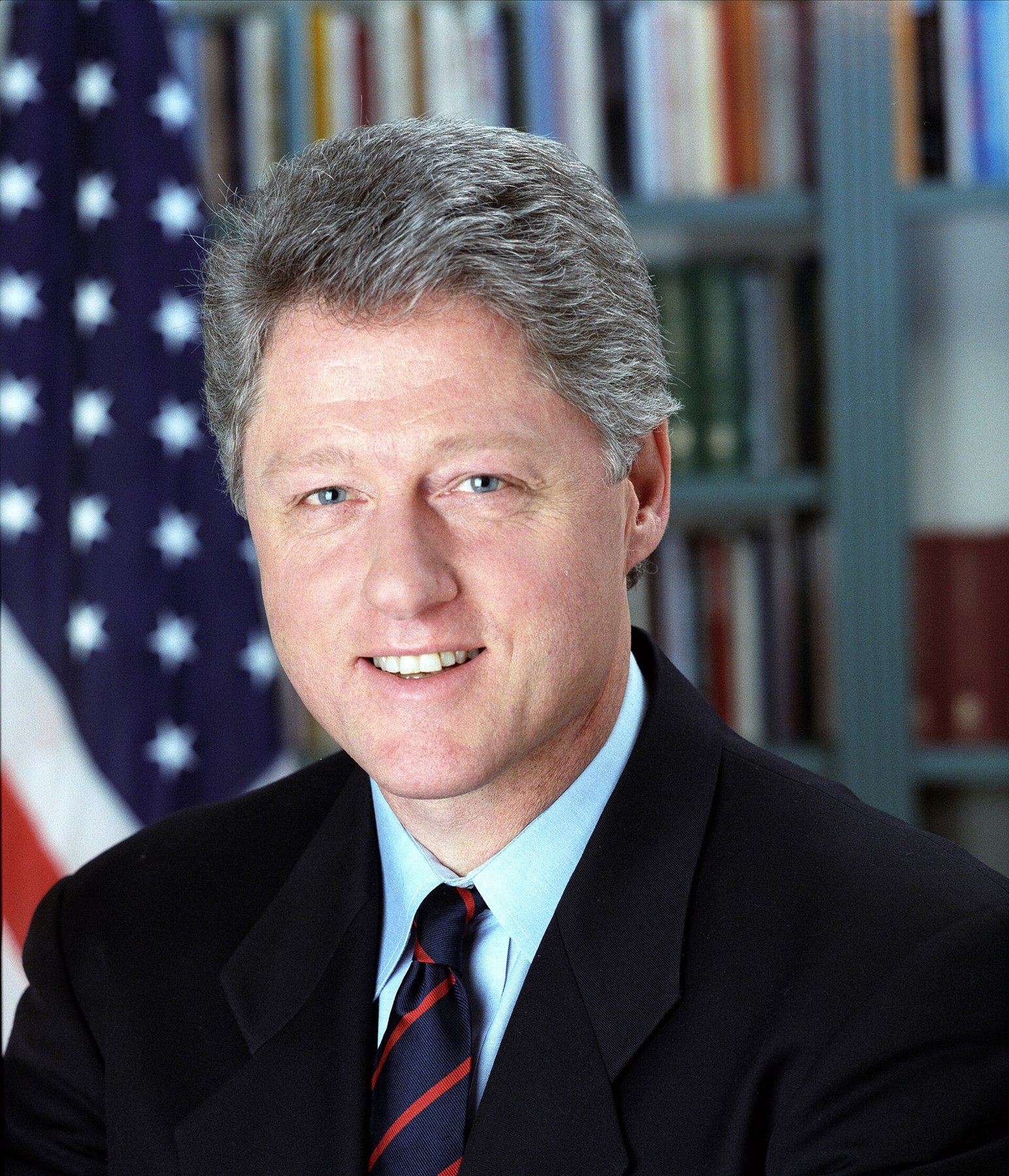
President Bill Clinton, who signed IIRIRA into law on September 30, 1996, as part of Public Law 104-208. (White House Photograph Office, public domain, via Wikimedia Commons)
Here is the part the coverage skipped. IIRIRA was folded into a giant spending bill that Clinton signed on September 30, 1996. Section 216 of that same law created 18 U.S.C. section 611, the federal crime of noncitizen voting in elections for President and Congress. One statute, passed by a Republican Congress and signed by a Democratic president, both outlawed noncitizen voting and, per six justices, gave DHS the data power to catch it.
Democrats who call SAVE a lawless Trump invention are arguing with a bill that carries Clinton's signature. It took 30 years and a new administration for anyone to use that power this way.
Justice Jackson Said the Ruling Would Barely Matter Before November
Jackson's dissent calls the majority's reading a "back-of-the-napkin assessment." She argues section 1373 only stops officials from interfering with lawful information sharing and does not override privacy statutes. She cites a 1999 Office of Legal Counsel opinion that took the narrower view, and a Texas plaintiff who "had her voter registration revoked without her knowledge."
Then she concedes the practical point. "If there is a bright side to today's opinion," she writes, "it is that the per curiam will likely have minimal short-term impact." Her footnote 2 adds that the government itself had conceded in the D.C. Circuit that the 90-day limit was "fatal" to any claim of harm from systematic voter-roll cleanup.
That tells you where the fight really is. It is less about SAVE itself than about the 90-day window in federal law that keeps states from running bulk cleanups before a federal election.
Footnote 2 Names the Case That Could Change the 90-Day Rule
The National Voter Registration Act says a state "shall complete, not later than 90 days prior to" a federal election, "any program the purpose of which is to systematically remove the names of ineligible voters." The challengers used that to argue Washington suffers no harm, since states can't purge in bulk this close to November 3 anyway. The majority agreed the moratorium "limits the potential impact" of its stay. Then it dropped a footnote.
Official record
Department of Homeland Security v. League of Women Voters, No. 26A308 (U.S. Sept. 25, 2026), on application for stay. Per curiam order with dissent by Justice Jackson, 19 pages. Official copy at supremecourt.gov.
"We will consider the scope of this provision in Republican National Committee v. Mi Familia Vota, et al., No. 25-1017, which asks whether the NVRA prohibits States from implementing programs within 90 days of federal elections to cancel the registrations of voters who are not U. S. citizens."
Per curiam, footnote 2, page 6
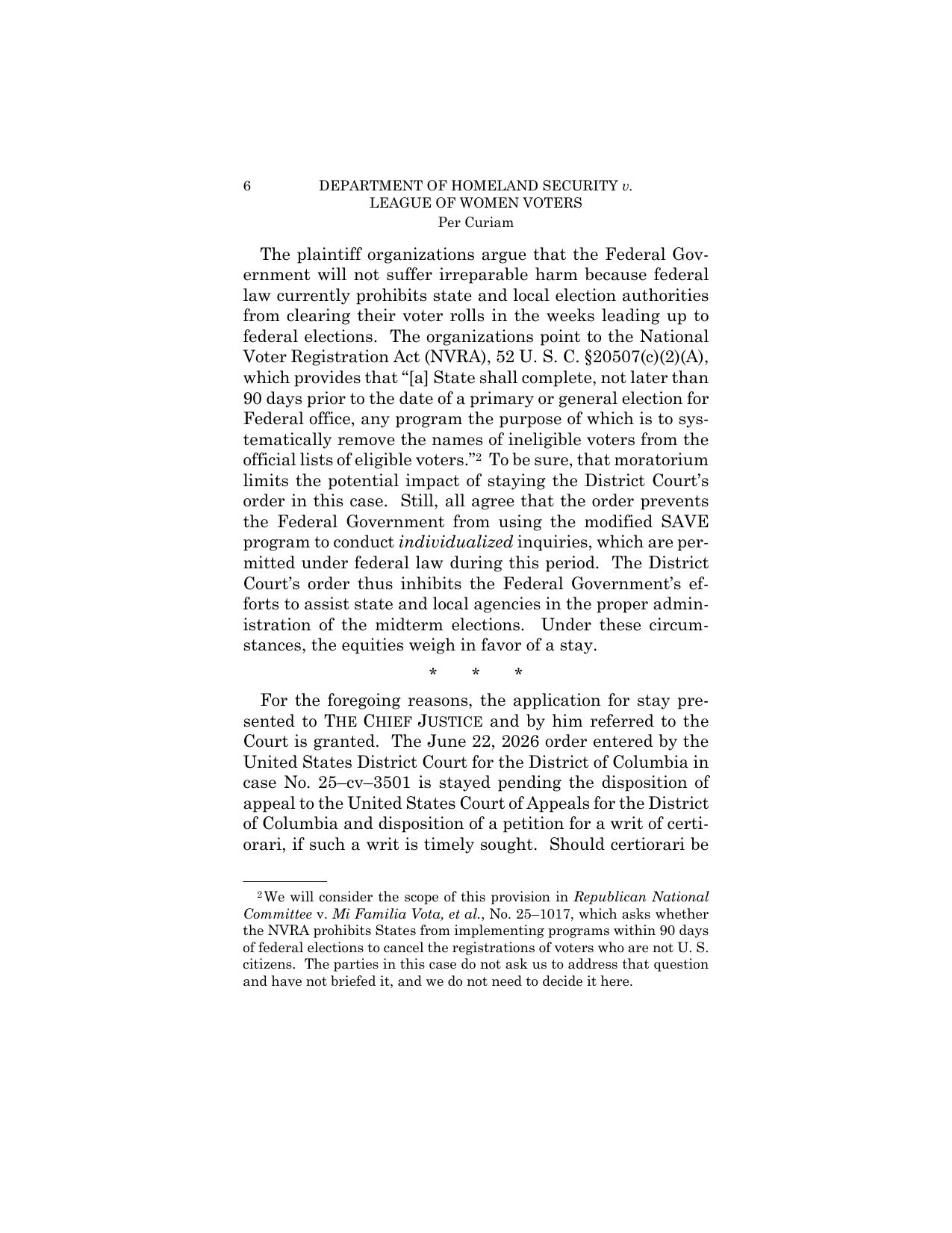
Read or download the full 19-page order and dissent (PDF) · docket for No. 25-1017
The question in Mi Familia Vota is whether the 90-day freeze even covers people who were never eligible to vote in the first place. The question presented asks whether the NVRA stops Arizona from "implementing a program within 90 days of a federal election to cancel the registrations of voters who are not U.S. citizens." A citizen who moved away was eligible once. A noncitizen never was. Whether Congress meant to protect both groups the same way is the whole ballgame.
The Arizona Case Will Be Argued 35 Days After the Midterms
The Court granted review on June 29 and set argument for Tuesday, December 8, 2026, according to the SCOTUSblog case page. That is five weeks after Election Day. Whatever the justices decide, it will shape the 2028 cycle, not this one.
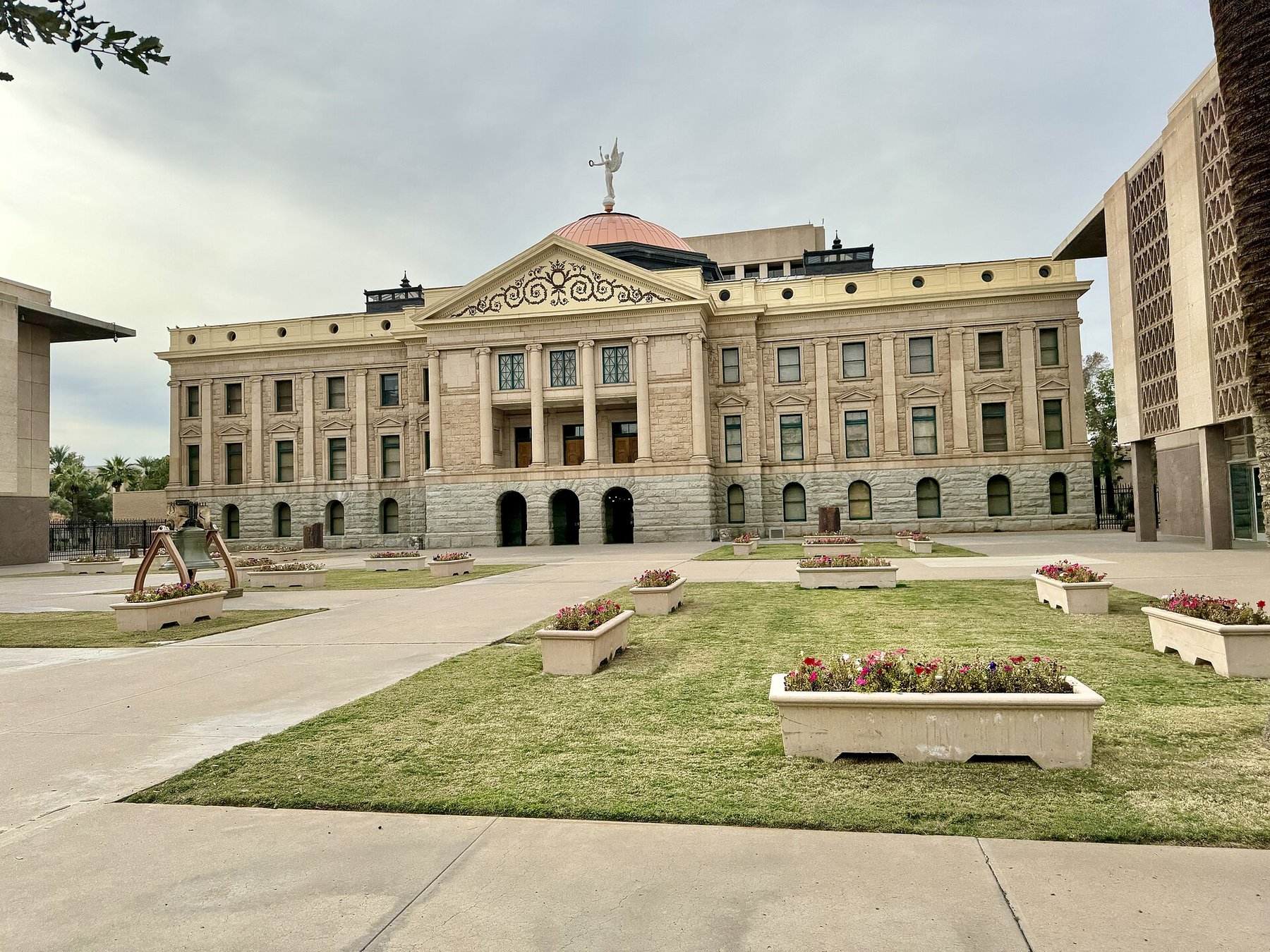
The Arizona State Capitol in Phoenix. Arizona's proof-of-citizenship law is the one at issue in RNC v. Mi Familia Vota. (Photo: w_lemay, CC BY-SA 2.0, via Wikimedia Commons)
The case also carries a first question about Arizona's rule that new registrants show "satisfactory evidence of citizenship." The Ninth Circuit struck that down, partly because a former Arizona secretary of state signed a 2018 consent decree with private litigants. The RNC's merits brief went in on August 28. The United States filed in support of the RNC the same day. Respondents' briefs are due October 13.
So Friday's footnote was not filler. Six justices told both sides, in writing, that they have not decided the 90-day question and intend to.
One Louisiana Voter Carried the Plaintiffs' Standing
The order has a detail the challengers will point to, and it is fair to report it. The majority found the groups likely have standing because of one member, "J. Doe 4," a naturalized citizen registered in Louisiana, a state that used the modified SAVE. Her Social Security records, the order says, "do not accurately reflect that she is now a naturalized citizen."
That is the program's real weak spot, and the government shouldn't wave it away. Social Security files can lag behind naturalization. Votebeat reported that SAVE has flagged citizens as noncitizens in at least five states, citing a ProPublica investigation. The answer built into the program is the follow-up letter, and states that use SAVE need to send it promptly and read the replies.
The majority weighed that risk against Washington's legal duty. Under section 1373(c), DHS must respond when state and local officials ask to verify someone's citizenship. The district court order, the justices wrote, kept the government from "using the program it believes is best suited to the task."
What States Can Do With SAVE Right Now
Individual checks are back on. The majority noted that "all agree" the lower court's order blocked "individualized inquiries, which are permitted under federal law during this period." A county clerk with a question about one registrant can run that person through the full system today. According to Votebeat, DHS says election officials in 25 states, mostly Republican-led, have already run their rolls through SAVE.
DHS General Counsel James Percival put the frustration plainly on X: "We had to file an emergency petition in the Supreme Court just so we could use government data to help states stop noncitizens from illegally voting." The Electronic Privacy Information Center, which represents the plaintiffs, told Votebeat the case "is not over."
It isn't. The D.C. Circuit still has the appeal, and the justices could take the merits later. The bigger date is December 8. If the Court rules that the 90-day freeze never covered noncitizens, the deadline that held SAVE back this fall stops applying to them, and a Clinton-signed law from 1996 will have done most of the work.
Top photo: The U.S. Supreme Court Building in Washington, D.C. (Carol M. Highsmith, Library of Congress, public domain, via Wikimedia Commons)