Senate Democrats blocked a 417-3 House bill to make giant data centers pay for their own grid upgrades, calling it too weak. Now Majority Leader John Thune says he is teeing it up for a test vote in the Senate's last week before the midterms. We read the bill Democrats want instead, and it leaves out every data center under 150 megawatts and most of Texas.
Thune Put the Data Center Bill Front and Center for the Final Week
The bill is H.R. 9340, the Ratepayer Protection Act. On Thursday, Sept. 24, it was read a second time and placed on the Senate calendar as Calendar No. 684, according to the Senate Daily Press Gallery's floor log. That step lets leadership bring it straight to the floor without sending it to committee first.
Thune told reporters the same day that the bill was "front and center" on his list of affordability votes for this week, Roll Call reported. The Senate returns Monday at 3 p.m., with a 5:30 p.m. passage vote already set on a college sports bill.
The House passed H.R. 9340 on Sept. 16 by 417 to 3. The only no votes came from three progressive Democrats: Summer Lee of Pennsylvania, Delia Ramirez of Illinois and Rashida Tlaib of Michigan, the Daily Signal reported. It was sponsored by Reps. Gabe Evans, a Colorado Republican, and Kathy Castor, a Florida Democrat.
One Democrat Stopped It the Day After the House Vote
Sen. Jon Husted of Ohio, who carries the Senate version, went to the floor on Sept. 17 and asked unanimous consent to pass the House bill and send it to President Trump. "In plain language, if you create the cost, you should pay the cost," Husted said, according to his office's transcript.
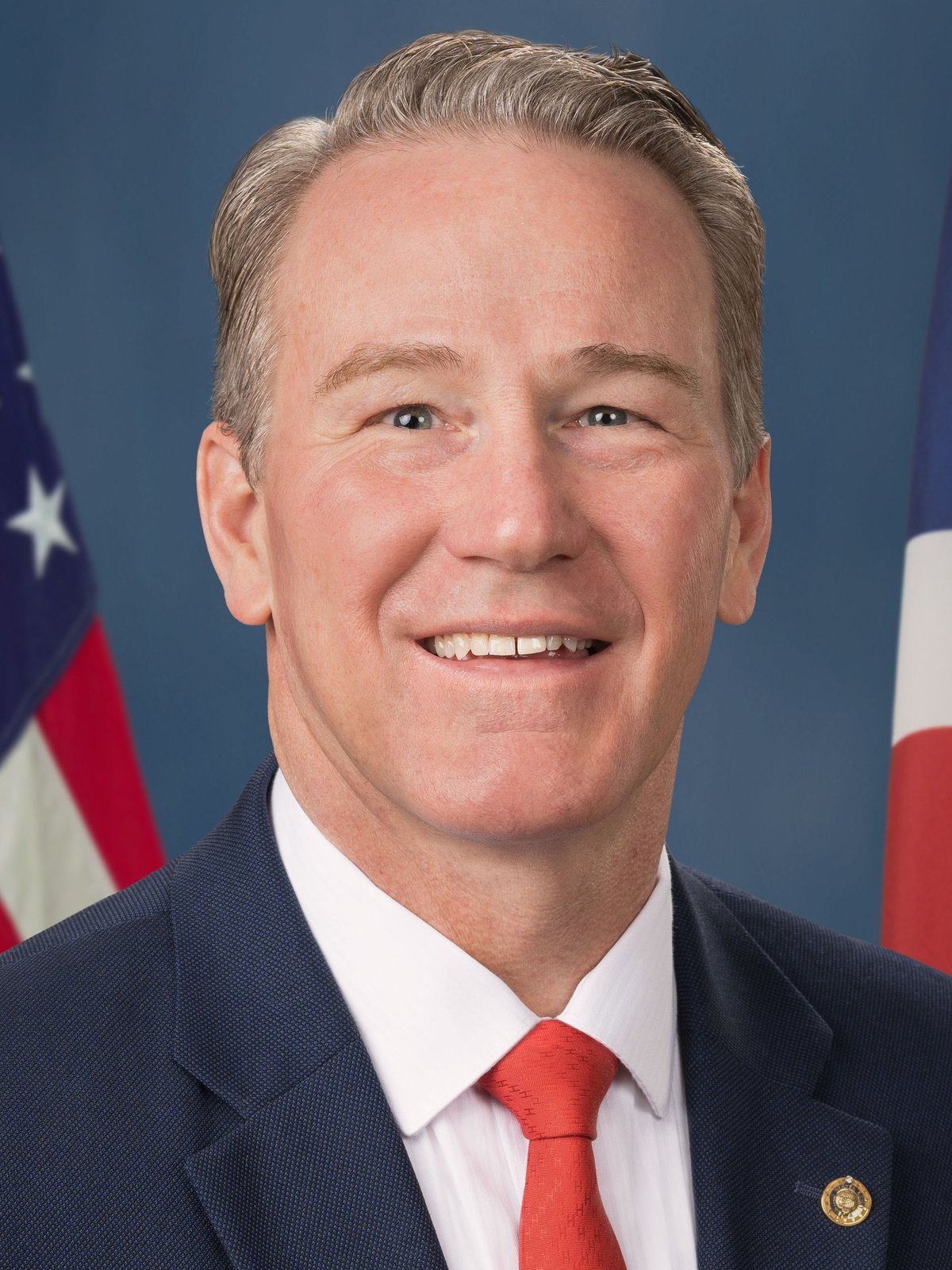
Sen. Jon Husted, R-Ohio, who tried to pass the Ratepayer Protection Act by unanimous consent on Sept. 17. (U.S. Senate official portrait, public domain, via Wikimedia Commons)
Sen. Martin Heinrich of New Mexico, the top Democrat on the Energy and Natural Resources Committee, objected. He then asked to pass his own bill, S. 5199, the GRID Savings Act. Sen. Bernie Moreno, R-Ohio, objected to that.
Chuck Schumer went further last week. "Sen. Husted's bill is a fraud. It's voluntary, no company has to do it," the minority leader said, per Roll Call. He called the Democratic bill "mandatory" and "much stronger."
What the House Bill Actually Does
We read the text the Senate received. It adds a new federal standard to the Public Utility Regulatory Policies Act of 1978. Under that standard, a utility's rate for a data center of 100 megawatts or more "shall be designed to recover" the "full, incremental cost" of any generation, transmission or distribution upgrade needed to serve it.
It covers the exit, too. The data center stays on the hook for those costs if it terminates its contract or stops buying power. Before a utility builds anything, it must require the data center to post "financial assurances or contributions to cover the cost."
Schumer has a point on one thing. Standards under this 1978 law are ones state regulators must consider, not ones they must adopt. The Congressional Budget Office's cost estimate says commissions "may adopt or reject federal standards for ratemaking under current law." The bill gives each state one year to open that review and two years to decide.
The Exemption Nobody Is Talking About
Coverage of the fight has skipped the clause on page 5. It says the new review requirement does not apply at all in a state that already acted before the bill becomes law. Three triggers count: the state already put in place the standard "or a comparable standard," its regulators held a proceeding to consider one, or its legislature voted on one.
Official record
H.R. 9340, Ratepayer Protection Act, as received and placed on the Senate calendar (Calendar No. 684), Sept. 24, 2026. Official text at govinfo.gov.
"the State legislature has voted on the implementation of the standard (or a comparable standard) for the electric utility."
H.R. 9340, Sec. 2(b)(1)(C), new PURPA section 112(i)(3)
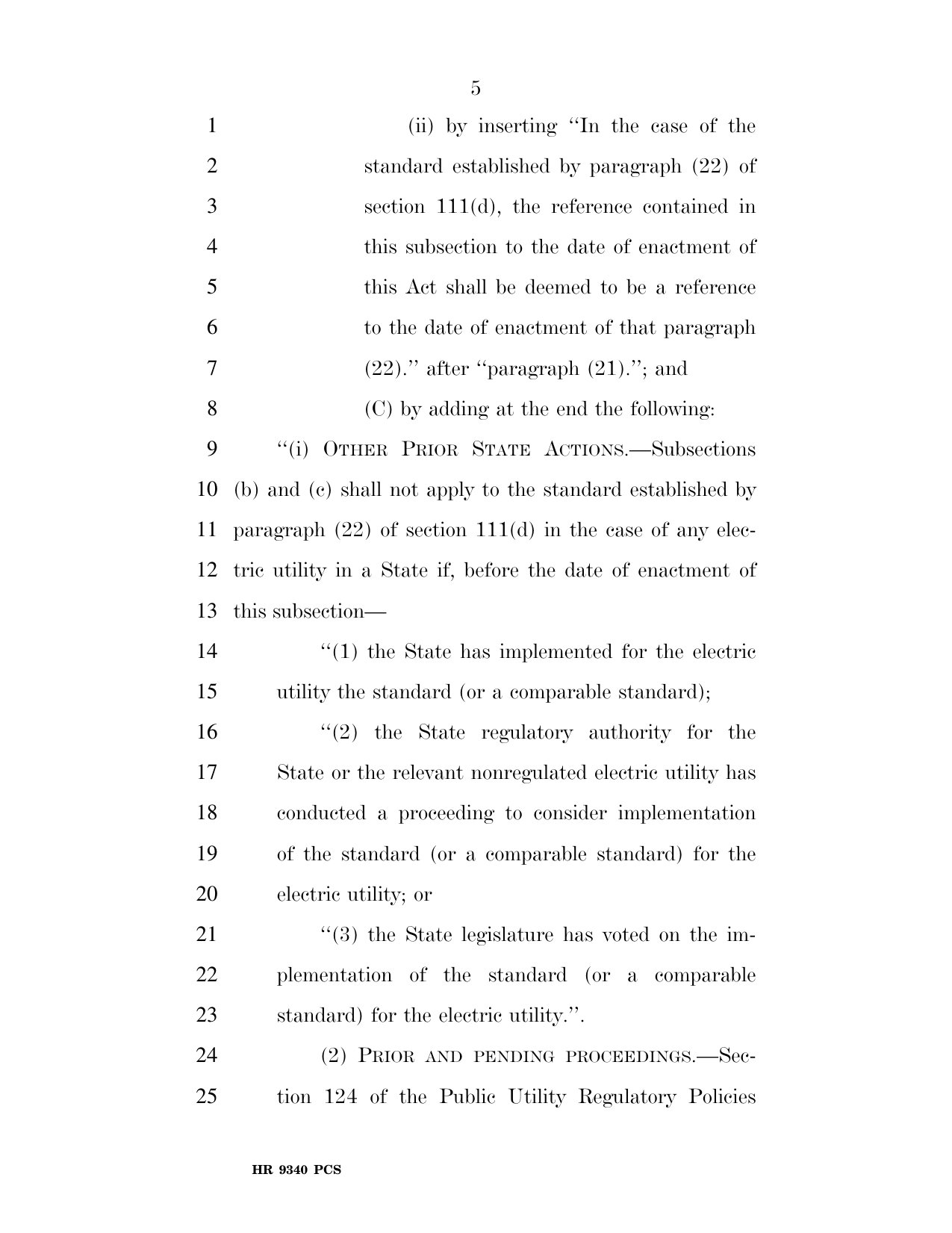
Read or download the full H.R. 9340 text (PDF) · CBO cost estimate
Read literally, a legislature that voted on a comparable standard and rejected it would still qualify. Husted's own state may already be out. In July 2025 the Public Utilities Commission of Ohio approved a data center tariff for AEP Ohio that makes large new data centers pay for most of the power they sign up for, whether they use it or not. Whether that counts as "comparable" is a question the bill leaves open.
The bill also reaches only data centers that request or sign a power contract on or after the day it becomes law. Every deal already on the books is left alone.
The Democrats' Stronger Bill Has Bigger Gaps
Heinrich's press release says his bill "forces" data centers to pay. The 13-page text of S. 5199 tells a narrower story. Its "covered large load" starts at 150 megawatts, 50 percent higher than the House bill's 100-megawatt line. A data center drawing 120 megawatts falls under the House bill's standard and outside Heinrich's.

Sen. Martin Heinrich, D-N.M., ranking member of the Senate Energy and Natural Resources Committee, who objected to the House-passed bill. (U.S. Senate official portrait, public domain, via Wikimedia Commons)
Its savings provisions say the new section "does not apply to ERCOT," the grid operator that runs most of Texas, for power moving wholly within that grid. The House bill contains no Texas carve-out.
The biggest cost category gets a refund. S. 5199 assigns 100 percent of a data center's own hookup facilities to the data center. For network upgrades, the grid improvements beyond that hookup, the bill says the costs "shall be credited back against transmission service charges." In other words, the data center fronts the money and earns it back over time through credits on its transmission bill.
And the Democratic bill is not faster. It gives the Federal Energy Regulatory Commission one year to write a rule, and puts these hookups to the transmission grid squarely under federal jurisdiction. For conservatives who want state utility commissions answering to local voters, that is a big ask.
Both Bills Take Time, but Only One Got 417 Votes
Neither bill would lower a single electric bill before Election Day. The House bill gives states up to two years to rule. Heinrich's gives FERC a year to write a rule before anything changes. The honest comparison is between a modest bill that passed the House with all but three votes and a bill still sitting in committee.
Heinrich cited a Federal Reserve Bank of Dallas finding that data center demand has already pushed national electricity prices up two to six percent, and said the mid-Atlantic could see an extra $840 a year per family within two years. Those are his figures, from his floor remarks. If he believes them, a bill that makes data centers post collateral before a single transmission line gets built is worth passing now, with a tougher one to follow.
Why This Vote Is Really About Ohio
Husted is in a special election against former Sen. Sherrod Brown, a race Inside Elections rates a Toss-up. Brown has run ads calling Husted "the face of data centers," the Daily Signal reported. Passing the Ratepayer Protection Act would hand Husted a signed law on the exact issue Brown is attacking him on.
That explains a lot. "The president wants it, House Democrats and Republicans want it, consumers want it, the business community wants it," Husted said in an interview quoted by Roll Call. The only people who don't want it this week are Senate Democrats, and their alternative lets bigger data centers and most of Texas off the hook. If a test vote comes, every senator will have to say on the record whether a bill 417 House members backed is really a fraud.
Top photo: Aerial view of data centers near Ashburn, Loudoun County, Virginia, November 2025. (Photo: Theodore Christopher, CC0, via Wikimedia Commons)