Judge Timothy Kelly ordered the White House to hand CNN, MS NOW and Politico their press passes back. Two days later, Real America's Voice flew to Knoxville on Air Force One in the seat CNN expected to fill. Read the eight-page order and you find out why that was allowed: the order covers "hard pass" credentials and nothing more, it expressly leaves President Trump himself out, and the appeals court precedent it relies on says the White House can write its own rules whenever it wants.
What Judge Kelly Actually Ordered
The case is Cable News Network, Inc. v. Trump, No. 1:26-cv-03287, in federal court in Washington. Trump announced on Truth Social on September 18 that he was "banning" the three outlets "from the White House." They sued on September 21, and Kelly granted a temporary restraining order in the early hours of Thursday, September 24.
The binding part of the order is one sentence long. It tells the defendants "(except for President Trump)" to "immediately return, reinstate, and restore the White House 'hard pass' press credentials held by employees of CNN, MS NOW, and POLITICO." The order lasts 14 days. The outlets had to post a bond of one dollar by October 1.
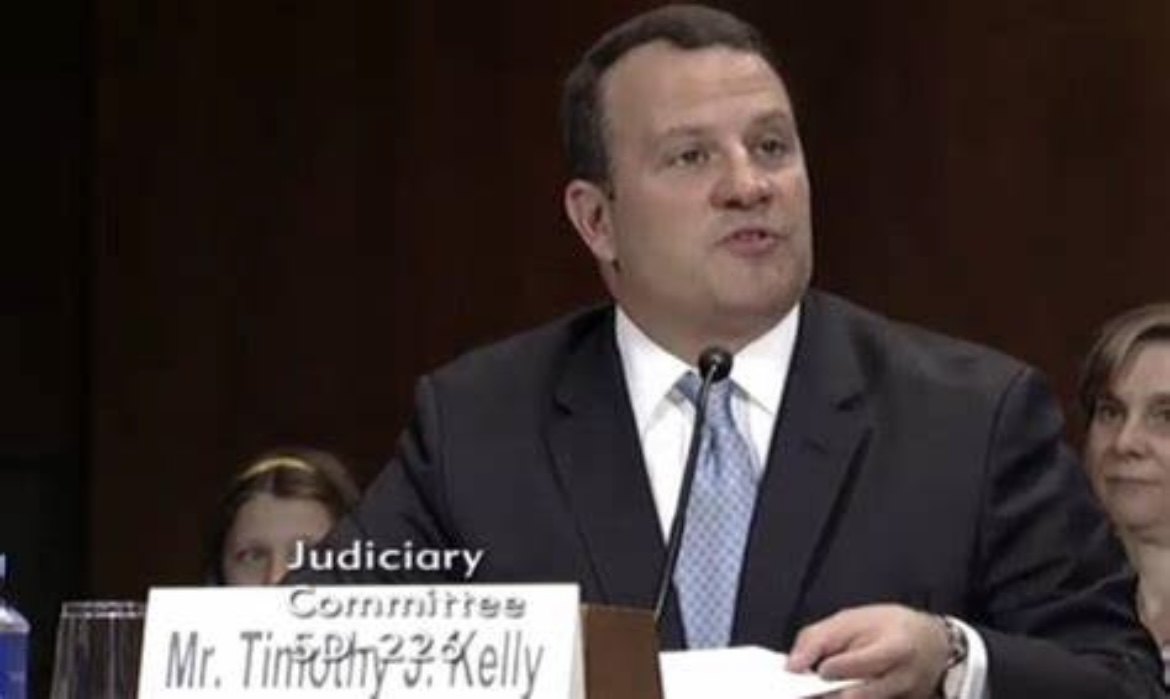
Timothy J. Kelly at his June 2017 Senate Judiciary Committee confirmation hearing. President Trump nominated him to the federal bench that year. (U.S. Senate Judiciary Committee, public domain, via Wikimedia Commons)
There is no mention of Air Force One in it. No mention of the Oval Office, the rotating TV pool, or which network gets which assignment. A hard pass is the badge that lets a reporter walk onto the White House grounds without a new clearance each day. That is all Kelly restored.
The Ruling Never Touched the First Amendment
The outlets called the ban a "direct assault" on the First Amendment, according to TIME. Kelly didn't rule on that. He found the outlets likely to win "at least on their Fifth Amendment procedural due process claim," meaning the problem was how the passes were pulled, not whether Trump may ever pull them.
UCLA law professor Eugene Volokh made the same point in his write-up at the Volokh Conspiracy: the court "didn't reach the outlets' First Amendment arguments." George Washington University's Jonathan Turley, who criticized the ban, wrote that Kelly ruled "on the narrowest grounds," and that it "was the only decision that he could make" under D.C. Circuit precedent.
That precedent is the heart of it. The Justice Department argued that the two controlling cases, Sherrill v. Knight from 1977 and Karem v. Trump from 2020, were wrongly decided. Kelly didn't argue back. He wrote that "this Court is bound by D.C. Circuit precedent, full stop."
Official record
Cable News Network, Inc. et al. v. Donald J. Trump et al., Civil Action No. 26-3287 (TJK), U.S. District Court for the District of Columbia, Temporary Restraining Order, Document 24, filed September 24, 2026. Court copy via CourtListener.
"It is further ORDERED that Defendants (except for President Trump) and their agents, representatives, and all persons or entities acting in concert with them shall immediately return, reinstate, and restore the White House 'hard pass' press credentials held by employees of CNN, MS NOW, and POLITICO that were revoked on or about September 18, 2026."
Temporary Restraining Order, page 8
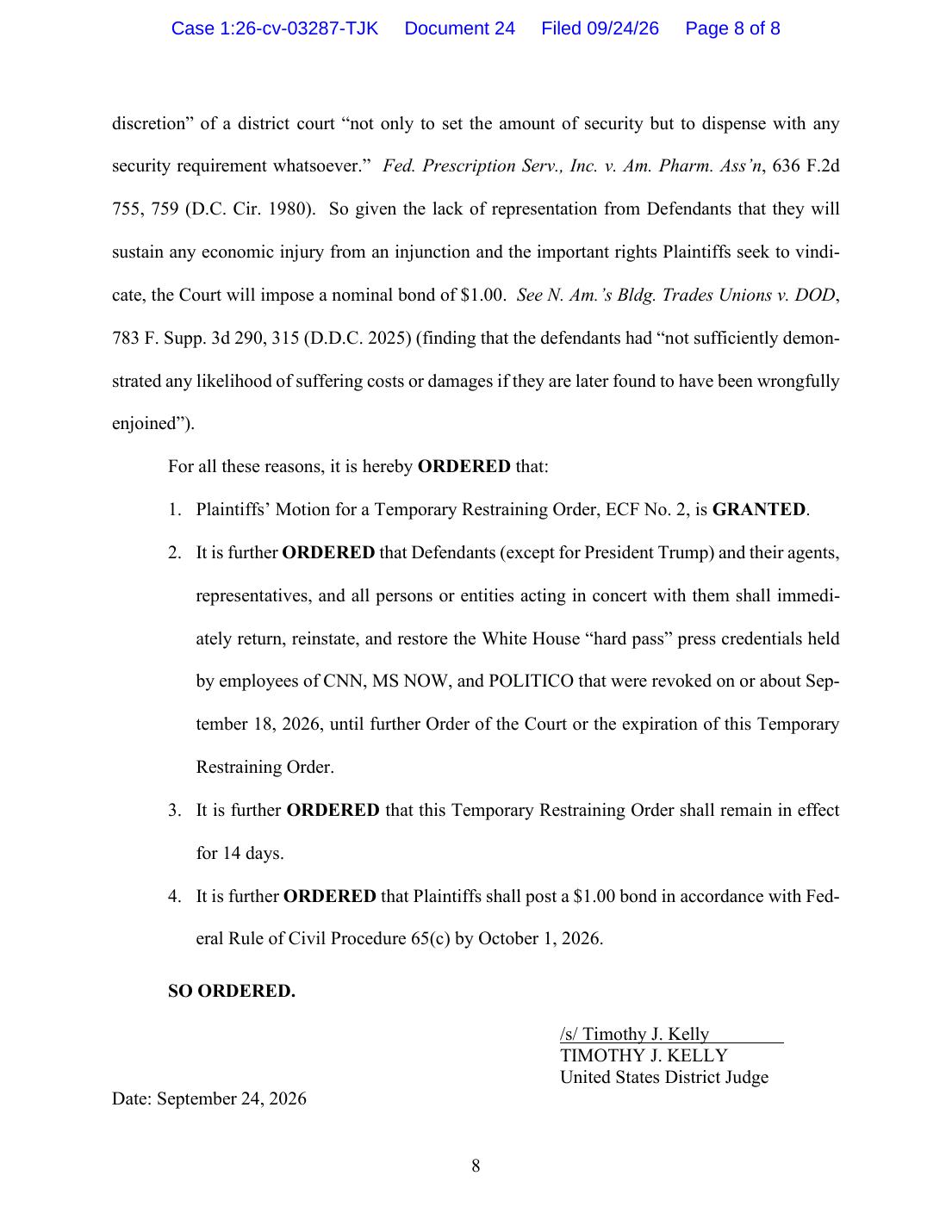
Read or download the full 8-page order (PDF) · view the docket on CourtListener
The 2020 Precedent Hands Trump a Roadmap
Here is the line the coverage skipped. Karem v. Trump is the case Kelly leaned on hardest, and it does not say the White House can never discipline a reporter. It says the White House has to announce the rules and the penalties first.
The D.C. Circuit's 2020 opinion, written by Judge David Tatel, put it plainly: "the White House may promulgate such sanctions any time it wishes, but, until then, due process precludes the White House from 'punish[ing]'" a reporter the way it punished Brian Karem. The same opinion says the White House can still order "the immediate removal of rogue, mooning journalists."
The first Trump White House already walked this road once. After Kelly restored Jim Acosta's pass in November 2018, the White House didn't appeal. Per the Karem opinion, it sent Acosta a letter that turned "widely understood practices" into written rules for press conferences, warning that breaking them "may result in suspension or revocation of the journalist's hard pass."
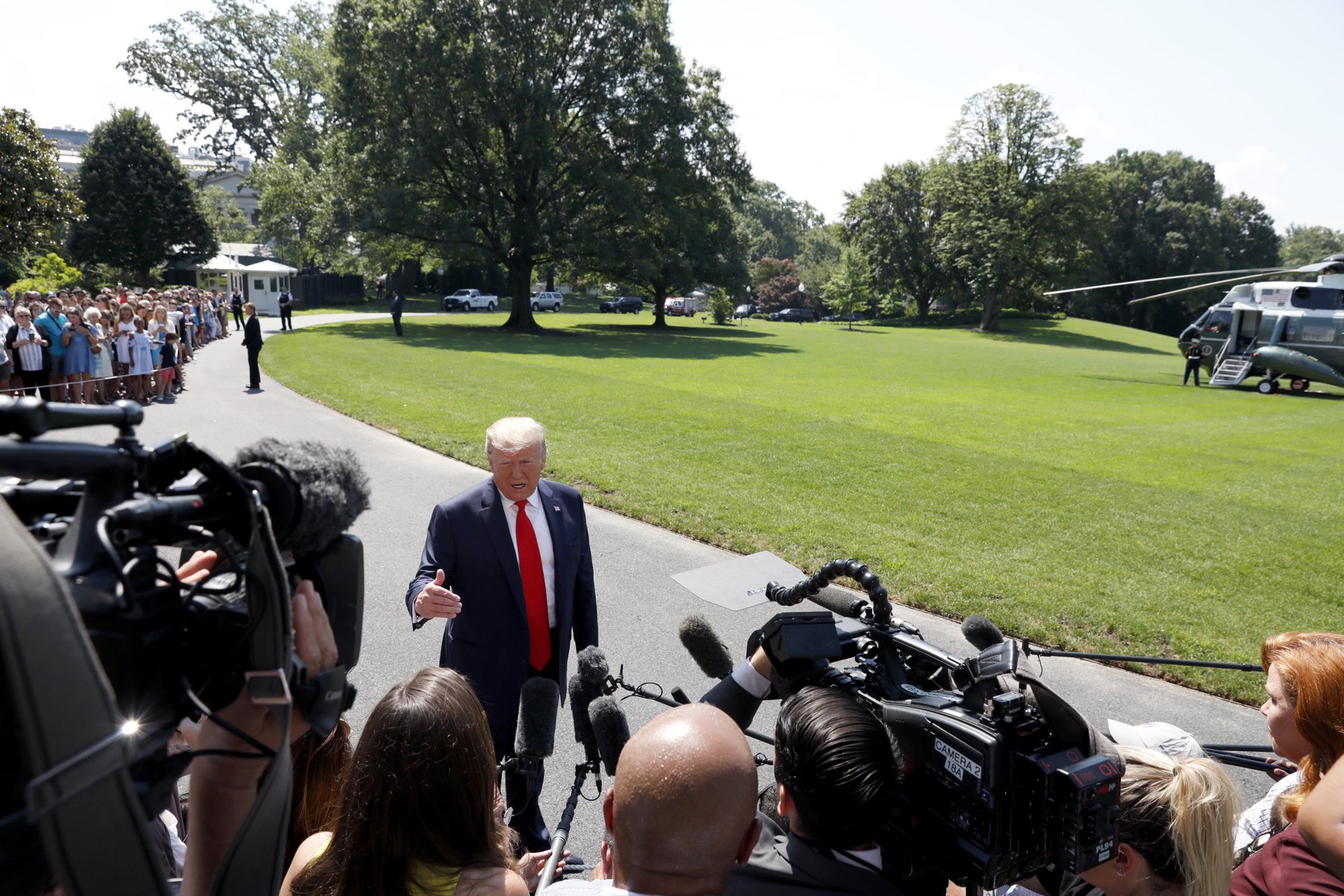
President Trump takes questions from reporters on the South Lawn in July 2019 before boarding Marine One. (Official White House Photo by Joyce N. Boghosian, public domain, via Wikimedia Commons)
Kelly's order points to that gap. He found the record "bereft of any relevant 'formally articulated standards'" in place before the reporting the White House objected to. Written standards with stated penalties, adopted going forward, would be a different case.
Where the White House's Case Was Weakest
Kelly did not buy the national security argument, and the order explains why in detail. The White House sent the outlets letters on September 22 listing stories it said "threatened national security and/or spread falsehoods." Kelly said the "and/or" left open that every story fell in the second bucket.
He called the stated standard, "the standards of professionalism and decorum expected of those given access to the White House Complex," so vague it "hardly does the trick." The White House had renewed CNN correspondent Betsy Klein's hard pass "several months after" she published some of the flagged reporting. And the outlets' declarations showed that "in most cases, the reporters who authored the stories" the White House cited "did not even hold hard passes."
That last point matters for anyone rooting for the administration. If most of the offending stories were written by people who never had a badge, pulling badges doesn't stop those stories. The government's only national security declarations came from senior Defense Department officials who, Kelly wrote, had "no direct knowledge of how reporters operate in the White House."
Then CNN Got Left Off Air Force One
CNN's Klein and a photojournalist got back onto the grounds around noon Thursday, CNN reported. That same day, the White House kept two CNN journalists from covering Chinese leader Xi Jinping's arrival for the state dinner.
On Friday night, White House guidance for Trump's Saturday trip to the Tennessee vs. Texas game in Knoxville listed Real America's Voice for the plane instead of CNN, the Associated Press reported. The AP noted that the seat "has long been saved for a member of the U.S. network video pool," a five-outlet group Real America's Voice isn't part of. A written pool report Saturday said there was "no TV pool" for the trip.
Real America's Voice said it would share its feeds with other outlets. "CNN is not here; we have taken over that responsibility," correspondent Taylor Mitchell said in a video the network posted. Trump posted Saturday morning that "FAKE NEWS SHOULD NOT BE ALLOWED IN THE WHITE HOUSE!!!"
CNN's Lawyer Says the Order Covers the Pool. The Order Doesn't Say So.
The outlets' attorney, Ted Boutrous of Gibson Dunn, said on CNN's "The Lead with Jake Tapper" Friday that the plaintiffs believe the ruling also covers pool access, per the AP. The AP's own description of the order is that it "dealt with 'hard passes' to the White House grounds and didn't directly address pool duties," and "said nothing directly about Air Force One."
The D.C. Circuit has already drawn that line in another press fight. In the Associated Press's case over the "Gulf of America" dispute, a divided panel lifted an injunction after stressing that Air Force One and the Oval Office are specific spaces where the president gets more discretion, as Turley summarized it. That case is still on appeal.
So the Knoxville swap sits inside the four corners of Kelly's order as written. If CNN wants a seat on the plane, it will have to ask the judge for more than he has given so far.
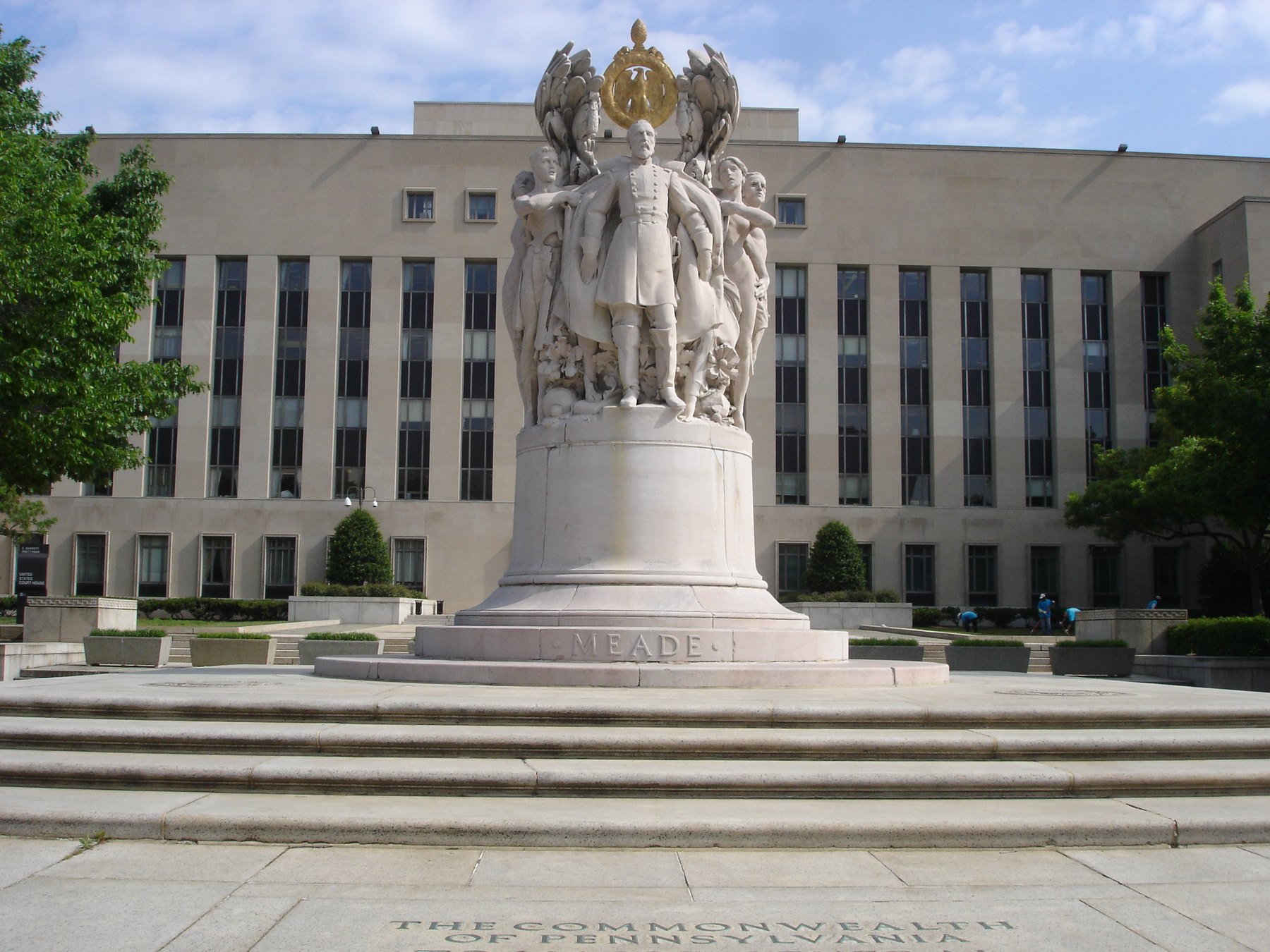
The E. Barrett Prettyman U.S. Courthouse in Washington, home of the federal district court and the D.C. Circuit. (Photo: Jorfer, public domain, via Wikimedia Commons)
What Happens Before October 8
A temporary restraining order usually can't be appealed, and Kelly said so in the order. Trump has vowed "we'll go for appeal" anyway. The real fight is the preliminary injunction. According to CNN's coverage of Kelly's schedule, the outlets' motion is due today, Monday, September 28, the government answers by October 2, the outlets reply by October 5, and the current order runs out October 8.
Volokh told TIME that whichever side loses the injunction round can then go to the D.C. Circuit, and that the Supreme Court might see things differently than that circuit's precedent does. Turley thinks the odds favor the outlets and urged the White House to walk away.
There is a third option neither the press nor the plaintiffs are talking about. Karem says the White House can publish conduct rules and sanctions "any time it wishes." Kelly's order said nothing about the plane, and the administration has already shown it read that closely. The next move may be a rulebook, not an appeal.
Top photo: President Donald J. Trump waves from the steps of Air Force One at Joint Base Andrews, Maryland, on September 18, 2020. (Official White House Photo by Tia Dufour, public domain, via Wikimedia Commons)