Federal prosecutors in Manhattan charged Nicolás Maduro and his wife, Cilia Flores, with conspiracy to commit torture on Thursday, including the torture of American citizens held in Venezuelan prisons. Read past the headlines and the 30-page indictment says something bigger: the regime treated jailed Americans as bargaining chips, and one of the officials accused of torturing them was still escorting freed Americans to the airport 12 days after Maduro was in U.S. custody.
What Prosecutors Filed on Thursday
The new charging document is the fifth superseding indictment in United States v. Maduro Moros, case S5 11 Cr. 205 (AKH), before Judge Alvin Hellerstein. The Justice Department's announcement lists five counts against both defendants. The new one, Count Two, charges a conspiracy to commit torture under 18 U.S.C. 2340A, with a maximum of 20 years in prison. The other four, carried over from the earlier drug case, cover narco-terrorism, cocaine importation and machine guns and destructive devices. Three of those four carry mandatory minimum sentences, from 10 years up to 30.
One quieter change matters for Flores. The indictment says she was first charged in December 2025 with drug trafficking and weapons offenses. The new Count One now names her in the narco-terrorism conspiracy too. Prosecutors allege the torture conspiracy ran "from at least in or about 1999, up to and including in or about 2025."
"As alleged in the indictment, the Maduro regime subjected American citizens to torture while held in custody of the Venezuelan government," FBI Director Kash Patel said in the release. Maduro's lawyer, Barry Pollack, said his client "denies the charges in the new indictment and looks forward to his day in court," IBTimes UK reported. These are allegations, and both defendants are presumed innocent.
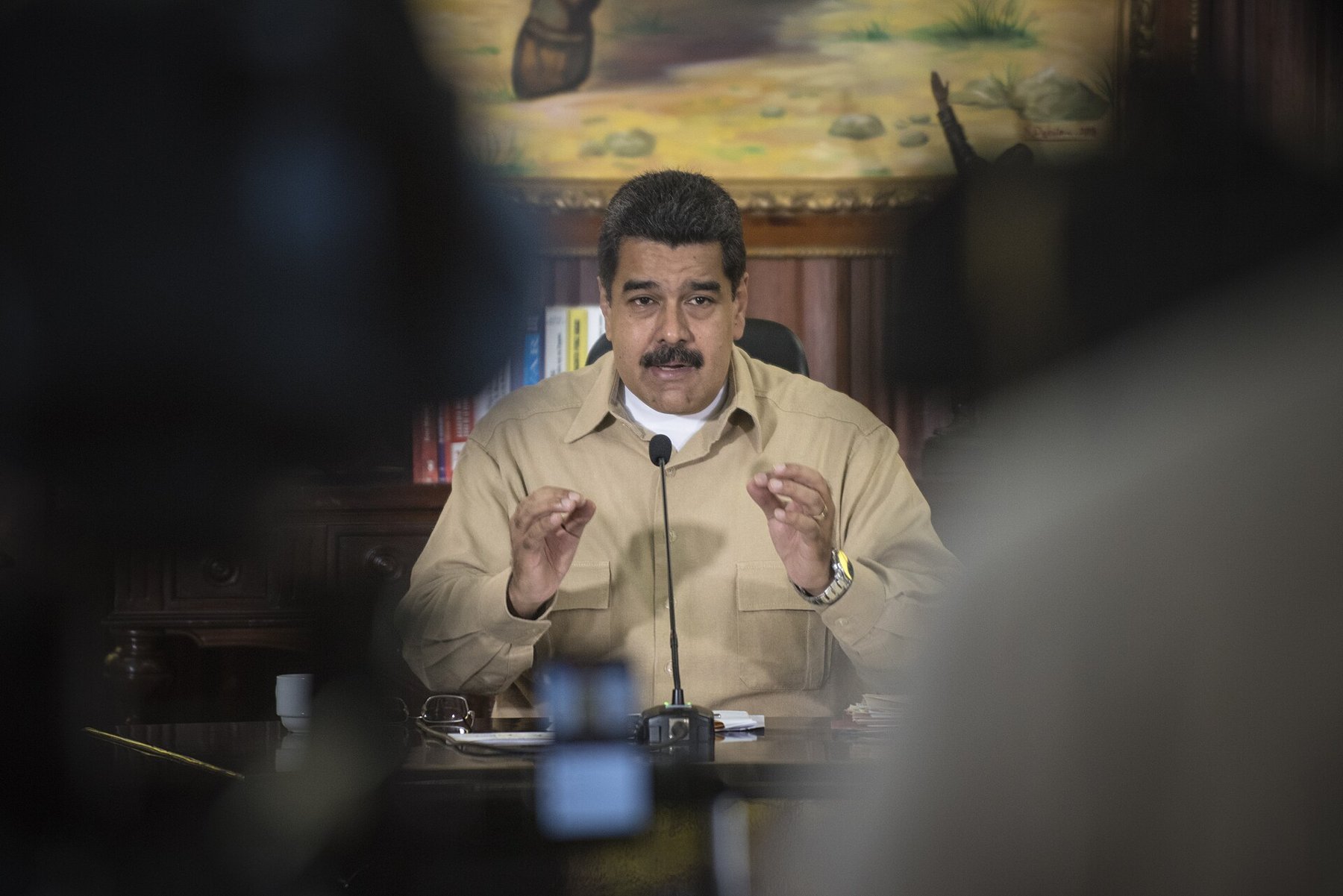
Nicolás Maduro during a media appearance in December 2016, the year the indictment says he canceled a recall referendum aimed at removing him. (Photo by Eneas De Troya, CC BY 2.0, via Wikimedia Commons)
"Squeeze Them Harder": What the Indictment Says Maduro Ordered
The indictment does not describe a president who looked the other way. It describes one who asked for updates. During the 2014 protests, prosecutors allege, Maduro suggested kidnapping five to seven military officers and "drawing the information out of them" through torture, and Flores agreed. When told that one detainee was still defiant, Maduro allegedly made a wringing gesture with his hands and said, "squeeze them harder."
Later passages allege he asked "what can we do to make them talk" and suggested methods himself, saying "do not let them sleep" or "pour water on them," at times "laughing after hearing about the abuse of prisoners." The document says the regime denied torture accusations publicly from 2014 to 2025 while the abuse continued.
The Indictment Calls the CITGO Arrests a Pressure Play
Here is the line most coverage skipped. Paragraph 35 on page 20 covers the Nov. 21, 2017 arrests of six oil executives, five of them U.S. citizens. Americans know them as the CITGO 6. The grand jury alleges that a senior Venezuelan official identified as CC-1 "stated privately that these arrests were necessary to put pressure on the United States during negotiations."
Venezuela convicted the executives of corruption. Now a federal grand jury alleges, in a sworn charging document, that their imprisonment was leverage. A footnote adds that "these victims were released in or about 2022."
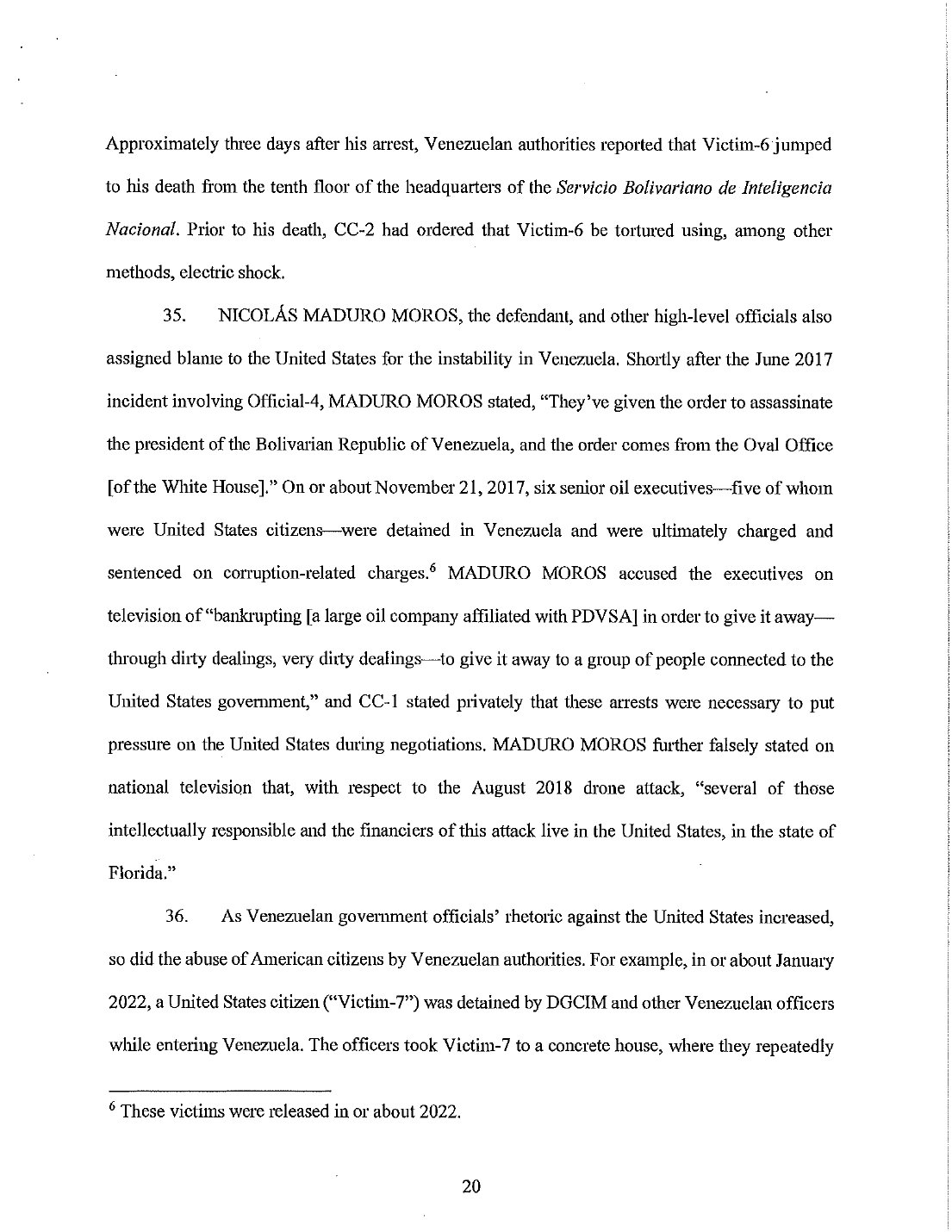
Page 20 of the superseding indictment. Paragraph 35 alleges that CC-1 called the 2017 arrests of the oil executives "necessary to put pressure on the United States during negotiations." (U.S. Attorney's Office, Southern District of New York, public court record)
They came home in two stages. One was released in March 2022. The other five came home on Oct. 1, 2022, when the Biden White House freed two nephews of Cilia Flores, who had been convicted in New York in 2016 of conspiring to smuggle cocaine, ABC7 reported at the time. Both nephews received clemency before the trade. In other words, the woman now charged with conspiring in the torture of Americans got her own relatives back as part of the price.
One American Was Kept Alive for a Trade
The indictment's account of Victim-8 is even more direct. Prosecutors say he was a U.S. citizen who traveled to Venezuela in August 2023 to see family. Military intelligence officers, known as DGCIM, attacked him from behind and injured his back so badly he needed a long hospital stay. On the ambulance ride to Boleíta Norte prison, officers allegedly put a gun in his mouth, told him to say goodbye to everyone he knew, shocked his genitals and put a pressure device on his ankles until he passed out.
Official record
United States v. Nicolás Maduro Moros and Cilia Adela Flores de Maduro, S5 11 Cr. 205 (AKH), Superseding Indictment, U.S. District Court for the Southern District of New York, unsealed Oct. 8, 2026 (30 pages).
"On one occasion, one of Victim-8's torturers told him that the only reason he was alive was because CC-3 had learned that Victim-8 was a United States citizen and, therefore, realized that Victim-8 could be useful in a prisoner exchange with the United States."
Superseding Indictment, paragraph 38, pages 21 and 22
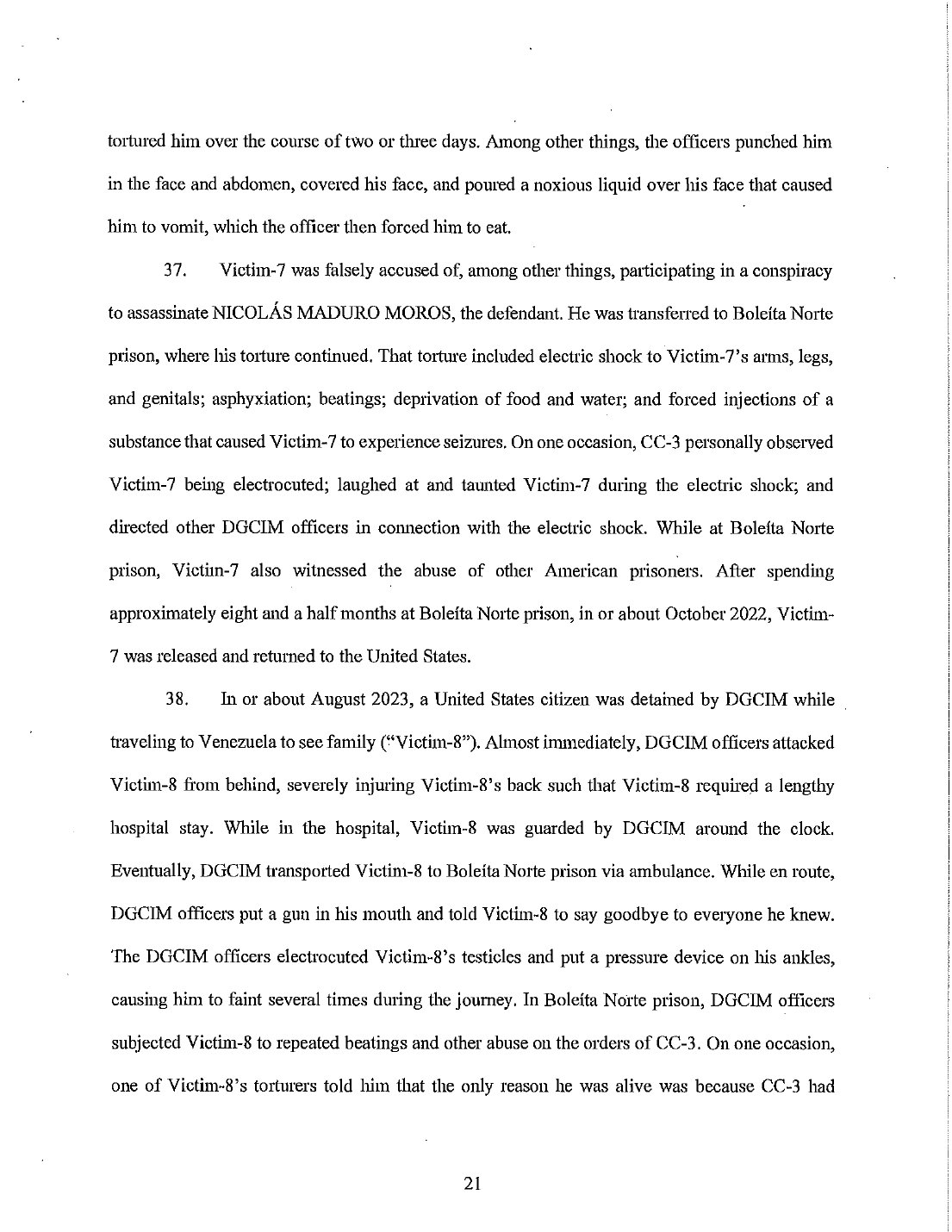
Read or download the full 30-page superseding indictment (PDF) · official Justice Department copy · SDNY press release
Read paragraphs 35 and 38 together and a pattern appears. In 2017, a senior official allegedly called the arrest of Americans pressure for negotiations. In 2023, an American was allegedly told his passport was the only thing keeping him alive. The indictment does not charge hostage-taking as a separate crime, but it describes a government that treated U.S. citizens as inventory.
Victim-7's Release Lines Up With the 2022 Swap
A third American, Victim-7, was allegedly detained in January 2022 while entering Venezuela. Prosecutors say he was beaten and shocked, then given forced injections that caused seizures, while CC-3 "laughed at and taunted" him. The indictment says he was released "in or about October 2022" after about eight and a half months at Boleíta Norte.
The indictment does not name him, and we will not guess. But the timing matches the same October 2022 exchange. That swap freed seven Americans, including one who, according to ABC7's report, had been held since January 2022. If Victim-7 came home in that trade, then the Flores nephews were the price for his freedom as well.
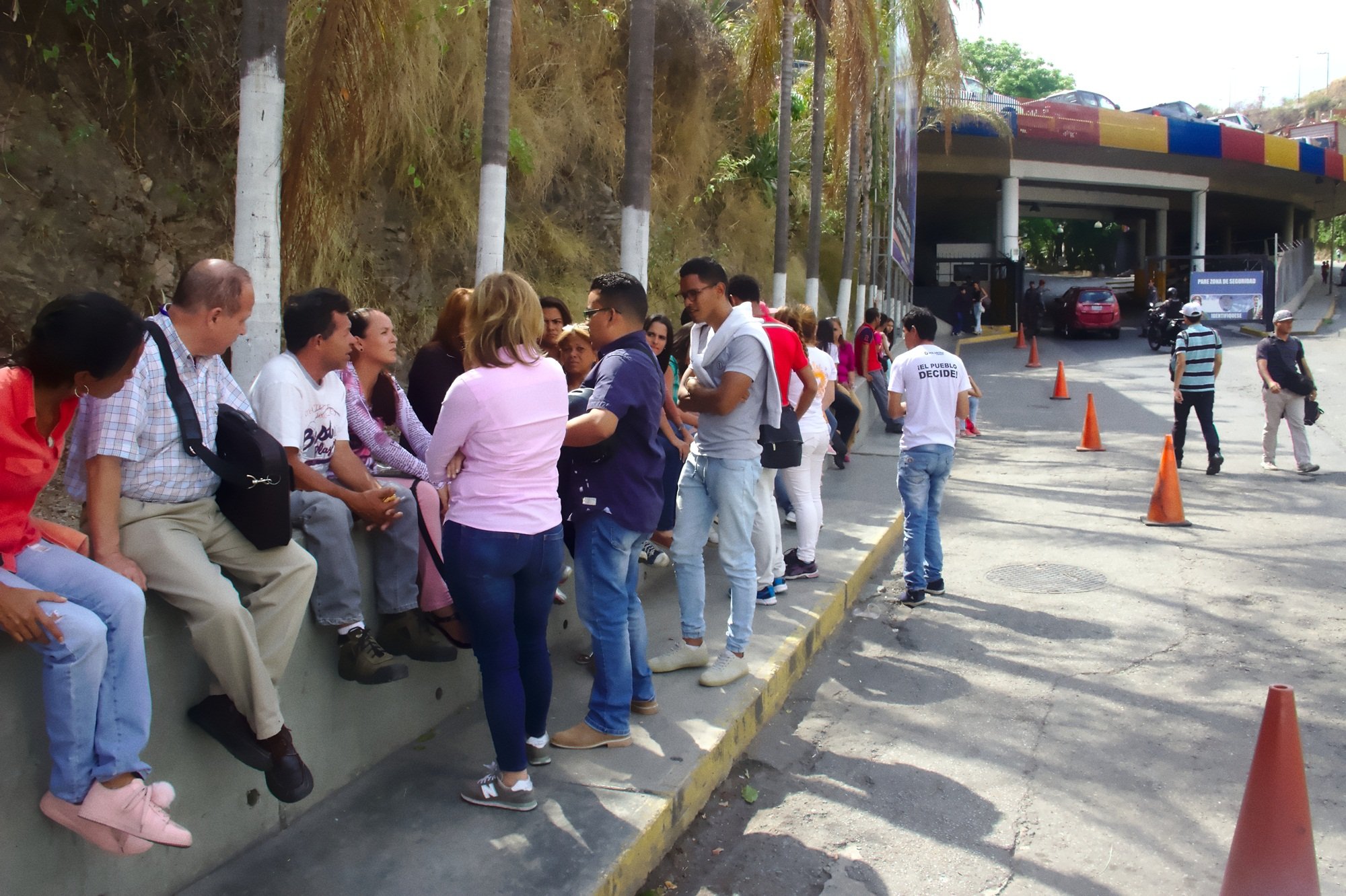
Relatives of detainees wait outside El Helicoide, an intelligence-service detention center in Caracas, on May 19, 2018. El Helicoide is not one of the prisons named in the indictment. (Photo by Provea, public domain, via Wikimedia Commons)
An Alleged Torturer Was Still on Duty After Maduro Fell
The last American in the indictment is Victim-9, arrested by DGCIM on Jan. 29, 2025, after officers came to his home looking for someone else. Prosecutors say he was hooded and beaten in the face, head and stomach about every half hour for two days, leaving permanent damage to one eye. He spent about a year in custody.
Then comes the date that should get Washington's attention. On or about Jan. 15, 2026, Victim-9 was driven to the airport for release. "There, Victim-9 and other Americans met CC-3," the indictment says, "who threatened them, saying they were not allowed to say the Venezuelan government had hurt them." U.S. forces had captured Maduro on Jan. 3. So by the government's own timeline, the official accused of ordering the torture of Victim-8 and taunting Victim-7 was still in a position of authority under the new "interim authorities" twelve days later.
That week, the State Department welcomed the releases as "an important step in the right direction by the interim authorities," as reported by the Anchorage Daily News. Those authorities are led by Delcy Rodríguez, Maduro's own former vice president.
Who Are CC-1, CC-2 and CC-3?
The indictment does not say, and only two people are charged in it. CC-1 is described as a high-level official who ordered murders and threatened to kill a prisoner's young child. CC-2 allegedly designed torture methods and presented them to Maduro for approval. CC-3 reported to CC-2 and appears in the accounts of all three Americans described in the indictment.
Prosecutors use co-conspirator labels when people have not been charged in the filing, and CBS News reported that Maduro and 14 others were first indicted in this case in 2020. Reuters, via The Star, reported before the filing that investigators had also discussed charging several additional people. Any official still serving in Caracas should read that as a warning.
What Happens Next
At a hearing Thursday, Judge Hellerstein denied bail to Flores and allowed her arraignment on the new indictment to be delayed because her lawyers had received it only that morning, CBS News reported. Neither defendant has entered a plea to the new charge. Trial is set for June 1, 2027, The Times of Israel reported.
For years, Americans were told that bringing citizens home from Caracas required deals, and every deal handed the regime something it wanted. Now a U.S. grand jury has alleged that the arrests were the business model. The next test is whether CC-3 and the men above him answer for it, or simply keep working for whoever runs Venezuela now.
Top photo: Nicolás Maduro and Cilia Flores at a December 2016 tribute to the late Hugo Chávez. (Photo by Eneas De Troya, CC BY 2.0, via Wikimedia Commons)