A federal judge in Manhattan voided the State Department's immigrant visa ban covering 75 countries, ruling Marco Rubio had no power to order it. Judge Jeannette A. Vargas ruled Friday, and she also set aside every visa refusal issued under the policy since January.
The loss is real. It is also narrower than most of the coverage makes it sound. Read all 61 pages of the opinion and the administration lost on the mechanism it chose while winning, in writing, on the thing immigration hawks actually care about.
What Rubio's January cable told consular officers to do
On January 14, the State Department announced that starting January 21 it would stop issuing immigrant visas to nationals of 75 countries it judged to be at high risk of becoming a public charge. Fox News Digital saw the memo first. The list ran to Somalia, Russia, Afghanistan, Brazil, Iran, Iraq, Egypt, Nigeria, Thailand, Yemen and dozens more, which Vargas calculated at nearly 40 percent of the world's countries.
"The State Department will use its long-standing authority to deem ineligible potential immigrants who would become a public charge on the United States and exploit the generosity of the American people," department spokesman Tommy Piggott said at the time. The same day, Rubio sent a cable to every diplomatic and consular post telling officers how to carry it out.
That cable is what sank the policy. It did not tell officers to skip the interview. It told them to run the full individualized public charge assessment, and then refuse the applicant anyway under Section 221(g) of the Immigration and Nationality Act, the provision codified at 8 U.S.C. 1201(g). It went further. Where a visa had already been approved but the printed document had not yet left the consulate, officers were told to reopen the case, refuse it under 221(g), and inform the applicant that "additional administrative processing is necessary to determine their eligibility for a visa under U.S. law."
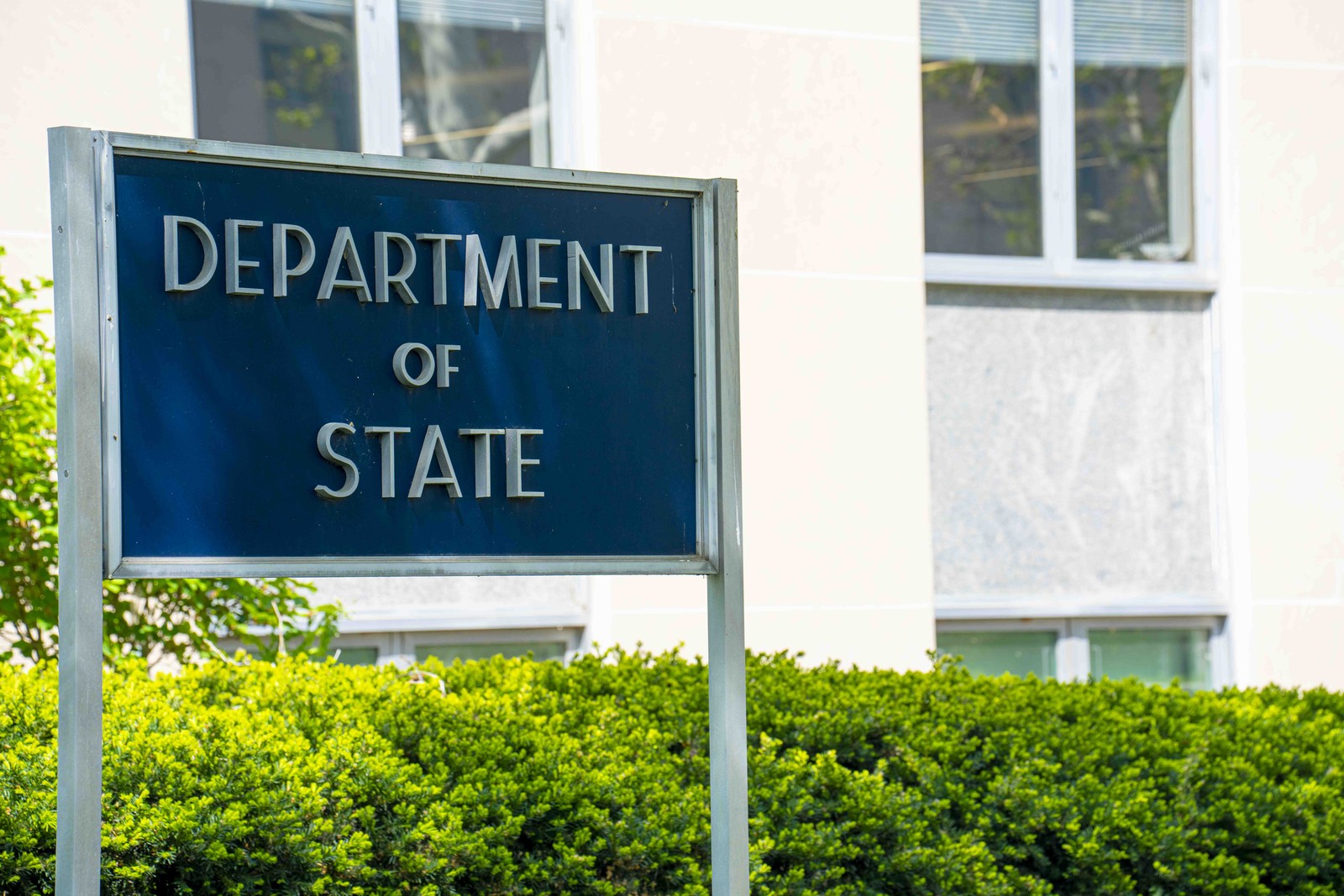
The Harry S. Truman Building in Washington, headquarters of the State Department, in a file photo taken in the spring of 2024. The January 14 announcement and Rubio's implementing cable both originated here. (Official State Department photo by Linda D. Epstein, via Wikimedia Commons, public domain)
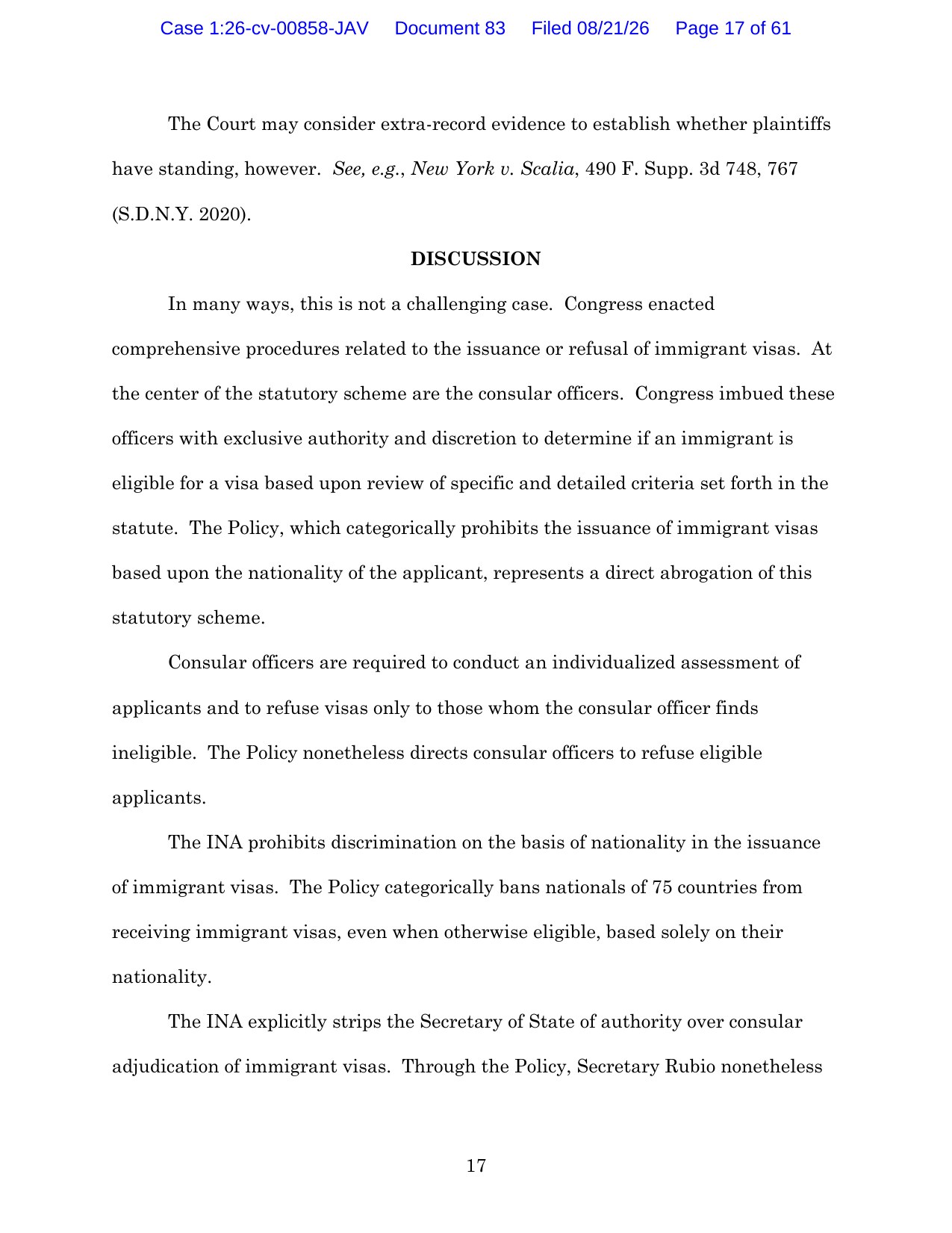
Vargas quoted that sequence back and drew the obvious conclusion. "While the Policy permits consular officers to exercise their normal functions up to a point, whatever determinations they make as to eligibility for the applicants subject to the Policy are ultimately irrelevant," she wrote. "The outcome is predetermined. The visa will be refused."
She did not rule that public charge screening is illegal
This is the part getting lost, and it cuts the other way. The plaintiffs asked Vargas to hold that the policy violated 8 U.S.C. 1182(a)(4), the public charge ground of inadmissibility itself. She refused.
"While the Court agrees that the Policy is contrary to law, as discussed infra, it is not because the Policy contravenes Section 1182(a)(4)," she wrote. "The Policy neither directs consular officers to forgo the individualized assessment required by Section 1182(a)(4) nor instructs them to categorically refuse immigrant visas on public-charge grounds."
She also entered judgment for the government on Count Three, the claim that the State Department had to put the policy through public notice and comment before imposing it. Her conclusion there was flat: the policy "does not qualify as a legislative rule subject to the APA's notice-and-comment requirement." So the screening tool survives, and so does the department's power to tighten it without a rulemaking. What died is the country list.
How the 75 countries got on the list
The list was not improvised. According to the administrative record described in the opinion, State built it from Council of Economic Advisers figures calculating the share of immigrant households from each country of origin receiving some form of public assistance. Every nation above 30 percent went on the list, with certain countries left off for foreign policy reasons. Somalia drew particular scrutiny after the Minnesota child care fraud prosecutions. And the suspension did not arrive alone: Al Jazeera notes it followed a travel ban covering 39 countries that took effect January 1 and a pause on diversity visa issuance in late December.
Vargas never calls those numbers wrong. She does not have to. Her problem is 8 U.S.C. 1152(a)(1)(A), which says no person "shall receive any preference or priority or be discriminated against in the issuance of an immigrant visa because of the person's race, sex, nationality, place of birth, or place of residence." Congress wrote that in 1965 and never carved out a fiscal exception. Once nationality is the operative filter, the quality of the statistics behind it stops mattering.
A second statute compounds it. 8 U.S.C. 1104(a) hands the Secretary of State authority over consular officers "except those powers, duties, and functions conferred upon the consular officers relating to the granting or refusal of visas." Congress carved the visa decision out of his job description on purpose.
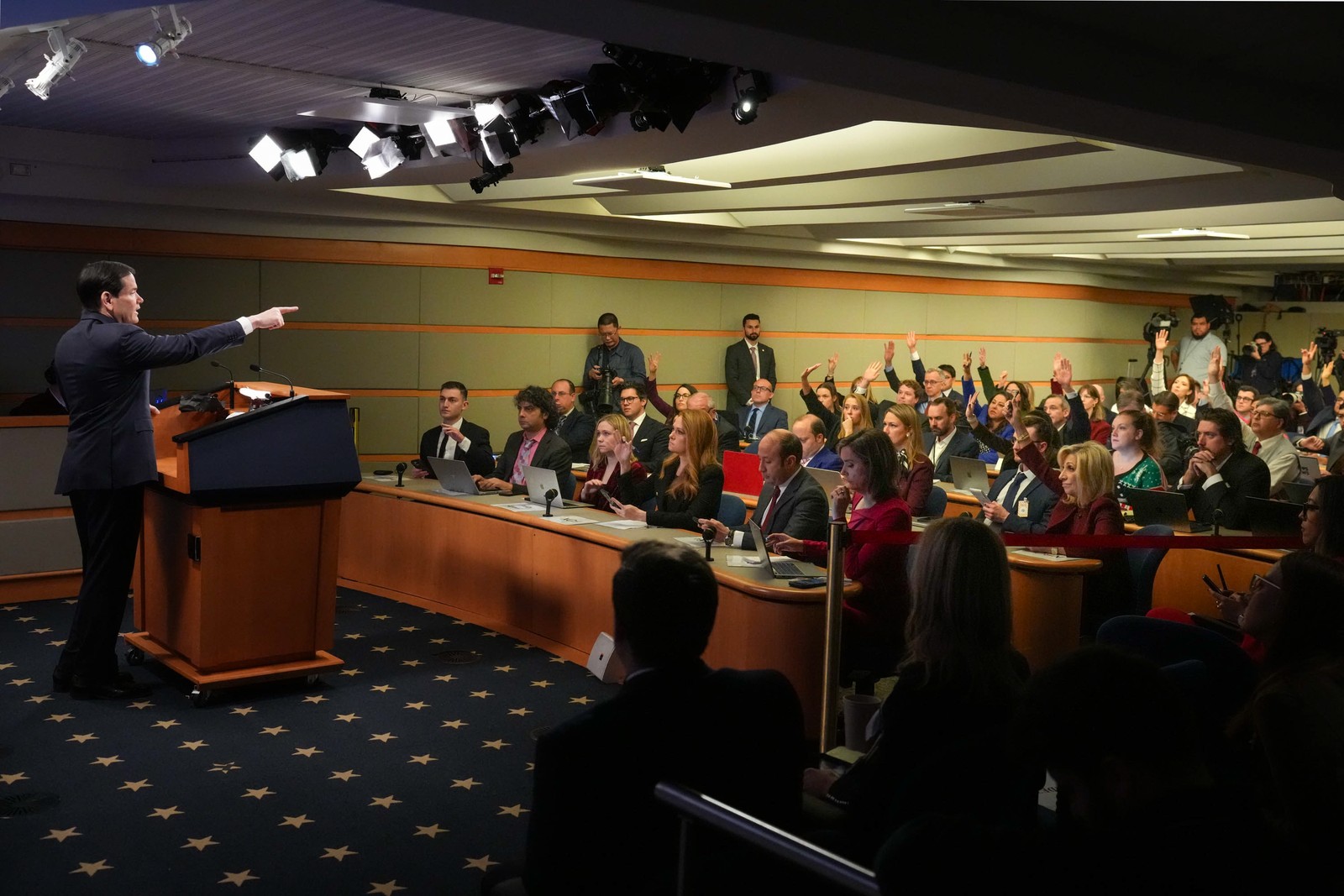
Secretary of State Marco Rubio takes questions in the State Department press briefing room on December 19, 2025, about a month before the visa suspension was announced. A department spokesperson has declined to comment on the ruling beyond a written statement. (Official State Department photo by Freddie Everett, via Wikimedia Commons, public domain)
Where Trump v. Hawaii stopped working
The government's strongest card was the 2018 Supreme Court decision upholding the first-term travel ban. That case beat back a challenge under the same anti-discrimination statute. Vargas distinguished it in two sentences, and the distinction is a fair reading of what the Court actually said: Hawaii rested on "the distinction between admissibility, to which Section 1152(a)(1)(A) does not apply, and visa issuance, to which it does." Then: "There is no question that the Policy at issue here regulates visa issuance."
The fallback argument was that the refusals were lawful because officers formally entered them under an existing statutory authority, Section 221(g). Vargas answered that the government "engages in what is best described as an exercise in Orwellian logic," noting it had never identified any provision of law permitting an officer to refuse a visa to an applicant already found eligible. Worth being precise, since the headlines have blurred it: Fox put the word "Orwellian" on the visa freeze. Vargas put it on the government's own briefing.
What has not happened yet
Almost everything. The public docket shows Document 83 as the last entry. No notice of appeal has been filed. The partial judgment she directed the Clerk to enter under Rule 54(b) has not posted either, and the government's appeal clock to the Second Circuit runs from that entry. Six of the nine original claims are still live, and she ordered both sides to file a joint letter by September 11 proposing how to handle them.
The department's public response ran two clauses. A spokesperson told NPR the administration is "protecting the American people by upholding the highest standards of screening and vetting of visa applicants" and does not comment on ongoing litigation. Nobody at State has said publicly how the vacated refusals get re-adjudicated, or when. The plaintiffs were louder. The National Immigration Law Center called the ruling "a major victory for families, fairness, and the rule of law."
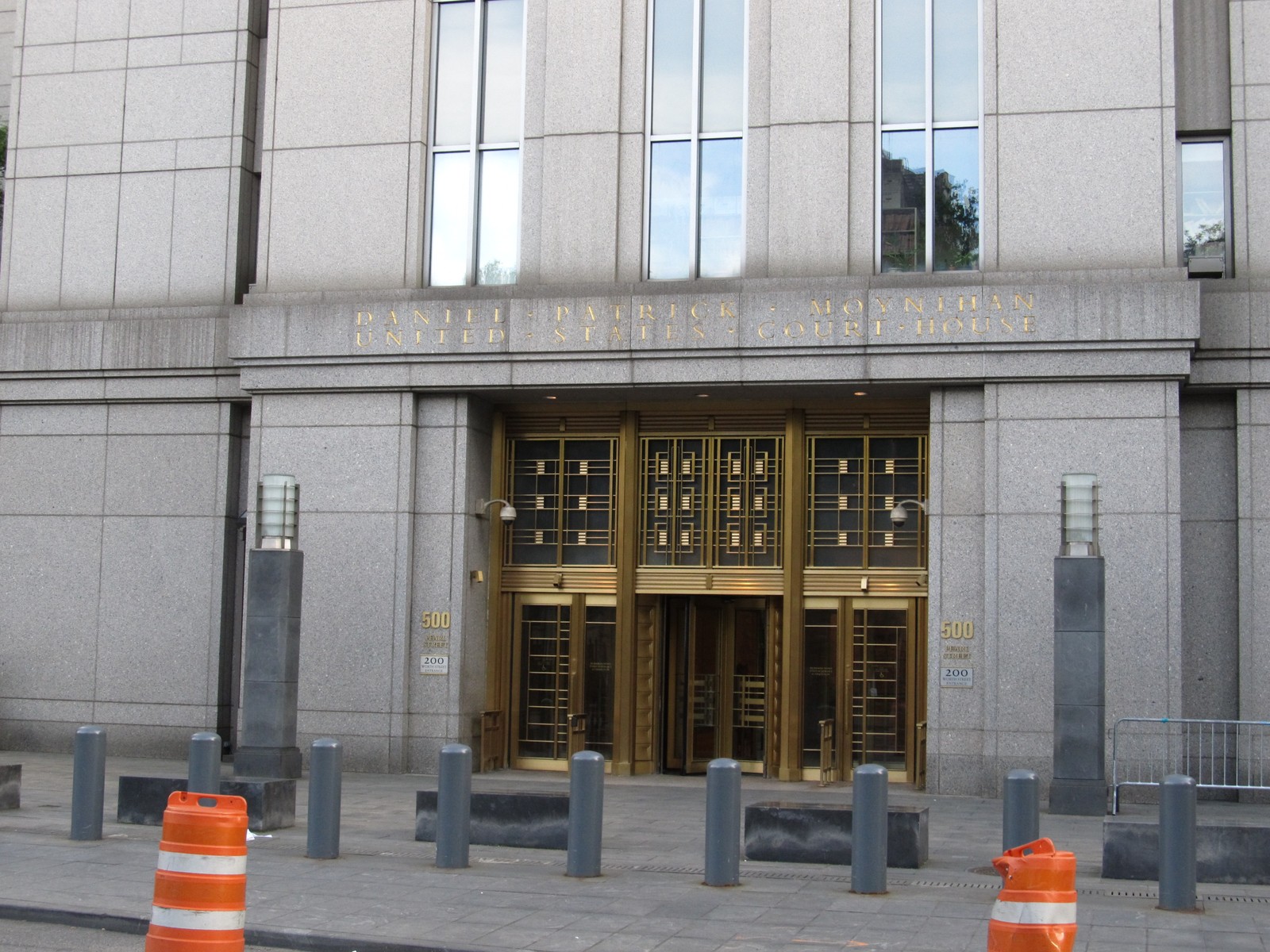
The Daniel Patrick Moynihan United States Courthouse at 500 Pearl Street in lower Manhattan, home of the U.S. District Court for the Southern District of New York, in a file photo from May 2012. Judge Vargas, an appointee of former President Joe Biden, issued the opinion here on August 21. (Photo by Ken Lund via Wikimedia Commons, CC BY-SA 2.0)
The administration already has a cleaner path, and it is walking it
Three days before Vargas ruled, the administration issued fresh public charge guidance directing officers to weigh each applicant's age, health, family status, assets, finances, education and skills. Daniel Di Martino of the Manhattan Institute, himself a Venezuelan immigrant, told Townhall that requiring immigrants to prove they will not depend on the government is "eminently reasonable, but no administration until the Trump administration has actually implemented this rule." The Milton Friedman line behind that argument is harder to answer than any country list: you cannot simultaneously have a welfare state and free immigration.
That guidance is applicant-by-applicant, which is precisely the structure Vargas says the statute requires. It was not in front of her and her order does not touch it. The second route runs through the White House rather than Foggy Bottom, because her holding turns on two things: a Secretary reaching into a decision Congress assigned to consular officers, and a rule aimed at visa issuance instead of entry. A presidential proclamation restricting entry is a different instrument with different precedent behind it, and Trump v. Hawaii is still good law.
Compare the other direction courts have moved this year. On August 20 we covered a federal judge in Massachusetts lifting the last stay on the administration's Temporary Protected Status terminations, putting every one of them into effect at once. Same agenda, opposite result, and the difference was not the politics of the judge. It was whether the administration used the instrument Congress actually gave it.
Immigration hawks lost a country list on Friday. They did not lose the public charge standard, and the judge who struck the list down said so on the record. Whether the administration treats those 61 pages as a defeat or as a set of drafting instructions is the only question worth watching between now and September 11.