A federal judge in Manhattan has wiped out ICE's 2025 rules for arrests at immigration courts, and headlines are calling it a nationwide ban. Read the 36-page opinion and the picture changes. The Trump administration lost on a paperwork error its own lawyers confessed to in March, it won the bigger legal fight, and the judge spelled out what ICE has to do to get the policy back.
What Judge Castel Actually Ordered
U.S. District Judge P. Kevin Castel, a George W. Bush appointee in the Southern District of New York, ruled in African Communities Together v. Venturella, No. 25-cv-6366. The named defendants are acting ICE chief David Venturella, DHS Secretary Markwayne Mullin, immigration court director Sirce Owen and Attorney General Todd Blanche. The opinion vacates ICE's January 2025 interim guidance and its May 2025 final guidance "to the extent they purport to rescind the April 2021 Guidance as applied to civil enforcement actions in or near immigration courts."
In plain English, the Biden-era memo of April 27, 2021 is back in force for immigration courthouses. That is narrower than much of the coverage suggests. Courthouse News and Newsweek both reported the ruling as coming down Thursday, Oct. 1. The opinion itself is dated and stamped filed Wednesday, Sept. 30.
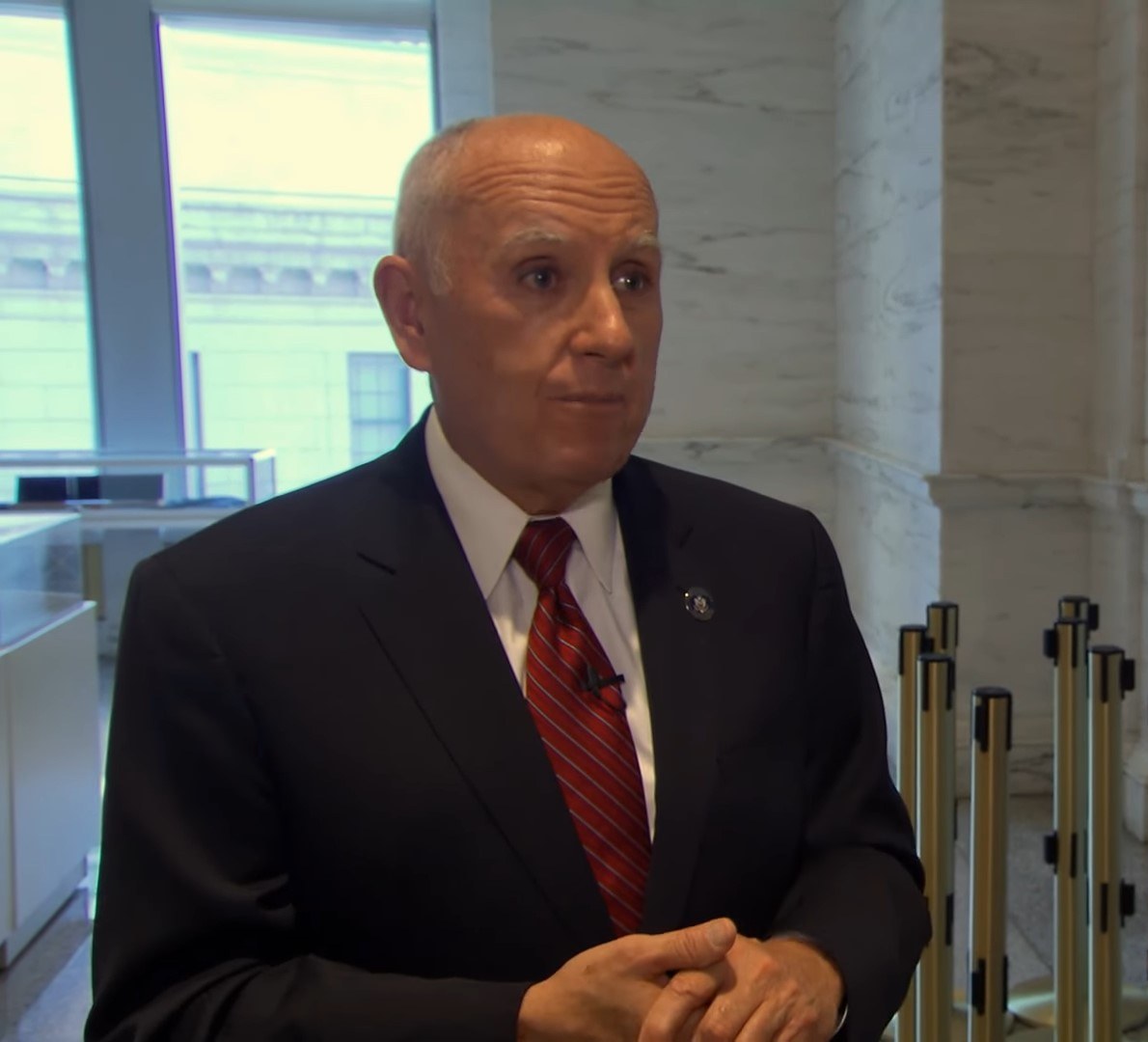
U.S. District Judge P. Kevin Castel of the Southern District of New York, a George W. Bush appointee. (Administrative Office of the U.S. Courts, public domain, via Wikimedia Commons)
The Headlines Overshot on "Nationwide Ban"
Hoodline wrote that Castel "permanently barred" ICE from arresting immigrants in or near immigration courthouses "anywhere in the country." Newsweek said ICE "could not continue to detain people at immigration court anywhere in the country." The Washington Examiner went the other way, summarizing the ruling as ICE not being "permitted inside courthouses in New York City."
None of those lines matches the order. Vacatur of a federal policy is not limited to New York, so the geography is national. But nothing in the opinion bans courthouse arrests outright. It restores a memo that allows them, under rules.
Here is what the 2021 memo permits, as quoted on page 22. ICE may act in or near a courthouse if "(1) it involves a national security threat, or (2) there is an imminent risk of death, violence, or physical harm to any person, or (3) it involves hot pursuit of an individual who poses a threat to public safety, or (4) there is an imminent risk of destruction of evidence material to a criminal case." A public-safety threat can also be arrested without hot pursuit, if no safe alternative location exists and a designated supervisor signs off in advance. Gang members and violent criminals were never off the table. What goes away is the 2025 rule letting officers pick up "family members or friends accompanying the target alien."
ICE's Own Lawyers Handed Castel This Case
This is the part most coverage skims. Castel originally sided with ICE. In September 2025, he refused to block the courthouse arrest policy, because the government told him the May 2025 memo covered immigration courts and explained the change.
Then, on March 24, 2026, two Assistant U.S. Attorneys wrote to the court that ICE "had informed them that day" that the 2025 policy "never applied to arrests at or near immigration courts." The opinion notes that the government lawyers "acknowledged that they had, in consultation with ICE, embraced a contrary position throughout the litigation." According to Newsweek, the U.S. Attorney for the Southern District of New York wrote that the Justice Department deeply regretted the error.
That reversal sank the government's case. If the 2025 memos never covered immigration courts, ICE had cancelled the 2021 rules for those courts and replaced them with nothing. Castel wrote that ICE's policy had become "unfettered discretion . . . with no guidance whatsoever." He also wrote that "the most likely explanation" for the silence in the record is that the 2026 position "was a recent invention and not the intent at the time of the issuance of the 2025 Policies."
Official record
African Communities Together v. Venturella, No. 1:25-cv-06366-PKC (S.D.N.Y.), Opinion and Order, Document 110, filed Sept. 30, 2026 (36 pages), as published by Courthouse News.
"Defendants do not defend the policy against these attacks and their briefs are silent as to whether the policy is arbitrary and capricious."
Judge P. Kevin Castel, page 29
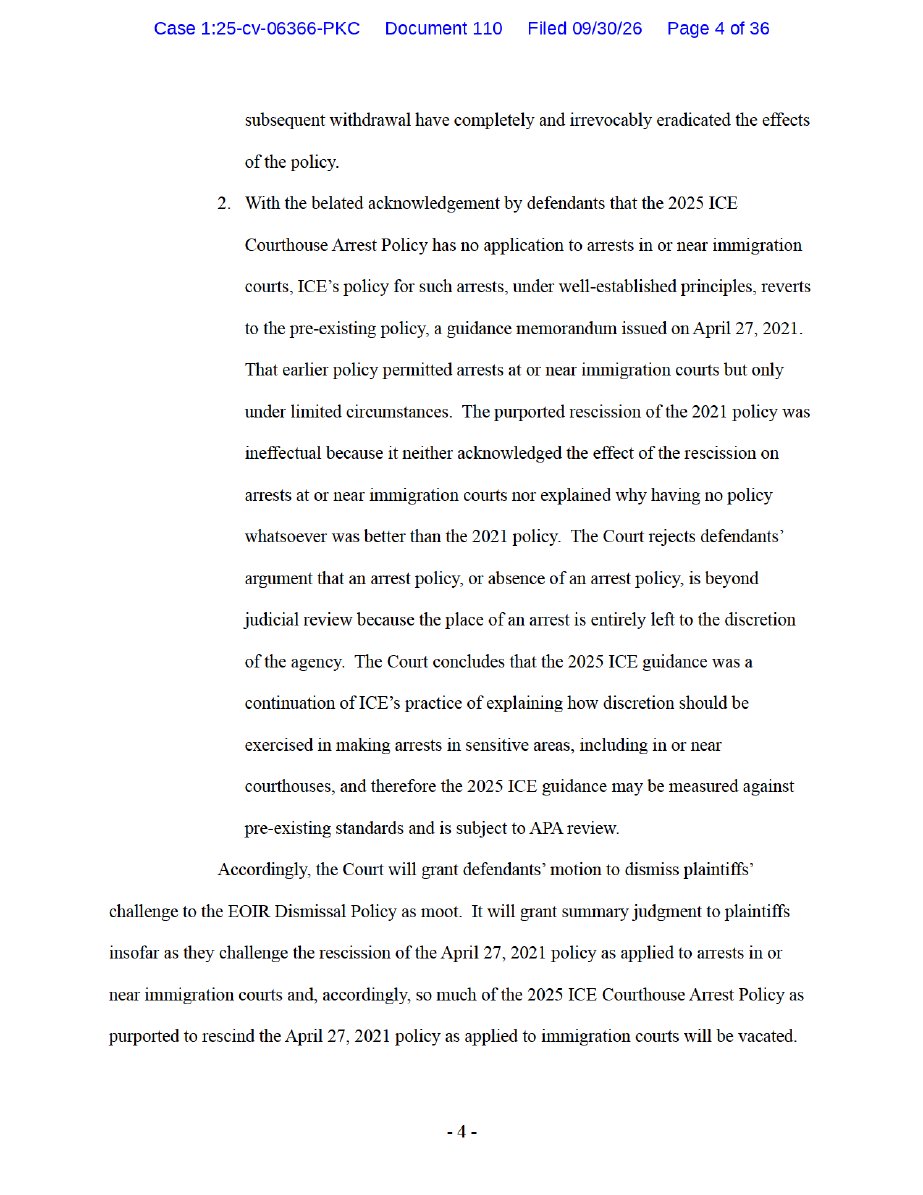
Read or download the full 36-page opinion (PDF)
The Government Won the Bigger Legal Fight
The activist groups behind the suit, African Communities Together and The Door, brought five counts. They won one. The judge entered judgment for the government on Count II, the claim that the policy was "contrary to law," and dismissed Counts III, IV and V as moot.
Count II carried their most ambitious theory: that an old common-law privilege against civil arrests at courthouses is built into the Immigration and Nationality Act. Had that theory won, any courthouse arrest policy could be attacked as illegal, no matter how well ICE explained it. Castel rejected it again. He "abides by its prior determination that plaintiffs have not shown that there was a common law privilege against arrest by the sovereign at courthouses that was incorporated in the INA." Footnote 7 says the groups only restated the argument "to preserve them for appeal."
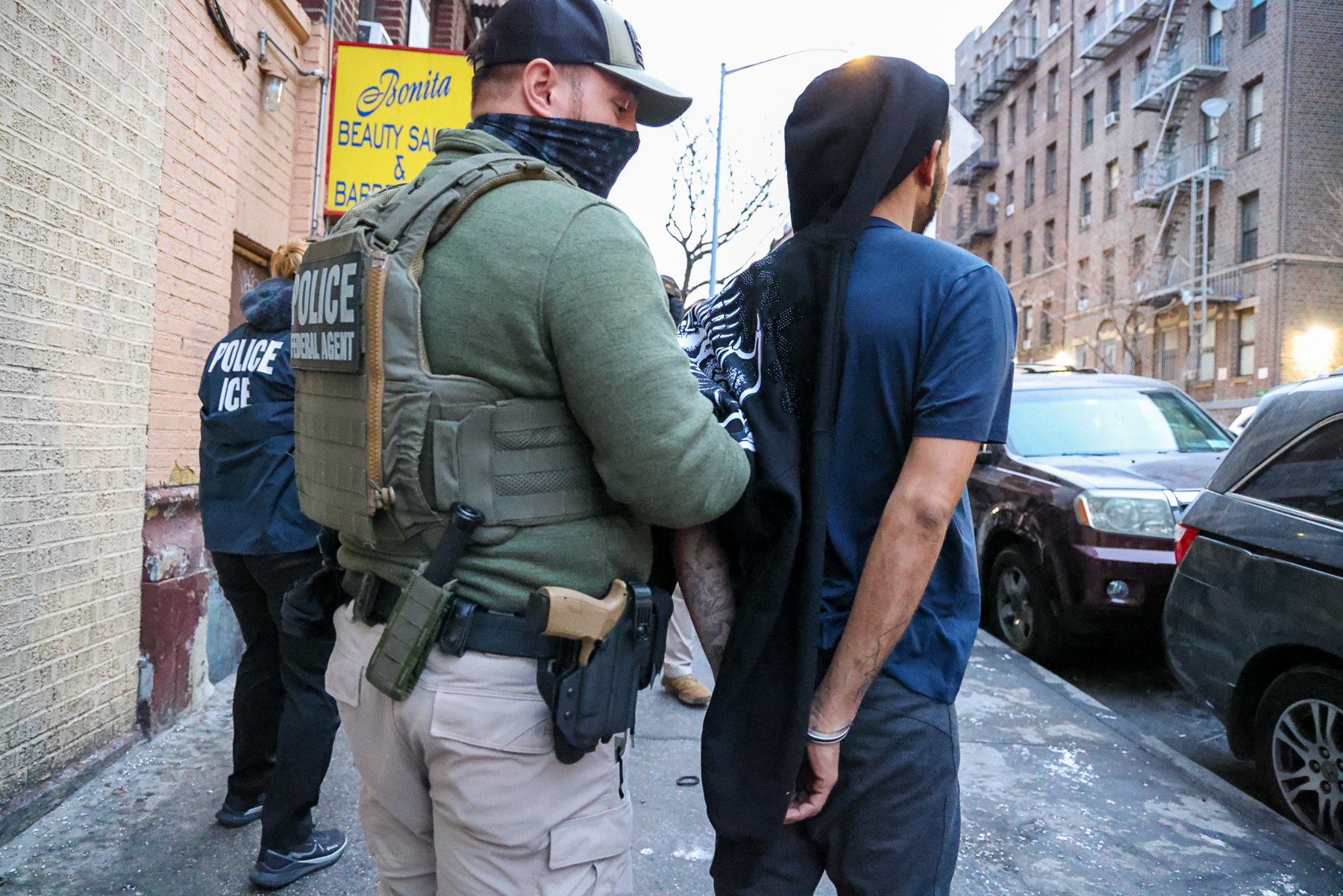
ICE officers with the New York City Fugitive Operations Team during a targeted enforcement operation, Jan. 28, 2025. (U.S. Immigration and Customs Enforcement, public domain, via Wikimedia Commons)
The immigration court half of the case died too. In May 2025, an email from two acting regional deputy chief immigration judges told judges that DHS motions to dismiss "may be made orally and decided from the bench." Plaintiffs said that let DHS drop a case on the spot so ICE could arrest the person in the hallway and move them to expedited removal. The immigration court office withdrew the email on Sept. 23, 2025, calling it "poorly drafted." Castel held the claims moot and noted the withdrawal reached further than his own stay, which covered only Manhattan and the Bronx.
Why One Memo Could Fix This for ICE
Castel did not rule that ICE lacks power to arrest people at immigration courts. Federal law gives officers power to arrest an alien without a warrant "if he has reason to believe" the person is here illegally and "is likely to escape," and the opinion quotes that statute. The defect is procedural. Under the Administrative Procedure Act, an agency that changes course has to admit it is changing course and say why.
The opinion quotes the Supreme Court's test directly: "Agencies are free to change their existing policies as long as they provide a reasoned explanation for the change." The 55-page administrative record ICE filed did not do that. According to the opinion, "the only document in the administrative record that expressly mentions immigration courts is the April 2021 Guidance."
So the road back is short. A new ICE memo that names immigration courts, acknowledges it is replacing the 2021 limits, and weighs the concerns the 2021 memo raised would be a new agency action, judged on its own record. Nothing in the opinion says ICE has written that memo yet, more than six months after its lawyers told the court the old one never applied.
The Bigger Fight Is Over One Judge Setting National Policy
The Justice Department argued that vacatur for everyone, not just the two plaintiff groups, works like the universal injunctions the Supreme Court curbed in Trump v. CASA in 2025. Castel conceded the point has force. "It certainly could be that vacatur of agency action raises the same concerns as nationwide injunctions," he wrote, quoting Justice Gorsuch's warning that vacatur can "lead to forum shopping."
He went ahead anyway, citing Second Circuit precedent and a footnote in CASA saying the Court had not resolved whether the APA lets courts vacate agency action. He wrote that he "is bound to follow" circuit law and left any change to the Second Circuit and the Supreme Court. That is an open invitation for the administration to take the question up.
It is also not the first such order. On June 23, Judge P. Casey Pitts in San Francisco vacated the same 2025 guidance in Pablo Sequen v. Albarran, a 71-page ruling that also applied nationwide. DOJ argued Castel's order would "create friction" with Pitts'. Castel wrote that the government offered "no support for the proposition that two overlapping vacatur orders may not co-exist."
What Happens Next
Courthouse News reported that arrests at Manhattan's immigration courts slowed sharply after Castel's May stay but did not stop, including at least one arrest the government said fit the 2021 exceptions. That pattern should hold. Officers can still take dangerous targets under the 2021 limits, while the routine hallway pickups seen at 26 Federal Plaza in 2025 stay off the table.
Newsweek said it had asked DHS for comment, and Courthouse News said DHS had not responded. We found no public DHS statement on the ruling as of Sunday morning. The administration now has two paths, and it can take both: appeal to the Second Circuit on the vacatur question, and write the reasoned memo Castel said was missing. The second one is entirely within ICE's control.
Top photo: The Jacob K. Javits Federal Building at 26 Federal Plaza in Manhattan, home to the immigration courts at the center of the case, photographed in 2012. (Photo: Ken Lund, CC BY-SA 2.0, via Wikimedia Commons)