U.S. Central Command told the world Thursday that America and its regional partners "control the strait" of Hormuz, with "more than 40 ships moving in the last 24 hours." A coalition shipping advisory published hours earlier tells a messier story: eight projectile strikes on merchant ships in two days, a container ship sunk, and U.S.-assisted traffic running at roughly a fifth of normal.
What CENTCOM actually claimed
The statement was a post on X headed "Three FALSE Iranian claims in the past 24 hours." The first fact-check reads: "The United States and regional partners control the strait as commercial vessels continue to transit despite unwarranted IRGC aggression."
The second is the strongest part of CENTCOM's case. The Iranian Revolutionary Guard said the Singapore-flagged container ship GFS Pride hit a naval mine. CENTCOM says it "was hit by an IRGC projectile" and sank while under tow. The independent advisory sides with CENTCOM on that point: it says of the Guard's mine story, "there is no substantiation to this claim."
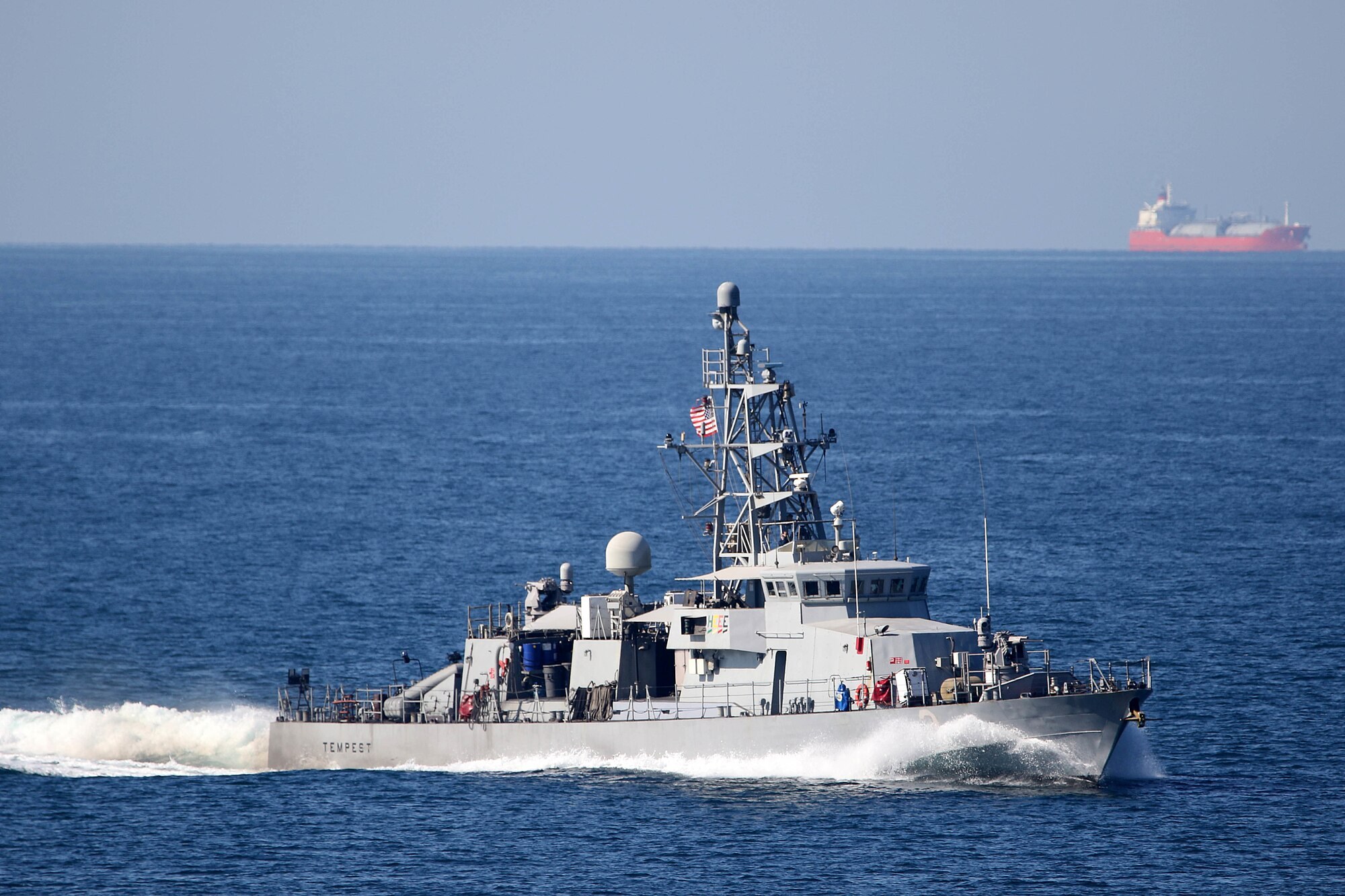
File photo: the coastal patrol ship USS Tempest in the Strait of Hormuz, December 2, 2020. Photo: U.S. Navy, via Wikimedia Commons, public domain.
What the advisory counted
The document is Update 105 to the Joint Maritime Information Center advisory, covering March 1 through October 15, and it is hosted by UKMTO, a maritime security reporting office. Every page is stamped DRAFT. It counts 121 U.S.-facilitated Hormuz transits from October 11 to 14. That is about 30 a day, against a 2025 baseline of about 138 a day, or roughly 22 percent of normal, as gCaptain worked out.
Ships outside the U.S.-assisted flow barely show up. The advisory's tracking data, which covers cargo-carrying vessels over 1,000 deadweight tons and leaves out ships calling Iranian ports, logged 19 cargo-vessel transits and 8 tanker transits across the seven days from October 8 to 14. The advisory calls the picture "single-digit numbers transiting in both directions."
Are CENTCOM's 40 and the advisory's 30 a contradiction? Not necessarily. CENTCOM's number covers a different 24 hours and may reflect a bump in traffic, and the two sources use different methods. But "more than 40" does not describe a strait running at normal volume, and the advisory does not use the word "control."
Official record
Joint Maritime Information Center, Update 105 to JMIC Advisory Note, 01 March to 15 October 2026 (draft, information cut-off 1513 UTC, October 15). Twelve pages. Also: CENTCOM's October 15 post on X.
"The threat level remains SEVERE, with deliberate attacks considered highly likely under current conditions." — JMIC Update 105, Section 5B, Strait of Hormuz outlook
Eight strikes in two days
The advisory logs four unknown-projectile strikes on October 11 and four more on October 13 inside the strait: AL MAQAM, DP WORLD KAVERI, KITION M and EVER VICT on the 11th, then GFS PRIDE, GFS GISELLE, AL SAADIYAT and one unnamed tanker on the 13th. Most kept sailing. GFS Pride did not. It caught fire, drifted and sank on October 14, and the advisory says all crew were evacuated with no injuries.
Outside the strait, the products tanker PETRO DOLPHIN was struck by a drone off Sohar, Oman, on October 11. The advisory relays the Indian Ministry of External Affairs saying two crew members were missing. The advisory counts 149 confirmed incidents since March 1.
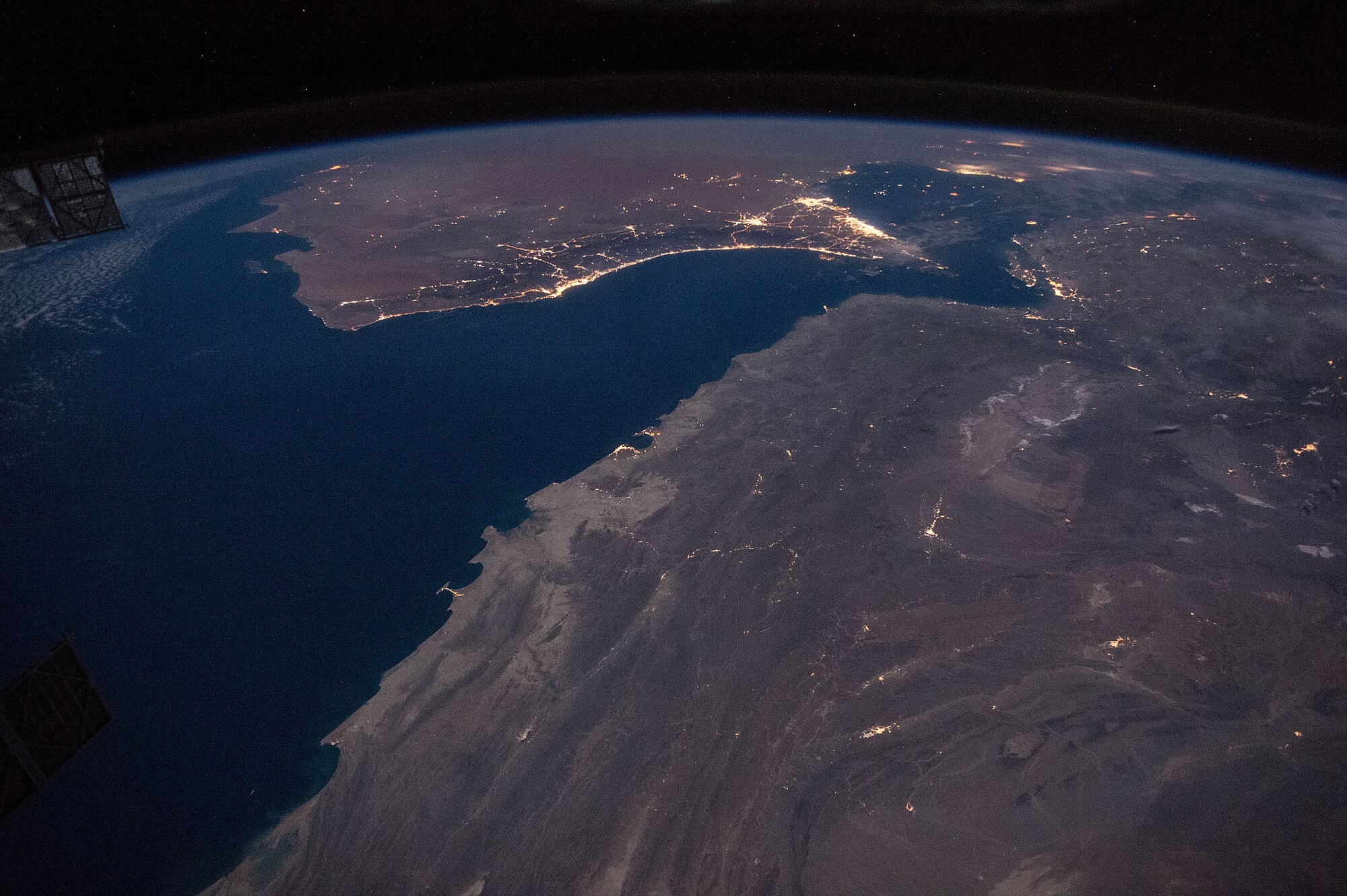
The Gulf of Oman and the Strait of Hormuz at night from the International Space Station, January 23, 2016. Photo: NASA/Tim Kopra, via Wikimedia Commons, public domain.
Who is steering the ships
One sentence in the outlook section is worth reading twice: "Vessels transiting with AIS-on can expect elevated targeting risk and receive directed hails instructing them to divert toward the northern Iranian-controlled route." That is the coalition's own wording for what the Guard is telling ships over the radio.
Meanwhile, about 430 ships are sitting at anchor outside the strait: roughly 180 off Fujairah and Khor Fakkan, 178 between Dubai and Ras Al Khaimah, and 74 near Musandam and Sohar, per the advisory. The U.S. blockade of Iranian ports continues too. Citing CENTCOM's latest figures, from October 10 and 11, the advisory says 135 commercial vessels had been redirected and four disabled.
The number to watch
Nobody serious doubts who is shooting at merchant ships here. The Guard is, and U.S.-assisted ships make up most of what is moving. CENTCOM is right to call out Tehran's mine story, and the advisory backs it up.
But "control" is a claim that can be tested, and the test is simple: how many ships go through each day compared with the 138 that did before the war. Right now the answer in the one document that publishes the count is about 30, with a threat level the same document keeps at SEVERE. Until that gap closes, the claim and the count will keep telling different stories.
Not confirmed: CENTCOM has not published its own day-by-day transit numbers, so its "more than 40" figure cannot be checked against a table. The advisory is a draft.
Top photo: U.S. Navy ships transit the Strait of Hormuz, a May 2012 file photo (MC3 Alex R. Forster, U.S. Navy, public domain, Wikimedia Commons). It does not show current events.