Consumer prices rose 3.7% in September from a year ago, up from 3.4% in August, and gasoline did most of the damage. The Labor Department says a 9.1% one-month jump in pump prices accounted for over half of the monthly increase. White House economic chief Kevin Hassett calls the surge "temporary." Paychecks are already feeling it, with real hourly earnings down 0.5% in a single month.
What Did the September Inflation Report Actually Show?
The Bureau of Labor Statistics reported Wednesday that its all-items index rose 0.6% in September, and 3.7% over the 12 months ending in September. Kiplinger's preview put economists' expectation at 3.6%. The AP, via PBS NewsHour, called the monthly gain the biggest in five months.
Energy was the story. The BLS says the energy index rose 5.2% in September after a 2.1% rise in August, and the gasoline index rose 9.1% in the month. Over the full year, gasoline is up 34.2% and energy overall is up 20.4%. AAA put the national average at $4.36 a gallon on Oct. 12 and said this is the first year the national average has topped $4 in October.
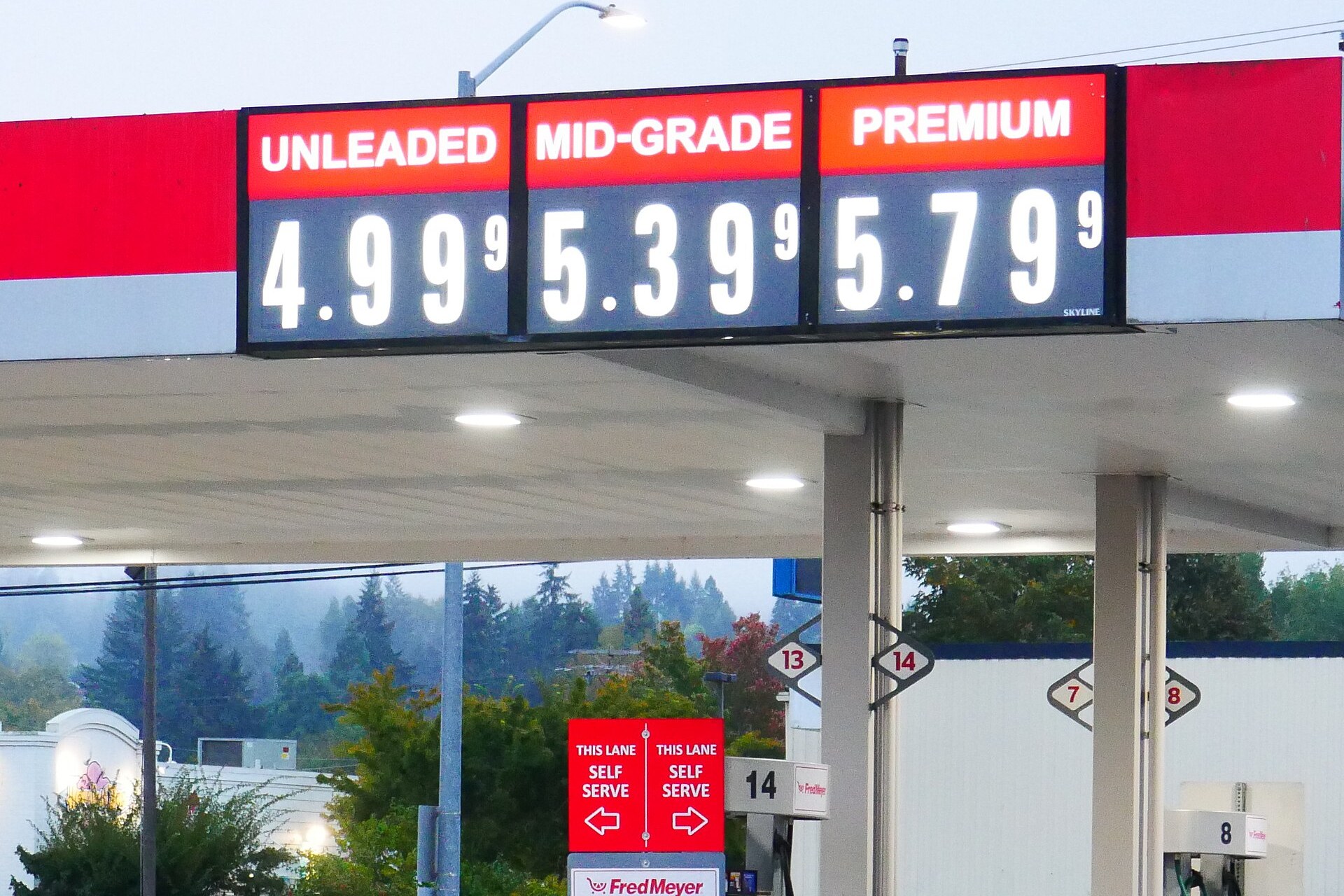
Fuel prices at a station on Sept. 26, 2026, listed on Wikimedia Commons as Eugene, Oregon. Prices vary widely by state. (Photo by Rick Obst via Wikimedia Commons, CC BY 4.0)
Is the Energy Surge Really "Temporary"?
Hassett, who directs the National Economic Council, told NewsNation minutes after the numbers came out: "The top line number was driven by a surge in energy prices, which we believe will be temporary. But there's a whole bunch of good news in the report." Yahoo Finance reported the exchange, and he added that the effort on food and drug prices "is going to motor through."
There is real evidence for his case. AP reports the national average has eased over the past two weeks to $4.33. That is only three cents under AAA's Oct. 12 figure, and it is still above where it stood a month ago. "Temporary" only helps a family if prices fall back, and a 34.2% annual climb is a long way to fall.

Kevin Hassett, now director of the National Economic Council, in an official White House portrait from his earlier service as Council of Economic Advisers chair. (Executive Office of the President, public domain, via Wikimedia Commons)
The cause is not a mystery. Axios attributes the rise to the Middle East war's toll on global fuel supplies, and notes the administration has already eased tax-exempt diesel rules and lifted some sanctions on Russian fuel to add supply. Kiplinger's David Payne expects annual CPI to finish the year near 4%, so even friendly forecasters are not betting on a quick reversal.
Where Hassett Has a Point
Strip out food and energy and the picture changes. Core inflation rose 0.3% in the month and 2.6% over the year, up from 2.4% in August. That is 1.1 points below the headline number, and nearly all of that gap is fuel.
Food prices were unchanged in September, the BLS says. Hassett's other examples, as Benzinga reported, were a 0.1% dip in grocery prices and a 1.2% drop in prescription drug prices. Those are the household bills that do not move with a barrel of oil.
The soft spots are still there. Shelter rose 0.4% in the month, airline fares are up about 22% on the year, and AP notes that Nintendo raised the Switch 2 to $499.99 while PepsiCo says it will lift snack and soda prices to cover fuel, aluminum and ingredient costs.
What Does This Do to a Paycheck and to Interest Rates?
The BLS real earnings release, issued the same morning, says real average hourly earnings fell 0.5% from August to September and 0.7% from September 2025 to September 2026.
The Federal Reserve is also in the picture. AP reports it raised rates in September for the first time in three years, to about 3.9%, with Chair Kevin Warsh saying inflation is not coming back toward 2% fast enough. The same story notes that rate hikes cannot directly fix a supply shock from the Iran war. The Fed meets again Oct. 27-28, and AP says most investors expect a hold, with a possible hike in December.
The politics are blunt. AP's poll with NORC found 17% of adults approve of Trump's handling of the cost of living, and 26% approve of his handling of the economy, a new low. CNN billed this report as the last snapshot of consumer prices before the midterms. Hassett's case rests on one prediction, that the pump price comes down. Voters will decide whether to believe it before the next report arrives.