Temporary Protected Status for about 200,000 Salvadorans hit its Sept. 9 expiration date with no decision from the Trump administration. Politico reported that DHS had already approved a termination notice and the White House held it back. Federal law fills the gap on its own, and the law says what happens next.
What Happened to El Salvador's Protected Status?
The current designation was extended by DHS in a Federal Register notice published Jan. 17, 2025, three days before Trump took office. That notice ran the program for 18 months, through Sept. 9, 2026, and counted roughly 232,000 beneficiaries.
Sept. 9 came and went. On Sept. 3, USCIS had posted an alert saying an announcement on El Salvador "will be made at the appropriate time," and that Salvadorans under TPS keep protection, including work authorization, as Ogletree's employment lawyers summarized it. No extension and no termination has been published since.
Then came the leak. According to a Sept. 29 Politico exclusive, as relayed by the Latin Times, DHS and USCIS had approved ending TPS for roughly 200,000 Salvadorans, and a notice was headed to the Federal Register when the White House stopped it. The reporting relies on anonymous sources. DHS has confirmed only that Salvadorans "retain protection," per a National TPS Alliance statement quoting the Politico story.
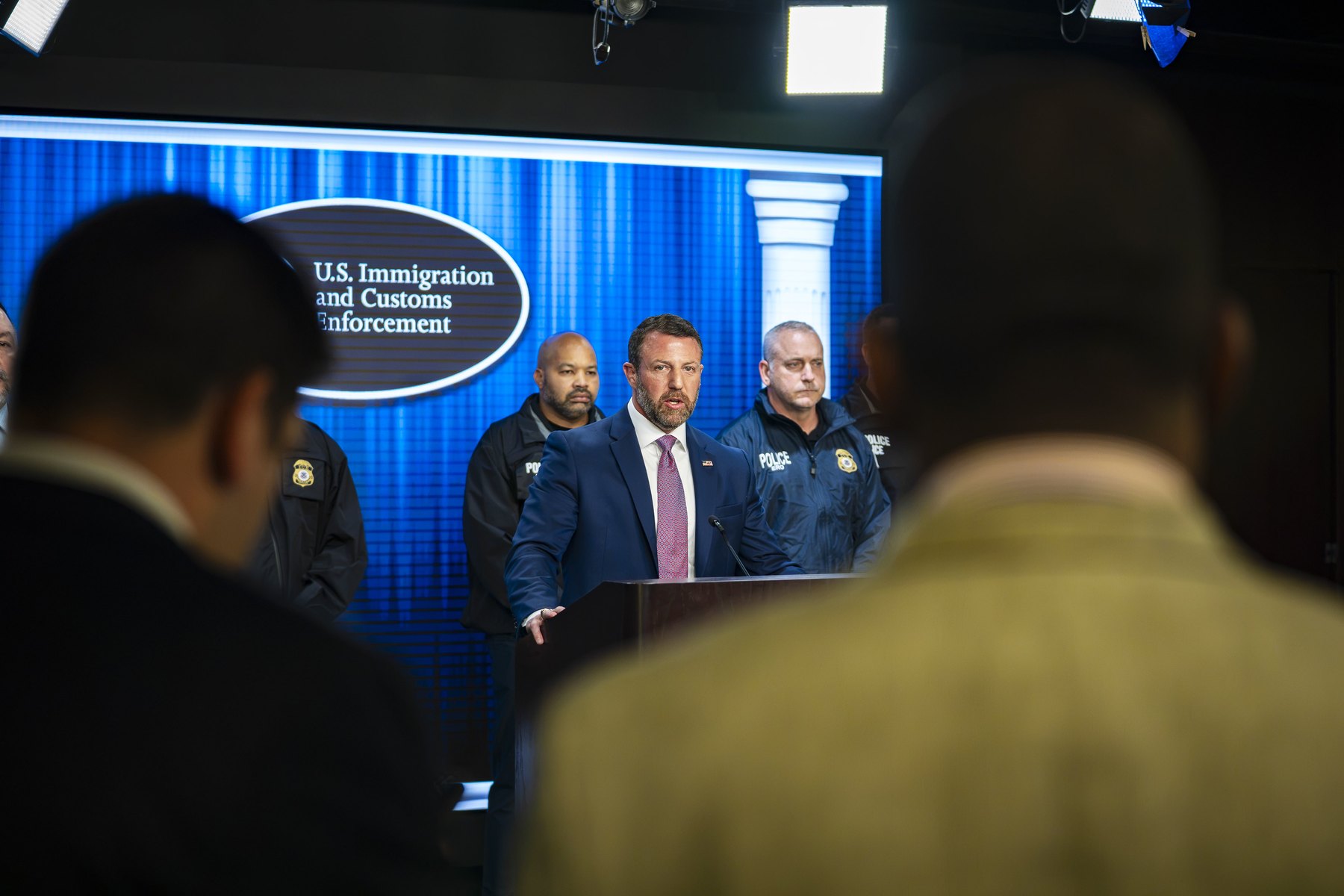
Homeland Security Secretary Markwayne Mullin at an ICE press conference in Washington, D.C., Oct. 9, 2026. The TPS decision sits with his department. (DHS photo by Andrew Jackson, U.S. government work, via DHS Flickr)
Why Would the White House Pause an Ending It Seems to Want?
Nobody on the record has said. The theories come from people outside the building. Mark Krikorian of the Center for Immigration Studies, which backs lower immigration, suggested the administration may want to "make this go away for six months" until after the election, according to The New American. That outlet, a conservative one, also reported that The New Yorker, citing former DHS officials, said a termination memo had sat on Secretary Markwayne Mullin's desk for more than a month.
Other factors are on the table. Salvadorans abroad sent $9.2 billion home last year, about a quarter of El Salvador's economy, per Politico's figures. President Nayib Bukele, a Trump ally who has taken in U.S. deportees, has pushed to keep the designation. The American Prospect quotes Cristosal's Noah Bullock calling it "some face-saving on both sides."
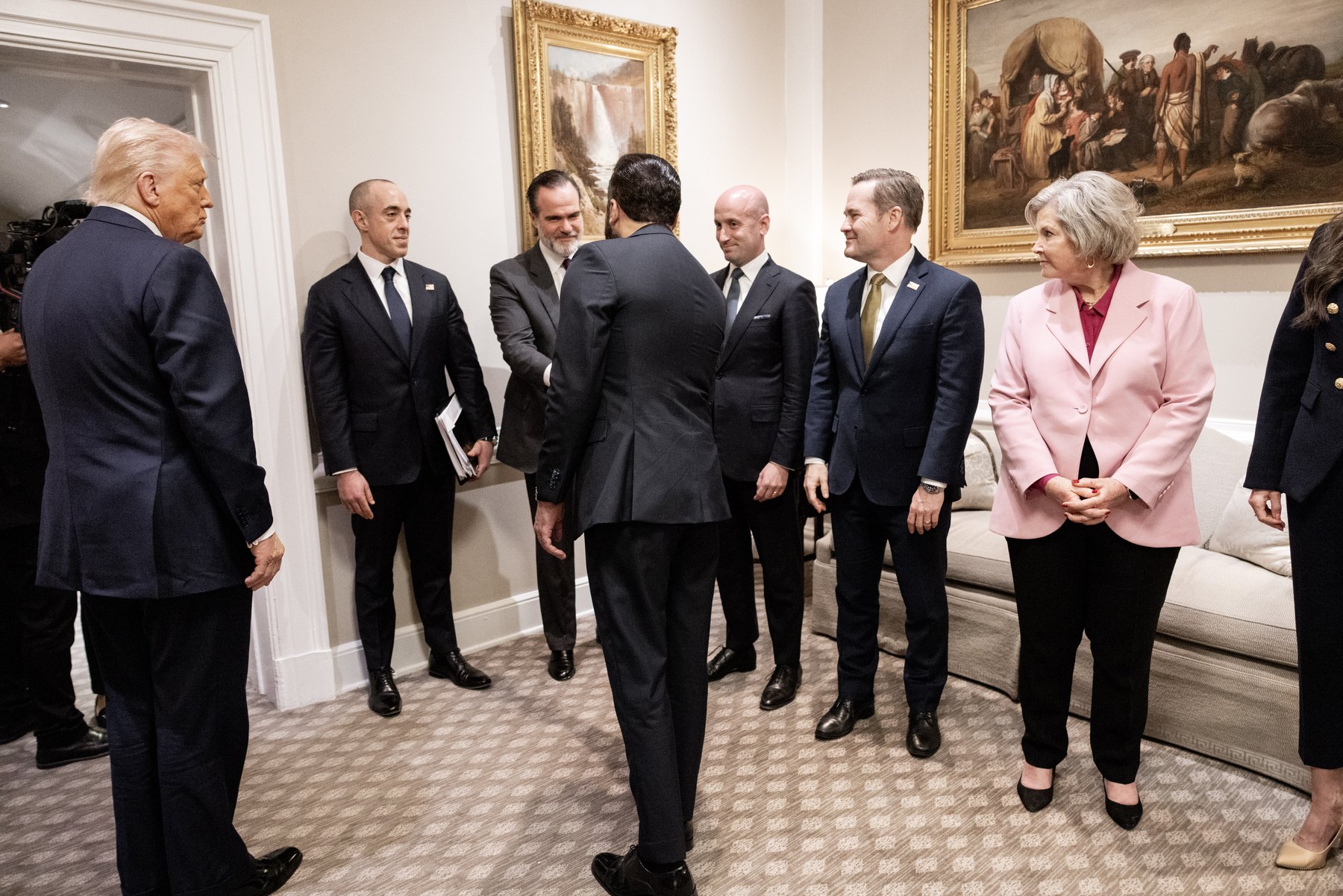
President Trump with Salvadoran President Nayib Bukele and aides at the White House, April 14, 2025. (Photo by Presidencia de El Salvador, CC0 public domain, via Wikimedia Commons)
For supporters who want open-ended "temporary" programs ended, this is the uncomfortable part. A 2001 earthquake designation is now 25 years old.
What Does the Statute Say Happens When DHS Stays Silent?
The law answers this more bluntly than the press coverage does. Under 8 U.S.C. § 1254a(b)(3), the Secretary must review conditions at least 60 days before a designation ends. If the Secretary does not find that the conditions have lapsed, the designation is extended for six months, or 12 or 18 at the Secretary's discretion. A termination is only effective once a notice is published, and not earlier than 60 days after that.
Official record
Federal Register, Vol. 90, No. 11, Jan. 17, 2025, page 5955. DHS's own notice describing the review rule that now governs the Salvadoran decision.
"At least 60 days before the expiration of a foreign state's TPS designation or extension, the Secretary, after consultation with appropriate U.S. Government agencies, must review the conditions in the foreign state designated for TPS to determine whether they continue to meet the conditions for the TPS designation."
90 Fed. Reg. 5955
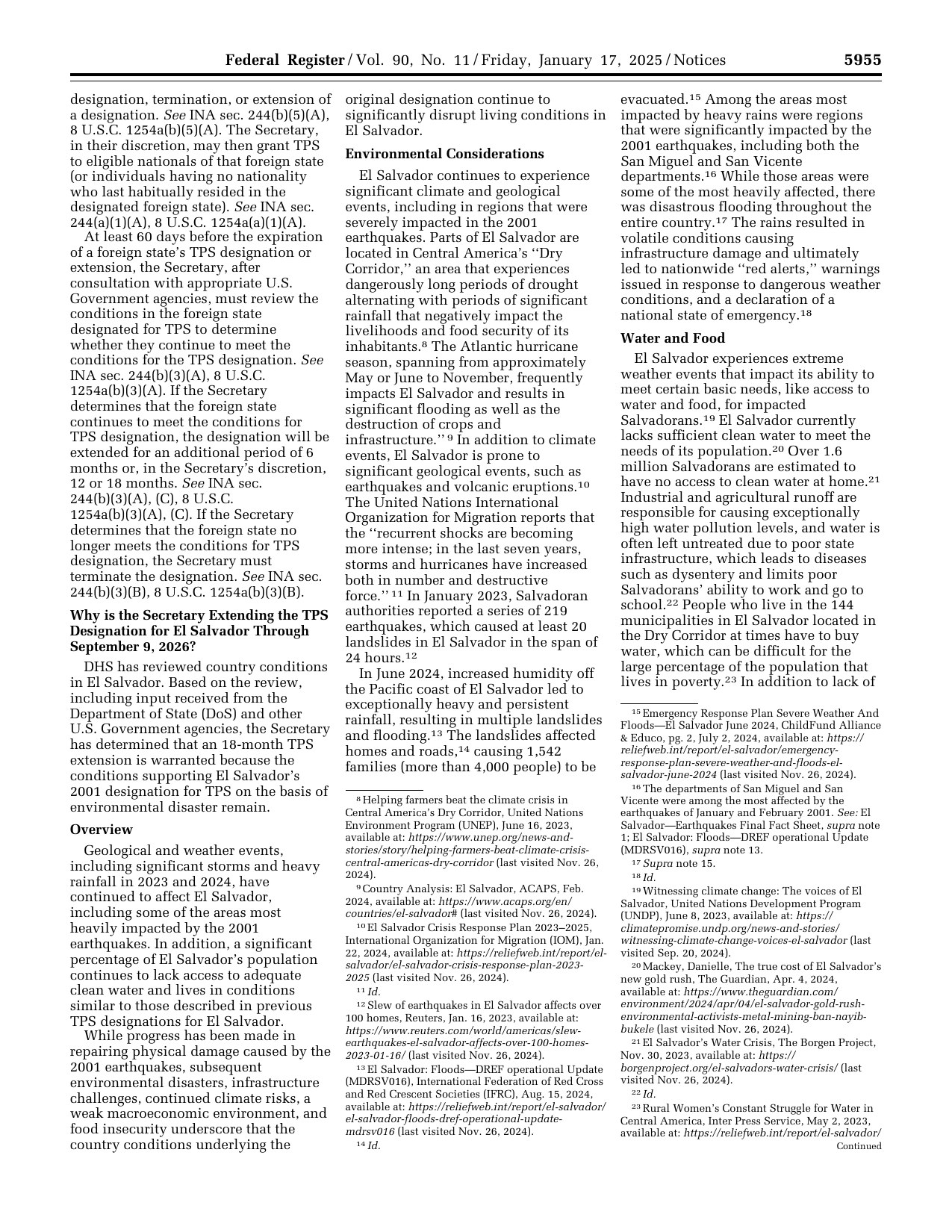
Read or download the full notice (PDF) · official GovInfo copy
Immigration lawyers read that to mean protection runs to March 9, 2027, according to El Tiempo Latino. DHS has not published that date. We could not confirm whether DHS made a timely determination that never became public, which would change the math. If it terminates now, the notice itself starts a 60-day clock.
Can Anyone Sue Over It?
Advocates are reportedly preparing challenges. They face a hard precedent. In Mullin v. Doe, decided June 25, 2026, the Supreme Court ruled 6-3 that the TPS statute bars courts from reviewing non-constitutional challenges to a designation or termination. Justice Alito wrote for the majority that the bar on review of "any determination" is broad enough to cover the process leading to it. That ruling let the administration end TPS for Haiti and Syria.
The statute that keeps judges out of terminations is the same one that writes the six-month default. Whether a court would hear a missed-deadline claim is untested.
What Is the Cost of Waiting?
On the ground, the limbo has a price. The National TPS Alliance says holders are losing jobs and driving privileges in some states. Alianza Americas warned Oct. 5 that more than 80 days without a decision complicates license renewals and proof of work authorization, with rules varying by state. Employment authorization cards carry dates that have already passed, and there is no updated I-9 guidance, as El Tiempo Latino reports.
Four TPS designations remain from the administration's list: El Salvador, Lebanon, Sudan and Ukraine, covering about 270,000 people, per The New American's count. The administration has terminated, or is trying to terminate, TPS for 13 countries.
The question for the movement is simple. Either TPS ends for Salvadorans because the law and the voters said it should, or it quietly rolls forward by statute while the election passes. Six months from Sept. 9 lands on March 9, 2027, four months after the midterms. Whoever controls Congress by then will decide whether "temporary" means anything.