The Justice Department sued Minnesota, Minneapolis and St. Paul on Thursday over a law that makes most Minnesotans wait up to 30 days to buy a handgun or an AR-15, and nearly 60 days in the Twin Cities. Read the statute behind the lawsuit and you find a line the 13-page complaint never mentions: Minnesota already lets a police chief waive the entire wait, in writing, once the buyer's background check comes back clean.
Washington Just Sued a State and Two Cities Over a Gun Wait
The case is United States v. State of Minnesota, City of Minneapolis and City of St. Paul, Case 0:26-cv-04123, filed September 24 in federal court in Minnesota. The complaint says the state's "permit to purchase and waiting period regulatory scheme violates the Second Amendment" for Minnesotans who want a gun to defend their homes. It asks the court for a declaratory judgment and a permanent injunction that stops all three defendants from enforcing it.
"When a person needs to defend their home, they need to defend it now, not thirty to sixty days from now," Assistant Attorney General Harmeet Dhillon said in the Justice Department's announcement. The filing is signed by Dhillon, U.S. Attorney Daniel Rosen and three trial attorneys from the Civil Rights Division's Second Amendment Section.
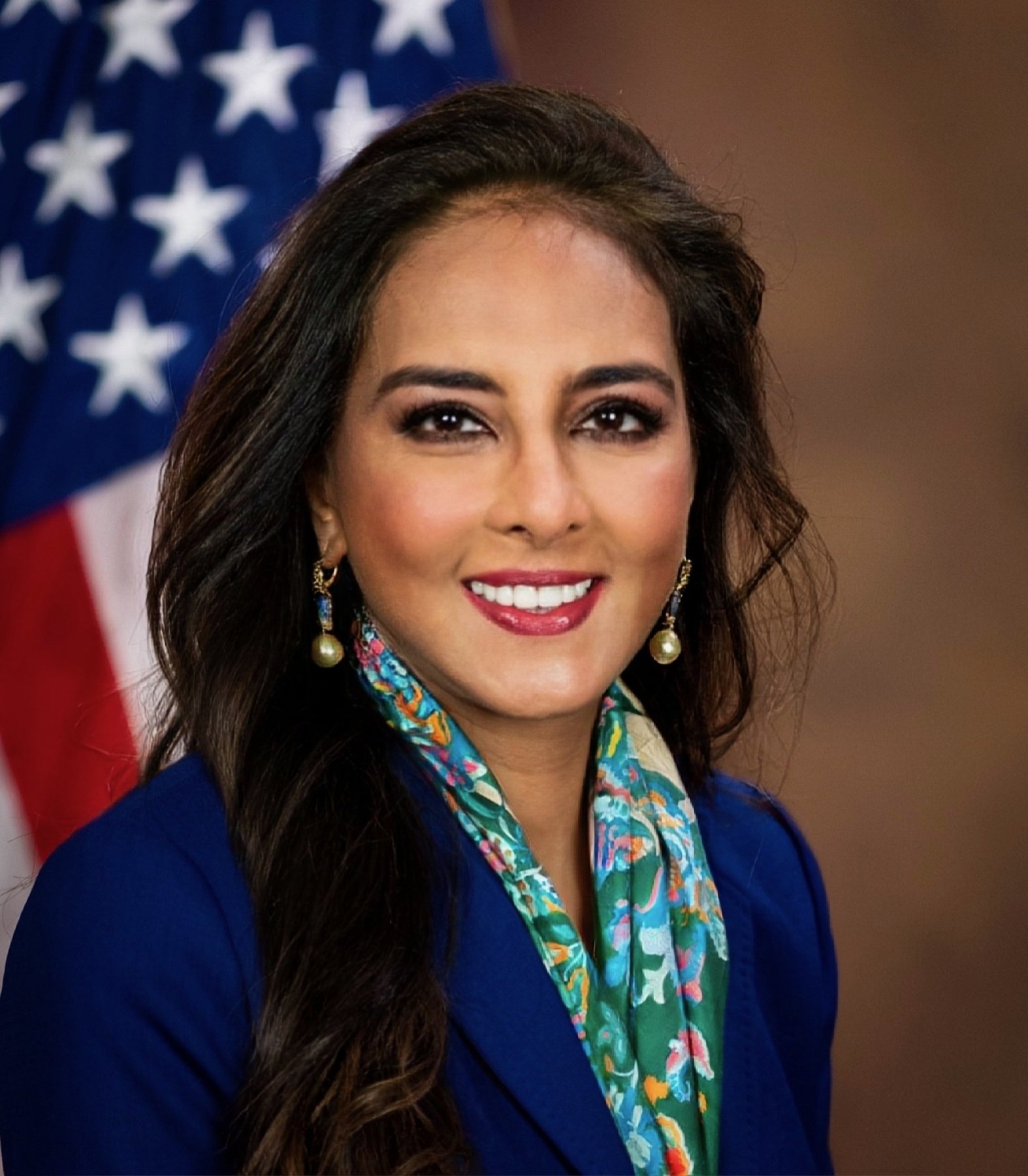
Assistant Attorney General Harmeet K. Dhillon, who leads the Justice Department's Civil Rights Division and signed the Minnesota complaint. (U.S. Department of Justice official portrait, public domain, via Wikimedia Commons)
The complaint is narrow on purpose. It says outright that it "does not concern public carry." It targets the purchase rules that land on people who have never applied for a carry permit, the ones who just want a pistol in the nightstand.
Minnesota Stretched a Five-Day Wait to 30 Days in 2023
This is newer than it sounds. The 2021 version of Minnesota Statutes section 624.7132 barred a dealer from handing over a pistol or a "semiautomatic military-style assault weapon" until "five business days" after the buyer's paperwork reached the local police chief or sheriff. The same sentence also referred to a "seven-day waiting period," which is why coverage of this lawsuit quotes both numbers.
The DFL-controlled Legislature rewrote the section in its 2023 public safety omnibus. The current text says no dealer may deliver the gun "until 30 days after" the report is filed. The fallback moved too. If police never send a denial, the dealer may release the gun after 30 business days, roughly six calendar weeks.
The 2023 rewrite handed police chiefs a new power as well. The old law said being legally barred from owning a gun "shall be the sole basis" for a denial. The new law tells a chief to deny anyone he finds poses "a substantial likelihood" of danger "to self or the public."
The Waiver Clause the Complaint Leaves Out
Here is the line the headlines missed. Subdivision 4 of the current statute says the chief of police or sheriff "may waive all or a portion of the waiting period in writing" if the chief "determines the proposed transferee is not disqualified prior to the waiting period concluding." The chief can also waive it for a buyer facing "a threat to the life" of someone in the household.
So 30 days is the maximum. A chief who clears a buyer on day two can sign away the rest of the wait on day two. The Justice Department's 13-page complaint never cites that clause. We read it end to end.
Official record
United States v. State of Minnesota, City of Minneapolis and City of St. Paul, Case 0:26-cv-04123 (D. Minn.), Complaint for Declaratory and Injunctive Relief, filed September 24, 2026. Official copy at justice.gov.
"Waiting periods for approvals from chiefs of police in St. Paul and Minneapolis commonly exceed the statutory limit of 30 days. Some citizens have been forced to wait nearly 60 days. There is no statutory penalty for law enforcement agencies that fail to act on applications within the statutory 30-day limit."
Complaint, paragraph 20
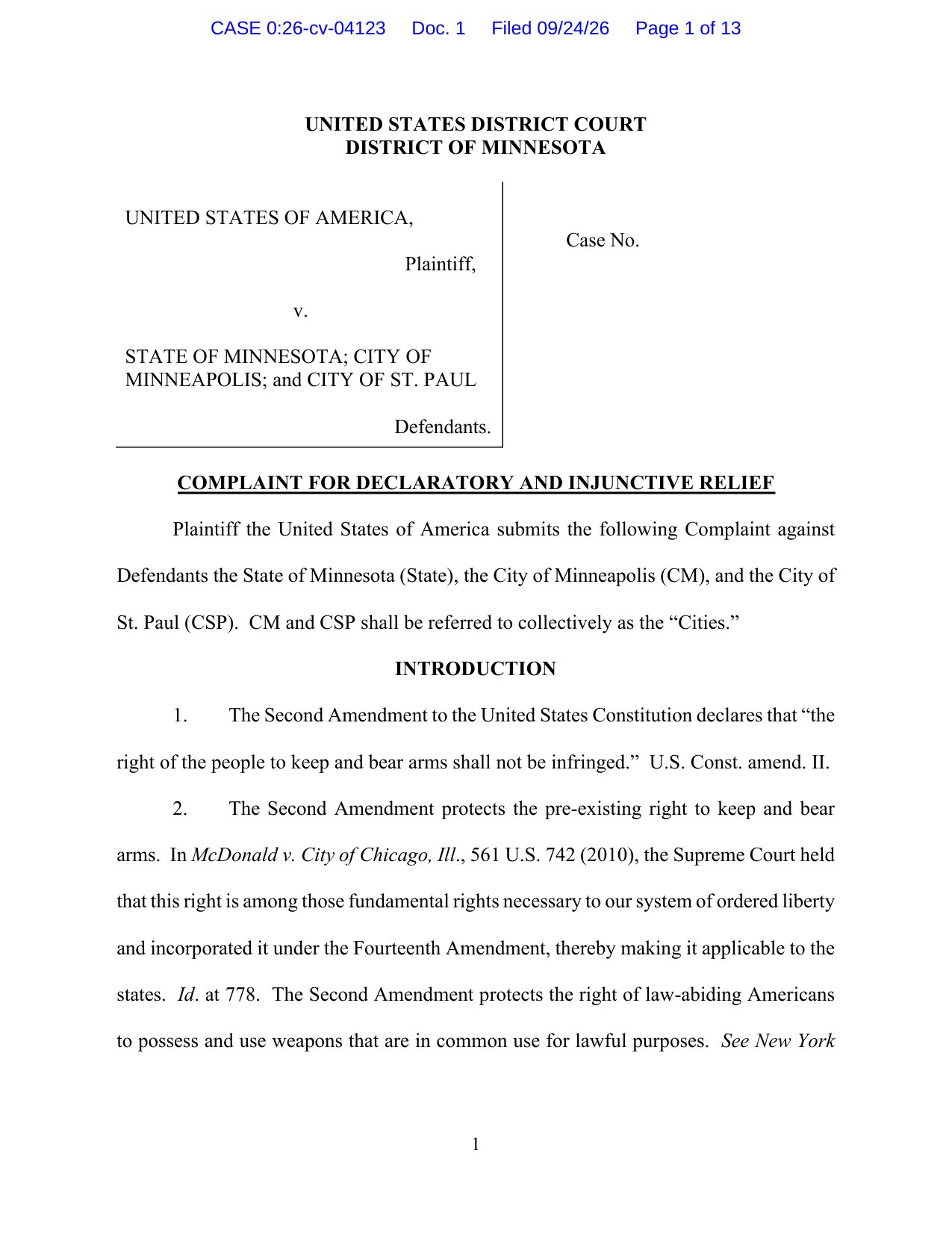
Read or download the full 13-page complaint (PDF) · Justice Department press release
That omission cuts in DOJ's favor more than against it. If the wait exists to let police run a background check, a chief who has finished the check has no reason to keep a law-abiding buyer waiting. The complaint says Twin Cities buyers wait anyway, sometimes twice the legal limit, with no penalty on the department and no remedy for the buyer. The waiver clause shows that delay is a choice.
DOJ Is Using the Statute Biden's Team Aimed at Minneapolis Police
The legal hook is the second quiet story in this filing. The United States can't sue a state simply for passing a law it dislikes. So the complaint relies on 34 U.S.C. section 12601, a 1994 law that makes it illegal for police to engage in "a pattern or practice of conduct" that deprives people of constitutional rights. The complaint argues that when Minneapolis and St. Paul officers process permits under the state scheme, that enforcement is itself the unconstitutional pattern.
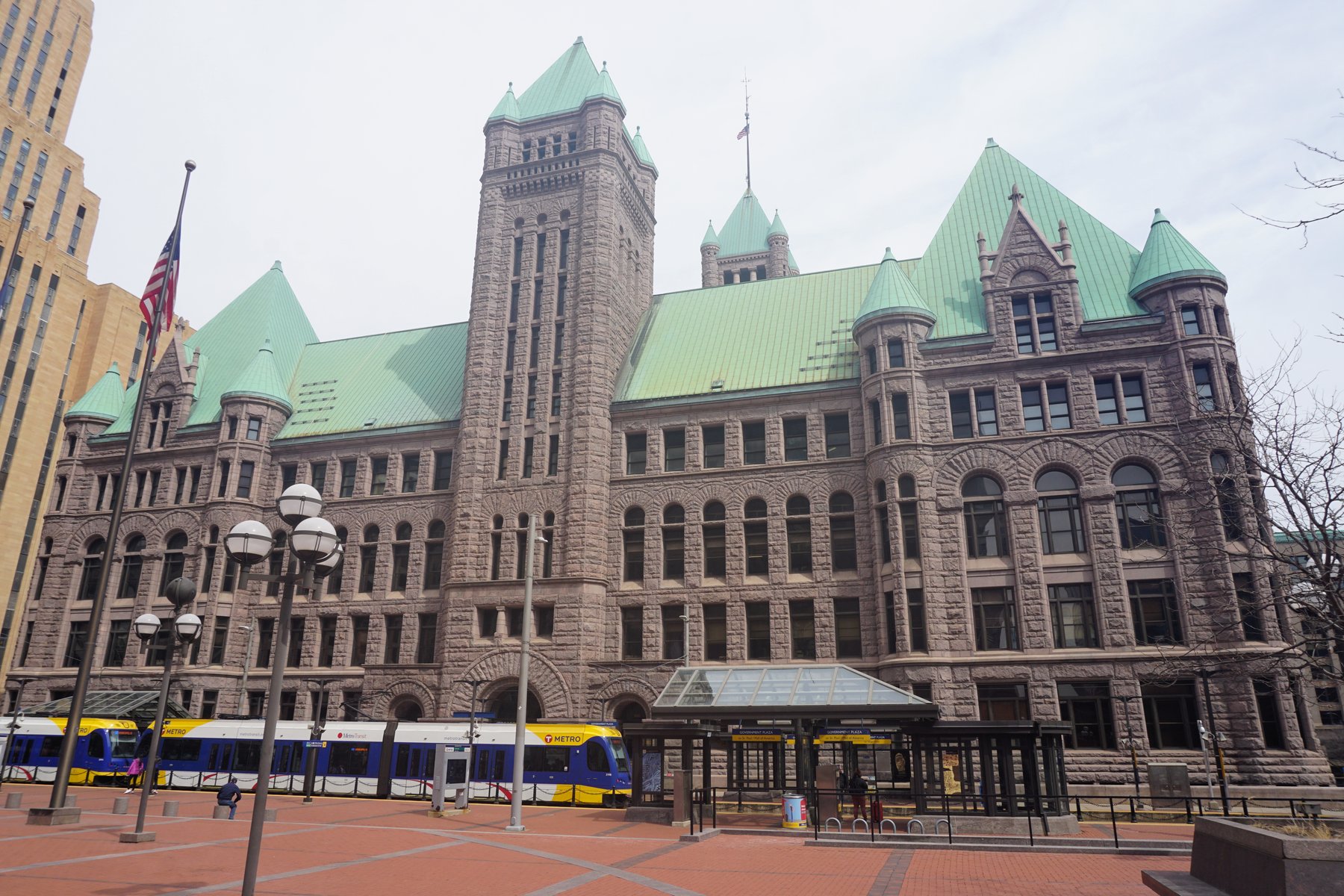
Minneapolis City Hall, home to the Minneapolis Police Department's headquarters. The complaint says the Minneapolis chief of police processes permit-to-purchase applications. (Photo: Michael Barera, CC BY-SA 4.0, via Wikimedia Commons)
That is the same statute the Biden Justice Department used against the Minneapolis Police Department after George Floyd's death. The department's June 2023 findings report says in a footnote that the investigation was conducted "pursuant to 34 U.S.C. § 12601." In May 2025 the Trump Justice Department walked away from the resulting consent decree, and U.S. District Judge Paul Magnuson dismissed the case with prejudice, writing that the monitor money "would better fund hiring police officers."
Sixteen months later, the same federal statute is back in the same city, now defending gun buyers instead of policing the police. The press release lists section 12601 alongside the Second Amendment and Executive Order 14206, President Trump's February 2025 order on protecting Second Amendment rights.
More Than Nine in Ten Minnesotans Fall Under These Rules
Carry permit holders skip all of this. Under section 624.7131, a valid permit to carry counts as a transferee permit, so no report, no wait. The complaint's footnote puts the state's population at 5,830,405 and its carry permit holders at 375,551, citing the Bureau of Criminal Apprehension's 2025 annual report.
Run that math and 6.4 percent of Minnesotans hold a carry permit, leaving about 5.45 million who don't. That denominator counts children, who can't buy handguns anyway, so the adult share is somewhat smaller. It is still the large majority of the state.
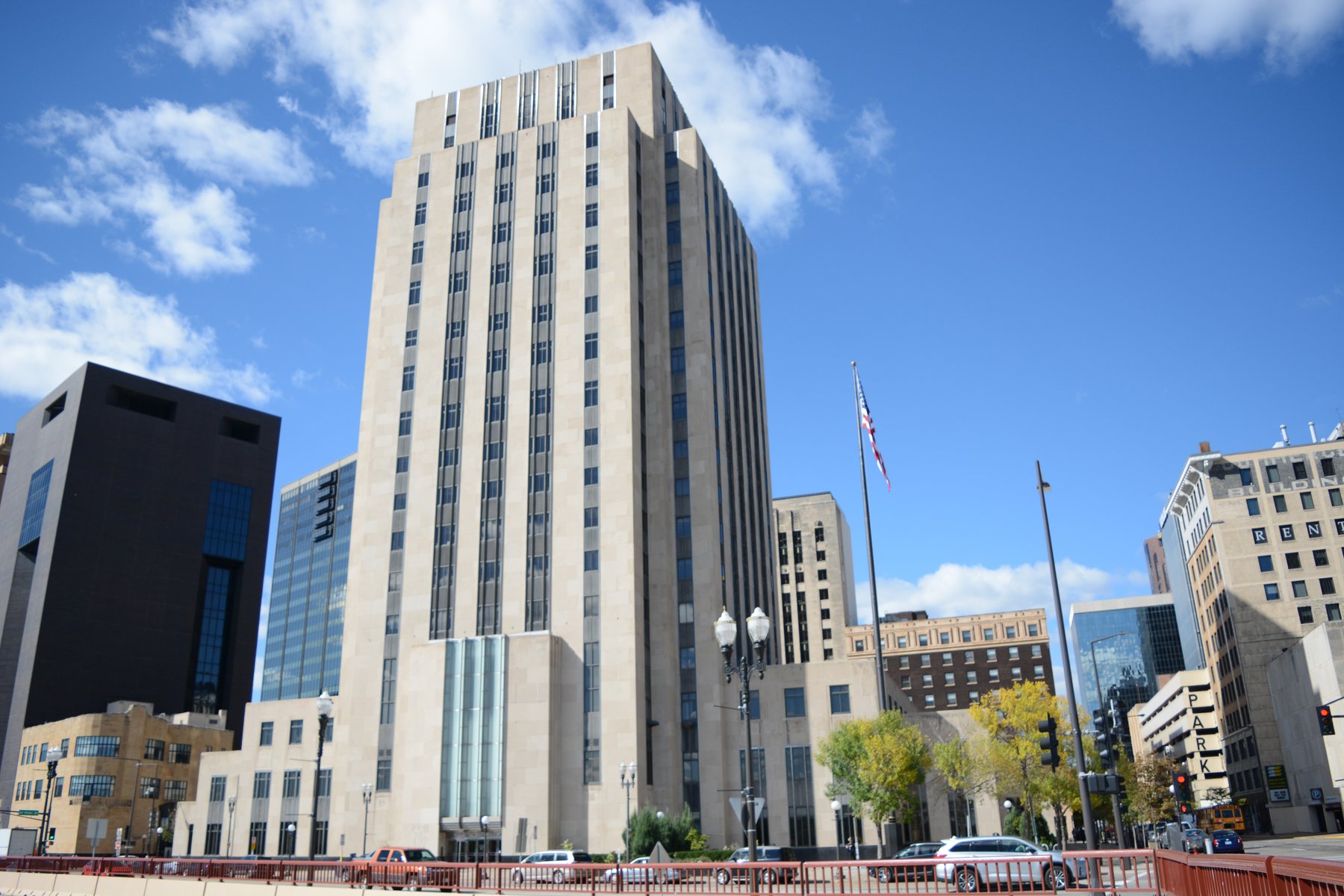
Saint Paul City Hall and Ramsey County Courthouse. St. Paul told FOX 9 it does not comment on active litigation. (Photo: Ramsey County, CC BY-SA 2.0, via Wikimedia Commons)
The other route, a transferee permit, is no shortcut. Chiefs get up to 30 days to issue or deny it, and the permit "shall expire after one year." The complaint calls that "an annual thirty-day waiting period every single year" for anyone who wants to stay ready to buy.
Minnesota's Attorney General Calls These Background Check Laws
The Minnesota Attorney General's Office answered with a statement to FOX 9 calling the lawsuit an attack on "Minnesota's police departments and the state's common-sense background check laws." It said the laws exist so that permits "are issued only to eligible purchasers." St. Paul declined to comment, and Minneapolis had not responded when FOX 9 published.
The statute undercuts the background check framing. By its own terms, a chief can end the wait the moment the check shows the buyer is eligible. Whatever keeps a cleared buyer waiting past that point, the background check isn't it.
Even friendly coverage stumbled on the details. FOX 9's summary box said citizens who "do have a permit to carry" face the 30-day wait, which is backwards, and its story credited Dhillon's "Law-abiding citizens do not need government permission" line to Rosen. The DOJ release attributes both of those sentences to Dhillon.
Two Appeals Courts Have Already Rejected Rules Like This
The complaint leans on two 2025 appellate rulings. It cites the Tenth Circuit's Ortega v. Grisham for holding New Mexico's seven-day waiting period unconstitutional, and the Ninth Circuit's Nguyen v. Bonta, which it says "easily" rejected California's rule forcing buyers to wait 30 days between gun purchases. It also quotes the Supreme Court's 2026 decision in Wolford v. Lopez at length on how courts must apply the Bruen test.
Neither appellate ruling binds a federal judge in Minnesota, which sits in the Eighth Circuit. But if the Tenth Circuit found seven days too long, Minnesota will have a hard time finding a Founding-era analogue for 30, never mind 60.
This is also the second time this month the Second Amendment Section has sued a local government over the cost of buying a gun. On September 16 it sued San Jose over what DOJ calls a $1,600 firearm permit fee. Minnesota's own statute already hands its police chiefs the power to shorten the wait. The lawsuit asks a federal judge to make them stop enforcing it entirely.
Top photo: Harmeet Dhillon speaking at the 2021 Young Women's Leadership Summit in Grapevine, Texas. (Photo: Gage Skidmore, CC BY-SA 2.0, via Wikimedia Commons)