A unanimous Ninth Circuit panel ruled Wednesday that California cannot force ICE agents and other federal officers to wear visible identification, and the opinion goes further than the court's earlier emergency order: the judges called the Trump administration "certain" to win on the merits. Two of the three judges were appointed by Trump.
What the Ninth Circuit actually ordered
In United States v. California, No. 26-926, the panel reversed a lower court and told it to enter a preliminary injunction. The injunction bars California, Gov. Gavin Newsom and Attorney General Rob Bonta from enforcing Section 10 of S.B. 805, the "No Vigilantes Act," against the United States, federal agencies and federal officers.
Section 10 required any non-uniformed federal officer working in California to "visibly display identification" showing an agency and a name or badge number during arrests, detentions and crowd control. A willful violation was a state misdemeanor. Judge Mark Bennett wrote the opinion. Judges Daniel Collins and Jacqueline Nguyen joined it.
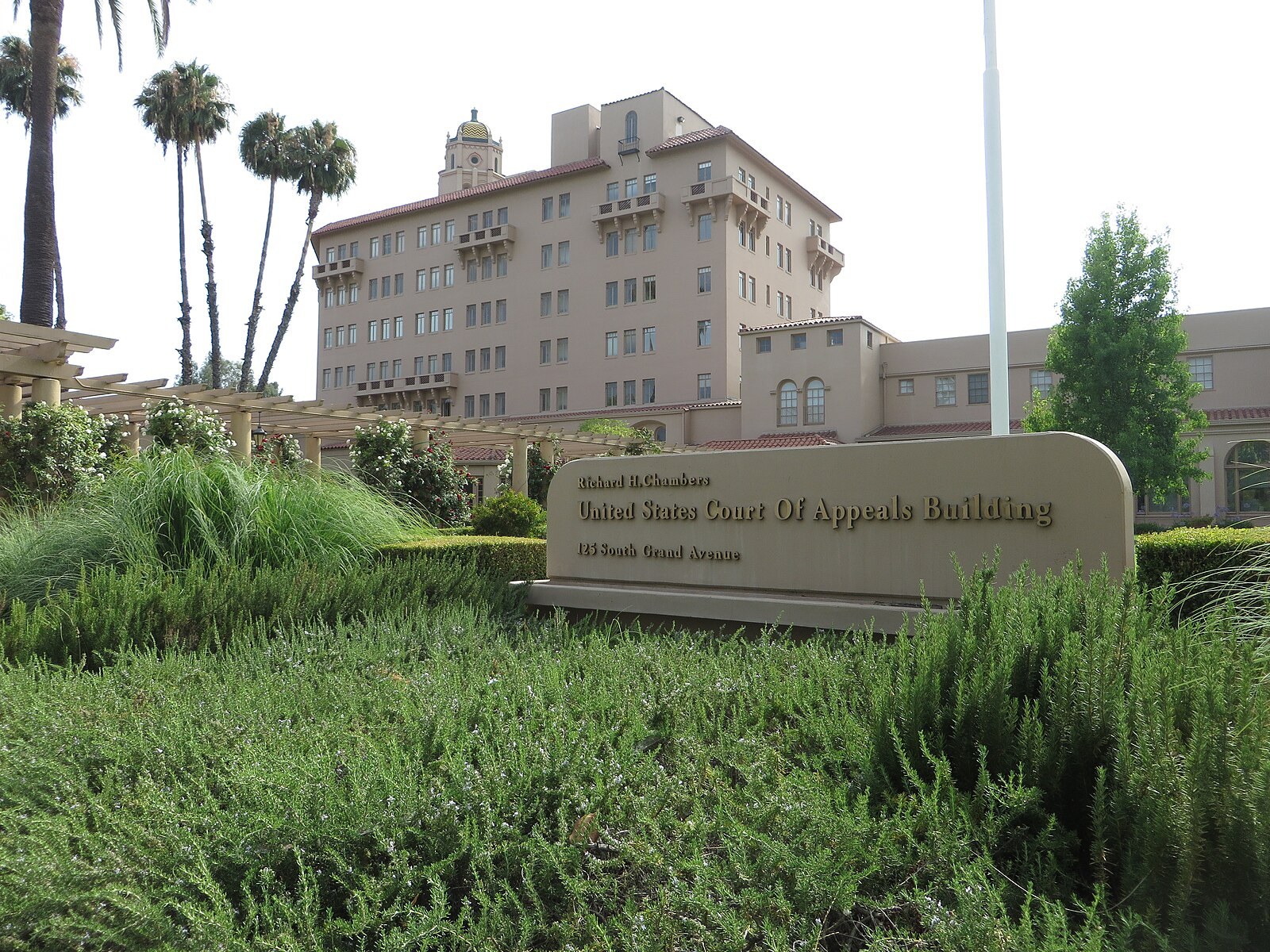
The Richard H. Chambers U.S. Court of Appeals building in Pasadena, where the case was argued on August 25. Photo by Ken Lund via Wikimedia Commons, CC BY-SA 2.0.
Why California's argument failed
The state's case rested on the idea that a law only counts as direct regulation of Washington if it imposes "substantial burdens" on federal operations. The panel called that a mistake. That test, Bennett wrote, belongs to cases about contractors and private employers, not to rules aimed at federal agents themselves.
The court's reasoning is simple. Under the Supremacy Clause, a state cannot directly regulate the federal government's own operations unless Congress clearly allows it, and there is no "de minimis exception." Section 10, the opinion says, "overrides the federal government's power to determine whether, how, and when to publicly identify its officers." Congress never signed off on that.
Official record
United States v. State of California, No. 26-926 (9th Cir. Oct. 14, 2026), opinion by Judge Bennett, page 15.
"Section 10 thus directly regulates inherently sovereign functions. Because Congress has not authorized such legislation, it is barred by intergovernmental immunity." — Ninth Circuit opinion
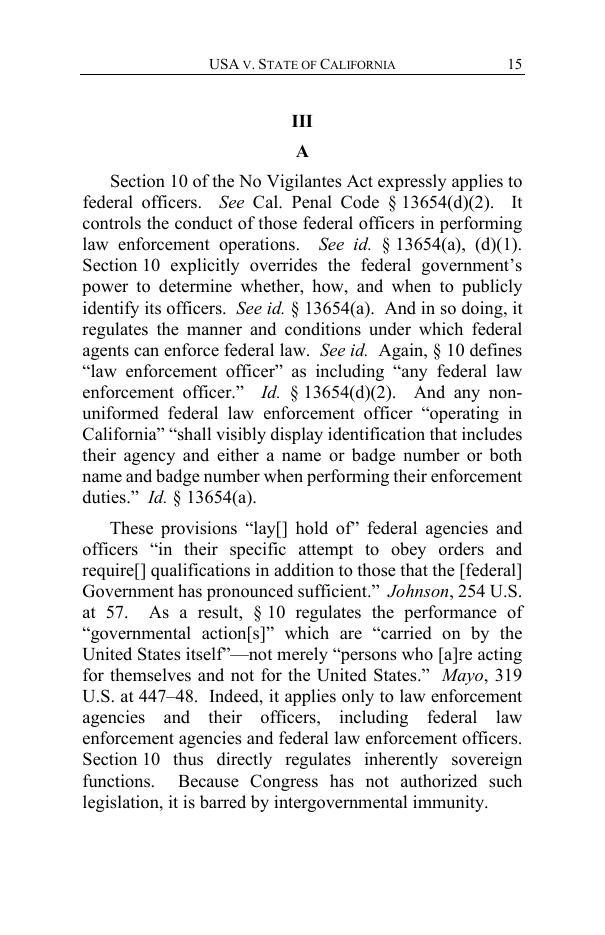
Read or download the full 21-page opinion (PDF) · view it at the Ninth Circuit
The "honest and reasonable belief" dodge
California also argued that individual officers already have a Supremacy Clause defense, so the law could not be unconstitutional in every application. The panel did not buy it. That defense protects an individual officer. The immunity at stake belongs to the United States, and the court said it does not depend on whether any one agent held a reasonable belief that his conduct was necessary.
That matters because the administration brought a facial challenge, which means it had to show the law could not be valid in any circumstance. The judges said it did.
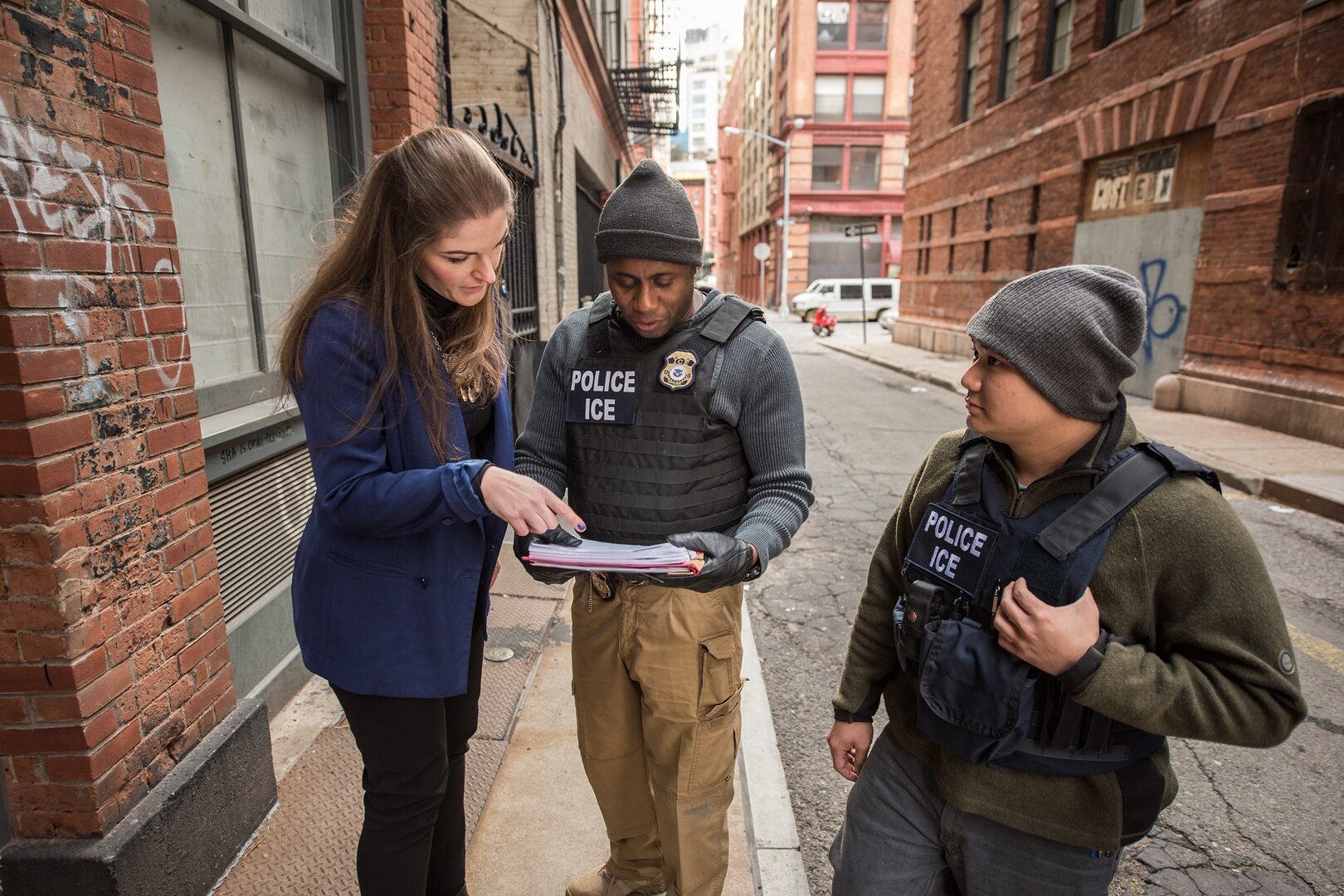
ICE Enforcement and Removal Operations officers on a New York City street. File photo from U.S. Immigration and Customs Enforcement via Wikimedia Commons, public domain.
What this ruling does not decide
Be careful with the headlines. The decision is about the identification mandate only. The separate "No Secret Police Act," California's mask ban for officers, was blocked earlier by U.S. District Judge Christina Snyder on the ground that it discriminated against the federal government, and no one appealed that part, according to the opinion. This ruling is also a preliminary injunction, not a final judgment, so the case goes back to the district court.
The court also left a door open. It said states might be able to impose "general rules that might affect incidentally" federal officers, such as a traffic ordinance. Section 10 was not that, the panel said, because it applies only to law enforcement and only when they are enforcing the law.
What the administration is saying
Associate Attorney General Stanley Woodward Jr. wrote on X that "California cannot regulate how Federal law enforcement officers carry out their jobs authorized by Congress," and Civil Division chief Brett Shumate said the court "agrees that California cannot regulate federal law enforcement," according to a Fox News report. When the panel first froze the law in April, Courthouse News reported that Homeland Security had signaled it did not plan to comply with California's requirements anyway.
The politics of it are plain. Sacramento passed a law in September 2025 in response to federal immigration enforcement, and the court has now told it twice that the Constitution does not allow that. If California wants federal agents to carry badges, the opinion points to the only branch that can do it: Congress. The state can also ask for further review, but the panel's language leaves little room to argue.
Stand with the officers who enforce the law. Browse the PatriotAddict collection.