China's state news agency says President Trump told Xi Jinping on Thursday in Shenzhen that the United States "does not support 'Taiwan independence.'" That line comes from Beijing's account of the meeting. As of Thursday, the White House had posted no readout of the talks, and the Trump State Department deleted that same sentence from its own Taiwan fact sheet in February 2025.
What does Beijing say Trump told Xi?
Trump and Xi met for about an hour at a Shenzhen villa, The Epoch Times reported, on the sidelines of the APEC summit before Vladimir Putin joined them for the first three-way meeting of the U.S., Chinese and Russian leaders. In Xinhua's English readout of the bilateral talks, Xi said U.S.-China relations have stayed "generally stable" and told Washington to "do the right thing" on Taiwan. The same report says Trump stated the U.S. does not support "Taiwan independence."
Xi's warning was blunter in the version carried by AFP: "the United States must keep doing the right thing" to avoid serious turbulence in the relationship. Reuters reported that Xinhua called the meeting "positive and constructive" and said the two sides agreed to draw up an action plan.
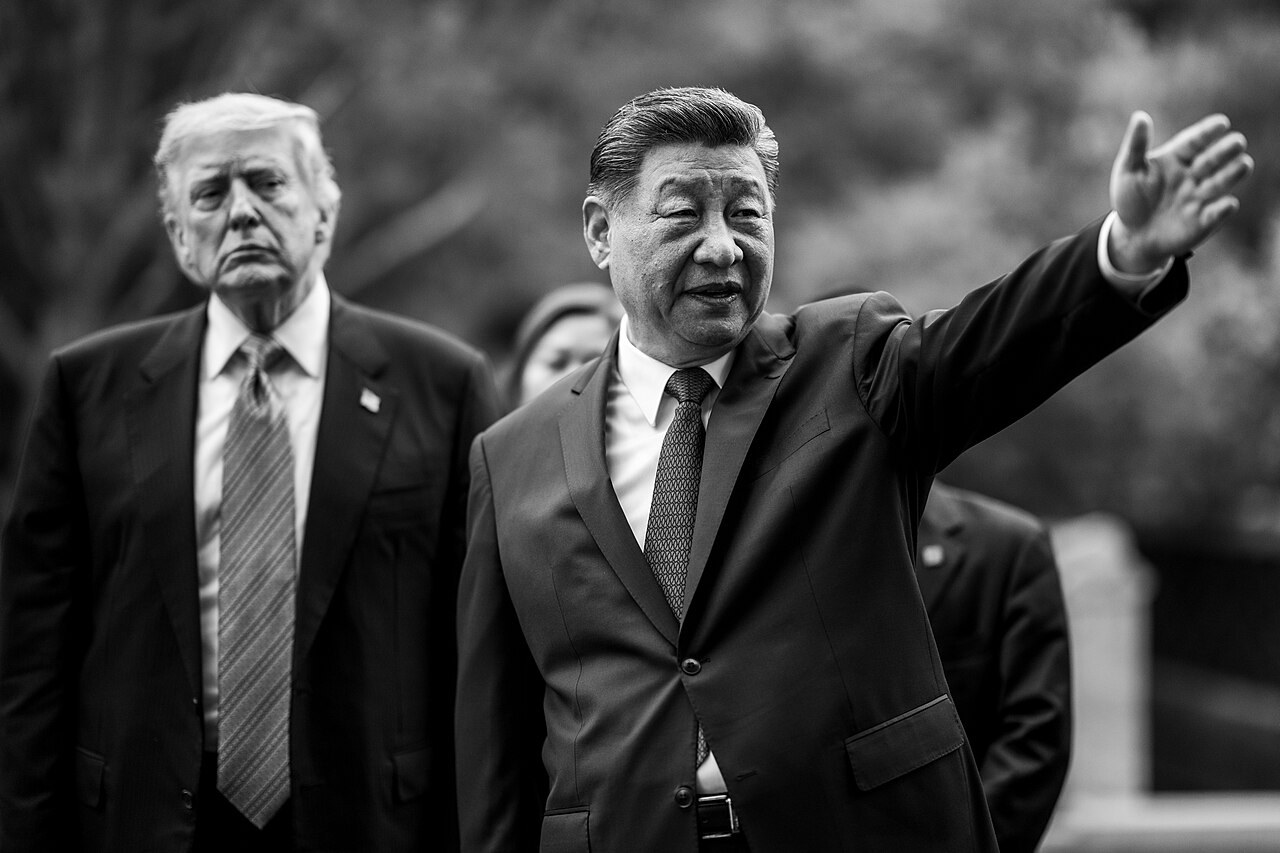
Xi Jinping and President Trump at the Zhongnanhai leadership compound in Beijing during Trump's May 2026 state visit. White House photo via Wikimedia Commons (U.S. government work, public domain).
Is there an American account?
Not yet. The White House statements page on Thursday listed the Thailand trade statement and a Quad leaders' release from Manila, but nothing on Shenzhen. On camera, Trump talked about nuclear weapons. "We are really making history," he said, calling the three countries "uniquely positioned to discuss how to reduce the number of nuclear weapons on Earth," according to Outlook India's summit report. No joint agreement on arms control, Ukraine or Iran was announced.
Dueling readouts are nothing new. In January 2025, China's foreign ministry said Secretary of State Marco Rubio told Wang Yi the U.S. "does not support 'Taiwan independence.'" The State Department's readout of the same call left that out and instead stressed "commitment to our allies in the region," the South China Morning Post reported.
How does that compare with earlier Chinese readouts?
It goes further than the recent ones. After a November 2025 phone call, the Chinese readout had Trump saying only that the U.S. "understands the importance of the Taiwan question to China," according to the Xinhua text republished by Henan's provincial government. China's account of the May 2026 Beijing summit attributed no Taiwan remark to Trump at all.
In September, when Xi visited the White House, China's foreign ministry said Xi urged the U.S. to "oppose" Taiwan independence, and did not say how Trump answered, The Epoch Times reported. The White House fact sheet on that visit did not mention Taiwan, Focus Taiwan noted. Notice the gap: even in Beijing's telling, Trump said "does not support," not the "oppose" Xi asked for two months ago.
Where does the phrase come from?
For years the State Department's Taiwan fact sheet said the U.S. opposes "any unilateral changes to the status quo from either side; we do not support Taiwan independence." In February 2025 the department dropped the middle clause and added that differences should be settled "free from coercion, in a manner acceptable to the people on both sides of the Strait," Taiwan's Central News Agency reported. China accused Washington of having "gravely backpedaled," CBS News reported.
Trump's own public words have run close to the old line. During his May visit to Beijing he told Fox News, "I'm not looking to have somebody go independent," and said he did not want to "travel 9,500 miles to fight a war," Euronews reported. Taiwan answered that it is a "sovereign democratic country."
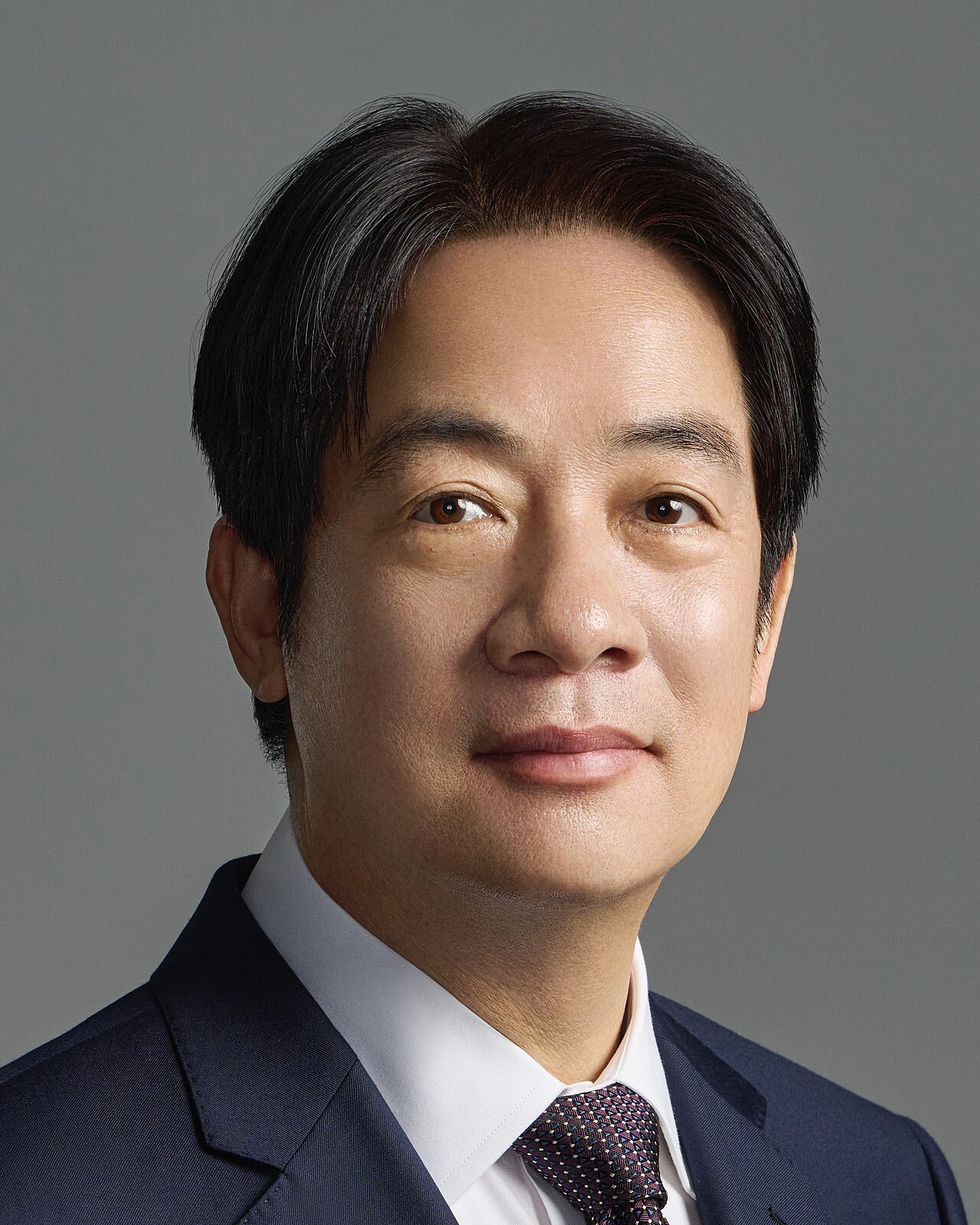
Taiwan President Lai Ching-te. Official portrait, Office of the President of the Republic of China (Taiwan), via Wikimedia Commons (Government Website Open Information Announcement, attribution required).
What does U.S. law actually require?
The Taiwan Relations Act of 1979 says nothing about independence either way. It does commit the U.S. to sell Taiwan defensive weapons, and that is where the real pressure sits. A roughly $14 billion arms package remains stalled, while an earlier $11 billion package approved at the end of 2025 is moving, the Associated Press reported. After talking with Xi in May, Trump said, "No, we discussed arms sales," and "I'll be making decisions," Axios reported.
Official record
Taiwan Relations Act, Public Law 96-8, 93 Stat. 14, enacted April 10, 1979, as published by the Government Publishing Office. Page 1, with the law's statement of U.S. policy, is shown below.
"It is the policy of the United States ... to provide Taiwan with arms of a defensive character." Taiwan Relations Act, Sec. 2(b)(5)
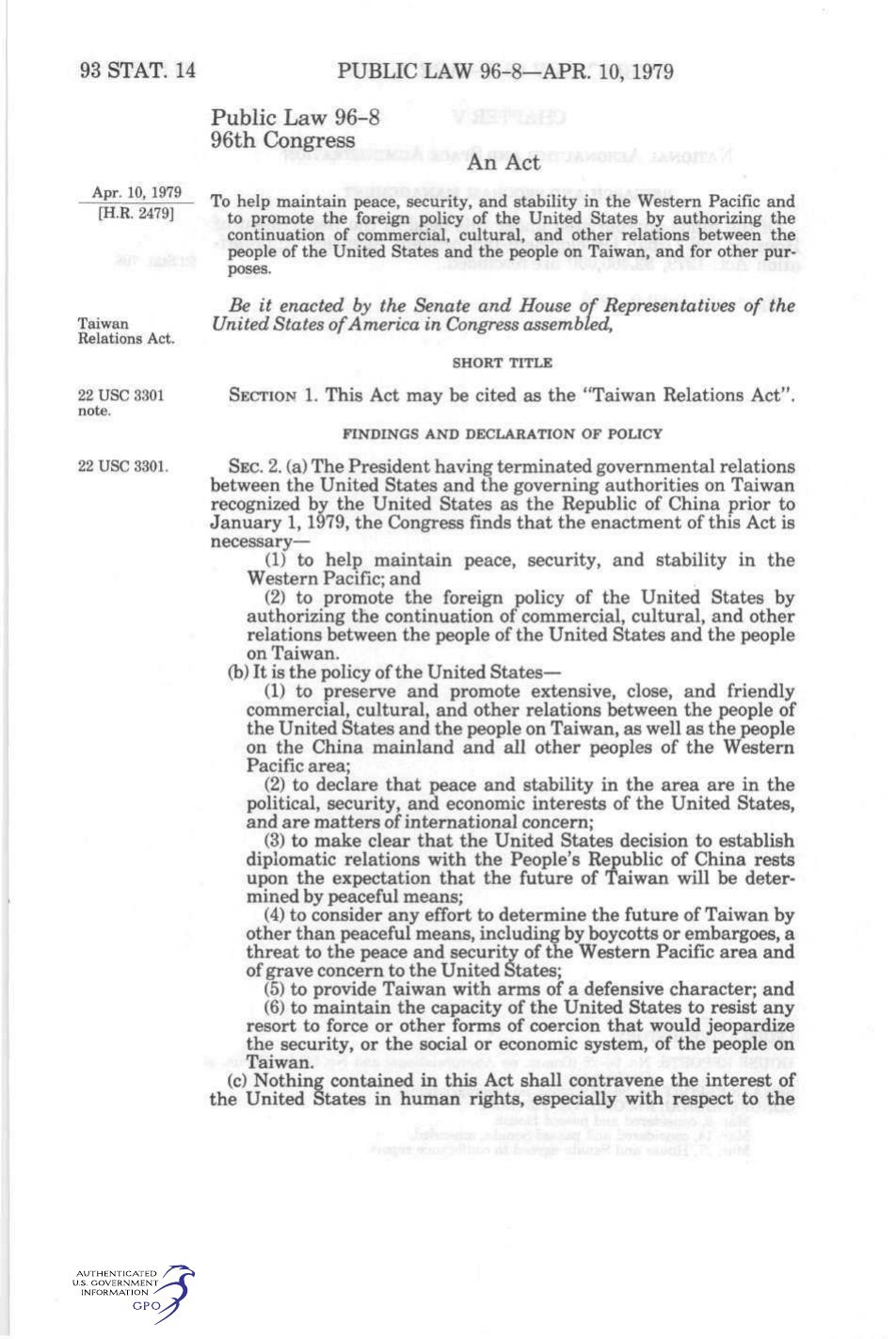
Read or download the full 8-page law (PDF) or view it on GovInfo.
Two days before Shenzhen, Trump signed onto a Quad leaders' release in Manila that said the four nations "strongly oppose any destabilizing or unilateral actions that seek to change the status quo, including by force or coercion." Taipei is watching both messages. Presidential Office spokeswoman Karen Kuo said Taiwan is in "close contact with the US and has a full grasp of developments," the Taipei Times reported.
Why it matters
Beijing writes its readouts for an audience, and a quoted American president is a trophy whether or not the words were spoken that way. If Trump did say it, he restated a position Washington held for decades and stopped short of the "oppose" Xi wanted. If he didn't, the White House can say so in one sentence. Until it does, the only written record of what America's president said about Taiwan in Shenzhen belongs to the Chinese Communist Party, and the test that matters more is whether the stalled $14 billion arms package ever ships.
Top photo: President Donald Trump and Chinese President Xi Jinping walk the red carpet past an honor guard at Shenzhen Bao'an International Airport, Nov. 18, 2026, a day before their talks. White House photo via Wikimedia Commons (U.S. government work, public domain).