

Temporary Protected Status for Venezuelans is set to come back to life on Friday, Nov. 20, unless the Supreme Court steps in first. The Justice Department filed its third emergency request in the same case on Wednesday, and its 28-page application says something the headlines left out: the plaintiffs have already admitted their challenge to the termination itself no longer works after the justices' June ruling.
What did the administration ask for?
Solicitor General D. John Sauer filed the application, docketed as No. 26A714, Mullin v. National TPS Alliance, on Nov. 18. It went to Justice Elena Kagan, who handles emergency matters from the Ninth Circuit. Sauer asks for an immediate administrative stay and a longer stay of a September 2025 order by U.S. District Judge Edward Chen in San Francisco, which set aside the termination of Venezuela's 2023 TPS designation.
Without action, Sauer wrote, Chen's "long-dormant" order "will spring into effect, inflicting severe and immediate harm." The Supreme Court had already paused Chen's rulings twice, on May 19 and Oct. 3, 2025.
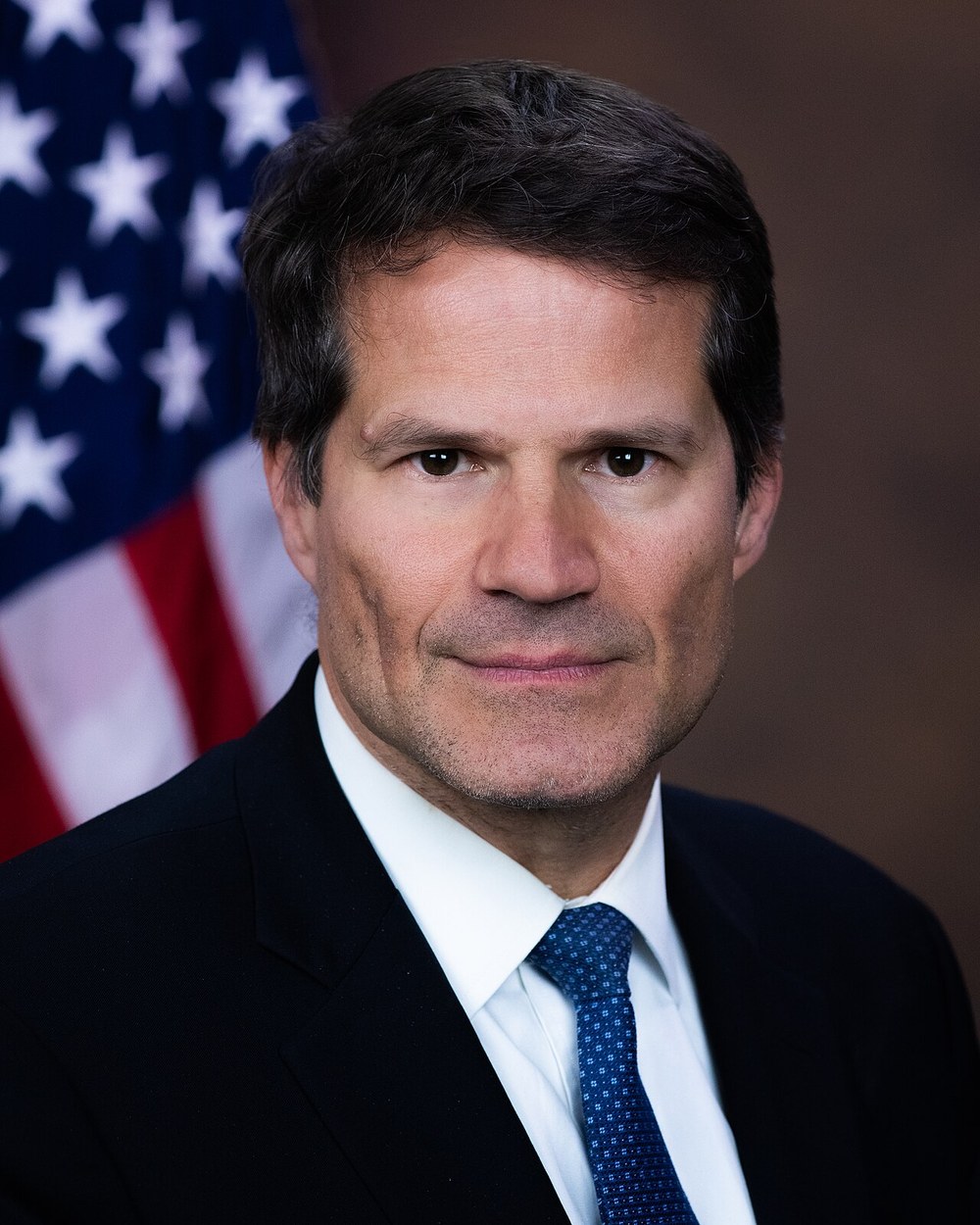
Solicitor General D. John Sauer, who signed the Nov. 18 stay application. Official U.S. Department of Justice portrait via Wikimedia Commons (U.S. government work, public domain).
Why is a paused ruling coming back now?
Because of the calendar. On June 25, the Supreme Court decided Mullin v. Doe, a case over Haiti and Syria. It held that the TPS statute bars courts from hearing "all non-constitutional claims" against a secretary's decision to end a country's designation. The law's own words are blunt: "There is no judicial review of any determination" on TPS designations, terminations or extensions, 8 U.S.C. 1254a(b)(5)(A) says.
On Oct. 5 the justices wiped out the Ninth Circuit's January ruling for the Venezuelan plaintiffs and sent the case back in light of Doe, according to the docket in No. 26-48. That order also ended the case's trip through the high court, and the old stay expired with it on Nov. 6. Chen's district court judgment, never vacated, was left standing with nothing holding it back.
What did the Ninth Circuit do?
The government asked the same three-judge panel, Judges Kim McLane Wardlaw, Salvador Mendoza Jr. and Anthony Johnstone, for a stay the day of the Supreme Court's order. The panel waited until Oct. 30, then denied it in one paragraph with no reasons. Four days later it declared that order "hereby withdrawn" and granted a 14-day administrative stay starting Nov. 6, both orders in the government's 361-page appendix show. The government asked for a decision by Nov. 13. Per the application, the court "has been silent" since, which Sauer called "gamesmanship."
Official record
Application to Stay the Judgment Issued by the United States District Court for the Northern District of California, Mullin v. National TPS Alliance, No. 26A714, filed Nov. 18, 2026, by Solicitor General D. John Sauer. Page 3 is shown below.
"This Office has been informed that the government could be forced to immediately release into the country some 1800 or so Venezuelan aliens from detention." Stay application, page 3
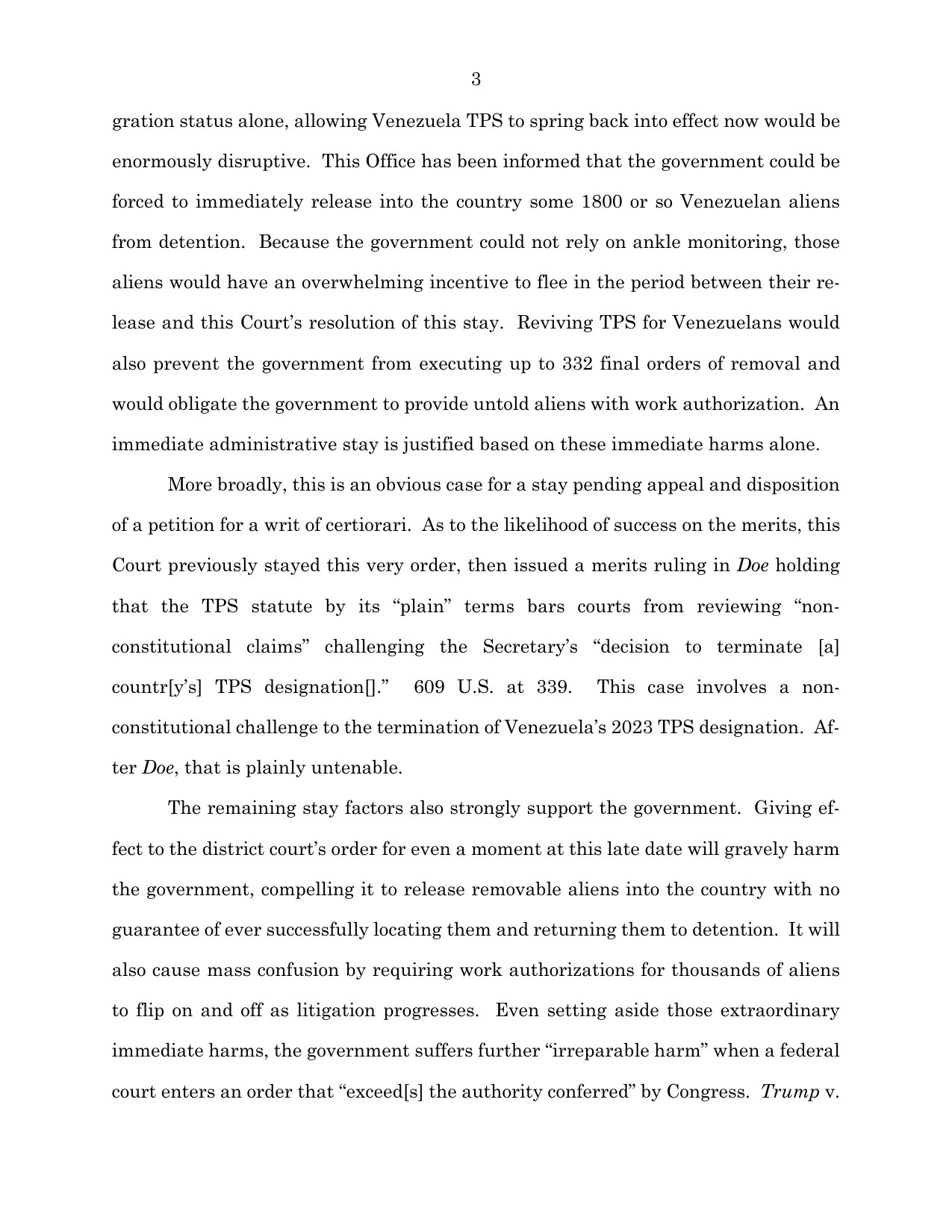
Read or download the full 28-page application (PDF) or view it on the Supreme Court's website.
What did the plaintiffs concede?
According to the application, the plaintiffs' own Oct. 15 brief in the Ninth Circuit "acknowledge[d]" that their "statutory challenges to the termination are no longer cognizable after" Doe. They are holding on to one narrower claim: that then-Secretary Kristi Noem had no power to cancel the 18-month extension Secretary Alejandro Mayorkas published three days before President Trump took office. If that cancellation was invalid, they argue, the termination took effect on the wrong date.
The government's answer is simple. Even if the plaintiffs win that point, the statute says a termination takes effect at the end of the most recent extension, and Mayorkas's extension ran out at the end of Oct. 2, 2026. Either way, Sauer wrote, the termination is in force today.
Who gets released if the justices do nothing?
Federal law bars removing or detaining TPS holders over their immigration status, and requires work permits for them. The application says about 1,800 detained Venezuelans could be released at once, and that 332 of them already have final removal orders the government could no longer carry out.
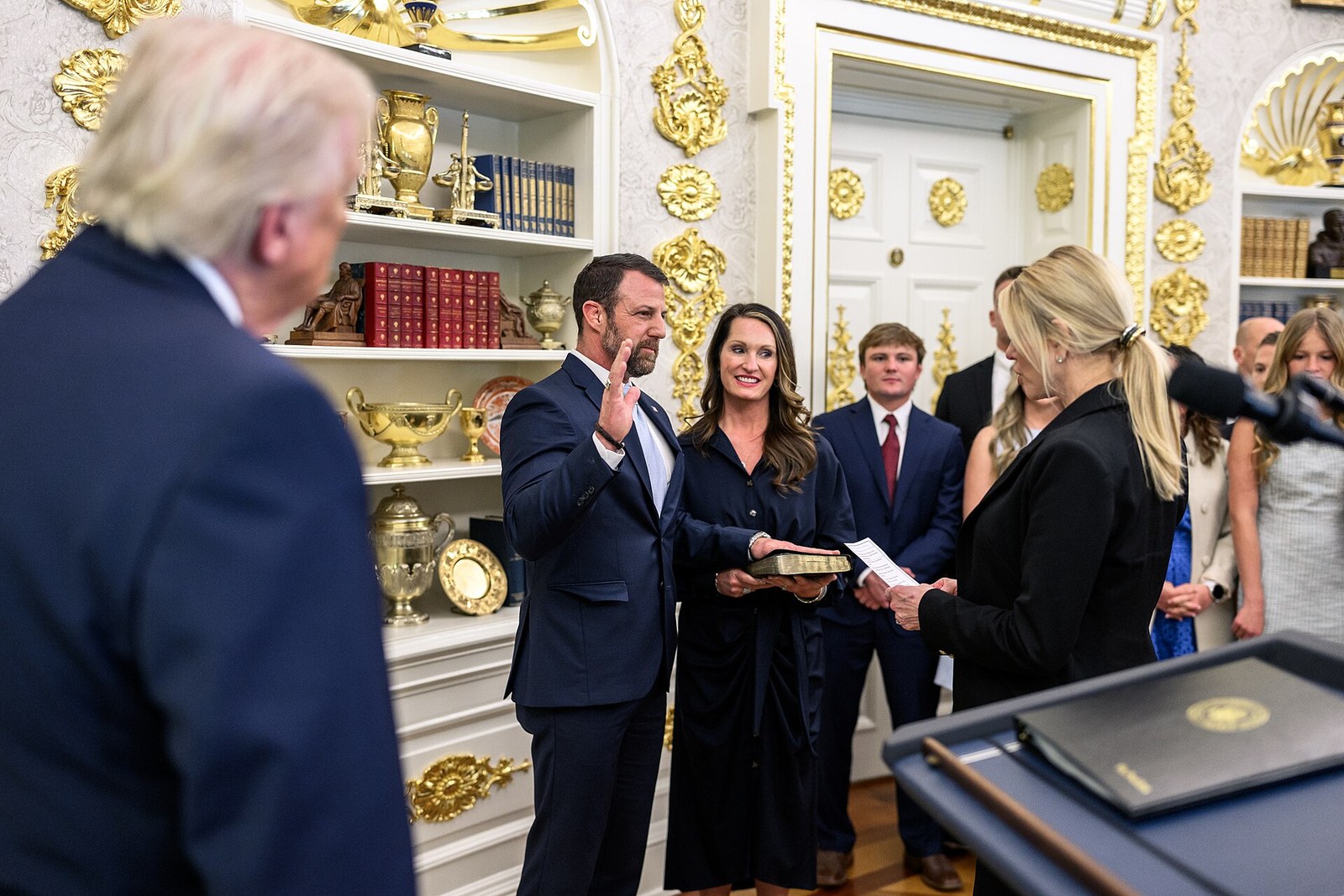
Markwayne Mullin, the named applicant in the case, is sworn in as Secretary of Homeland Security by Attorney General Pam Bondi as President Trump looks on, March 2026. Official White House photo via Wikimedia Commons (U.S. government work, public domain).
Coverage of the fight has used a figure of about 600,000 Venezuelans, the estimate the plaintiffs' legal team gave in an Oct. 16 statement. The government's own count is smaller. Noem's February 2025 termination notice says DHS "estimates that 348,202 aliens are registered under the 2023 designation." Mayorkas's extension also let people from the older 2021 designation re-register under it, and that 2021 designation's termination is not challenged in this case.
What do the TPS holders say?
The plaintiffs say Venezuelans who lost TPS have been detained, separated from U.S.-citizen children, deported, and sent to third countries where they have no ties, Reuters reported. "We will not stop fighting to hold this administration accountable, and to make sure that TPS holders are protected," National TPS Alliance coordinator Jose Palma said in the October statement. The plaintiffs also have an equal protection claim that Chen left out of his final judgment, and Doe's bar does not reach constitutional claims.
What happens Friday?
Kagan can act alone on a temporary pause or send the request to the full Court, which has sided with the administration twice in this case already. The application notes the justices found in October 2025 that "the parties' legal arguments and relative harms generally have not" changed, and Sauer argues the only thing that has changed since is a merits ruling in the government's favor. If no order comes by Friday, DHS will be under a court judgment to restore a status that has been off for 19 months, even though the plaintiffs have conceded their challenge to the termination itself is no longer viable.
Top photo: The west facade of the U.S. Supreme Court Building in Washington, D.C. Photo by Claire Anderson via Wikimedia Commons (CC0, public domain dedication).















