Glock, Ruger and four other gun makers sued Maryland on Friday to stop its "Glock ban" before sales end Jan. 1. Their complaint says the State Police still haven't published the list of banned pistols, and the law itself lets police officers keep buying them.
What did Glock and Ruger file?
The National Shooting Sports Foundation filed the 35-page verified complaint on Nov. 20 in federal court in Maryland, case No. 1:26-cv-04844. Its co-plaintiffs are Glock, Shadow Systems, Sturm, Ruger and Co., Derya USA, Palmetto State Armory and Fred's Outdoors, a family-owned gun shop in Waldorf that opened in 1977. They are suing Attorney General Anthony Brown and State Police Secretary Michael Jackson, and the Maryland Daily Record reports the case has gone to U.S. District Judge James K. Bredar.
The target is Senate Bill 334, signed by Gov. Wes Moore on May 26. Starting Jan. 1, 2027, it says no person may "manufacture, sell, offer for sale, purchase, receive, or transfer a machine gun convertible pistol." The industry's argument is simple: you can't ban America's most popular handgun design because a criminal might bolt an illegal part onto it. NSSF general counsel Lawrence Keane put it in Carville's words: "it's the criminal, stupid."
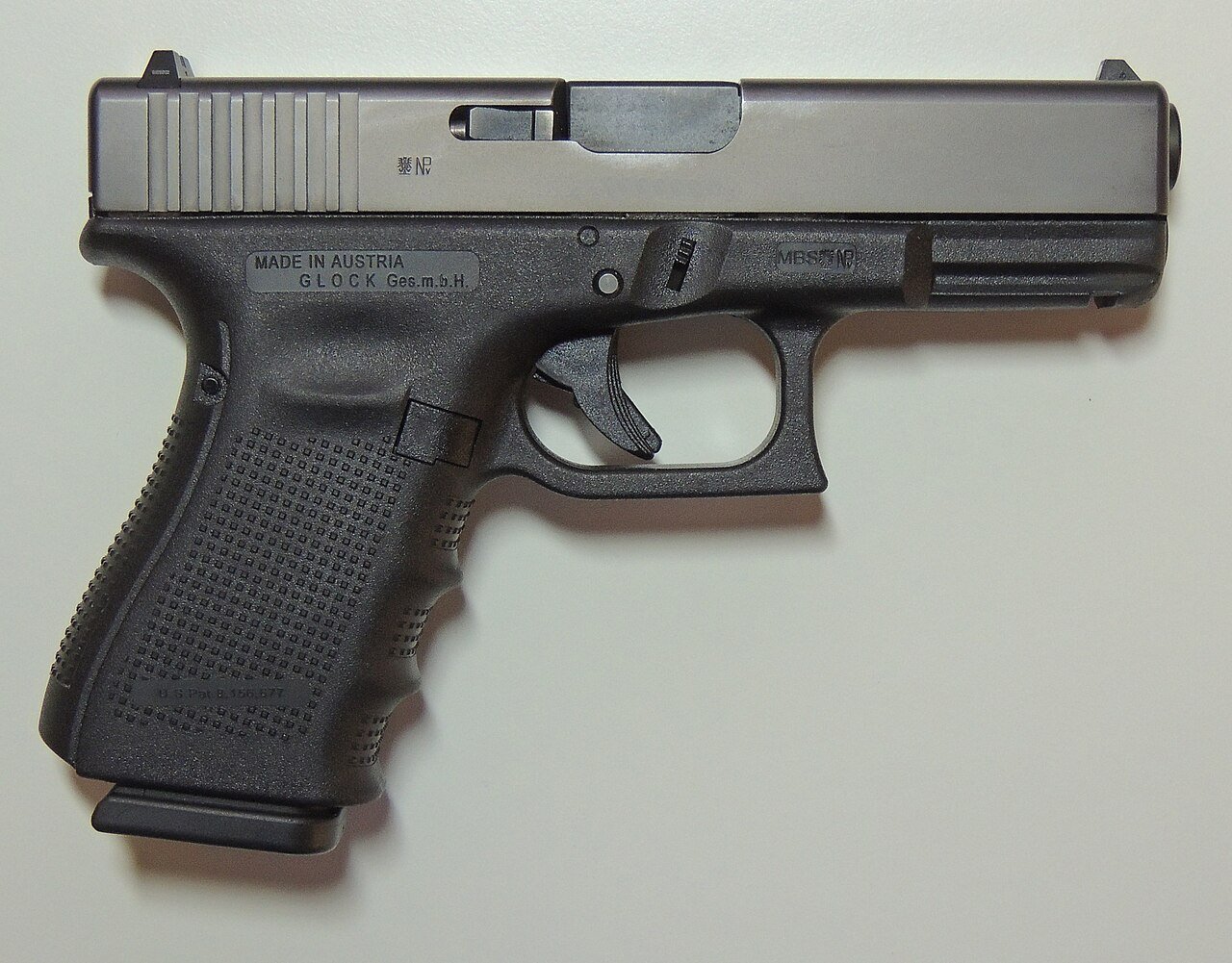
A Glock 19 Gen 4. The Fourth Circuit, which hears Maryland's appeals, has itself called the Glock 19 a "commonly used handgun," the complaint notes. Photo by TacticalGuy via Wikimedia Commons, CC BY-SA 4.0.
Which pistols does the law actually cover?
The law never says "Glock." It bans any semiautomatic pistol with a "cruciform trigger bar," a cross-shaped part linking the trigger to the firing pin, that can be "readily converted by hand or by using common household tools" into a machine gun with a device that replaces the slide's backplate. The statute even lists the household tools: a screwdriver, pliers, a hacksaw, a crowbar, an electric drill and six more.
That design is Gaston Glock's 1982 invention, and it now sits inside handguns from nearly every major maker. The complaint says well over 500,000 cruciform-trigger handguns are made for U.S. sale every year, and that Glock alone has held up to 65% of the U.S. handgun market. Fred's Outdoors puts its revenue from these handguns at more than $2.1 million over five years, between 7% and 10% of its sales in a given year.
Gun makers already tried to engineer around this. Glock's V-series, unveiled in December 2025, switched the slide-cover plate to metal "as part of the effort to frustrate 'switch' installation," American Rifleman reported. But Maryland's definition still covers a pistol with a blocking tab "if the tab or other piece of material can be readily removed with a common household tool."
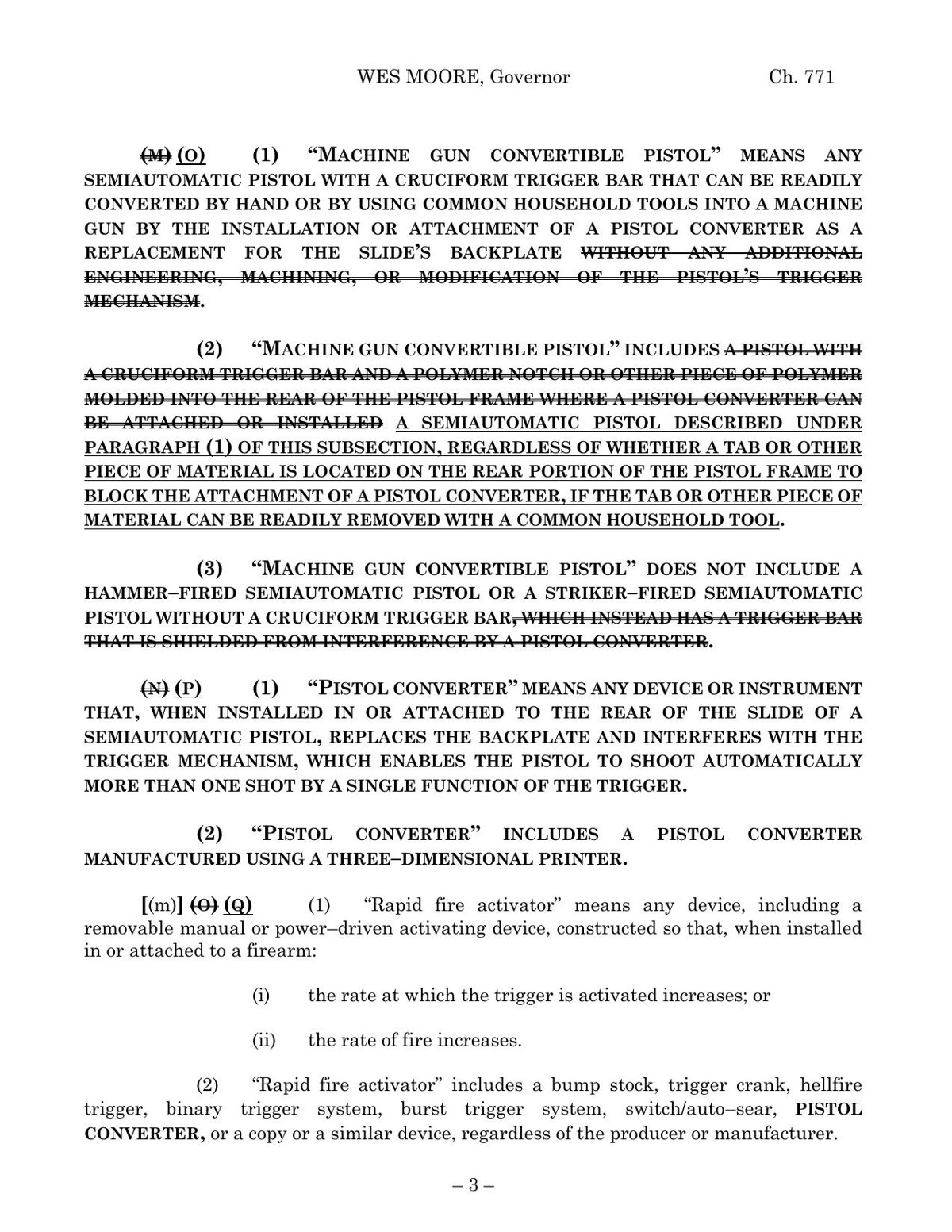
Page 3 of Chapter 771, the enacted text of SB 334, with the definition of "machine gun convertible pistol." Maryland General Assembly (public record), via mgaleg.maryland.gov.
Where is the list of banned guns?
This is the part a Maryland gun buyer should read twice. The law orders the State Police to adopt regulations, "including publishing a list of prohibited machine gun convertible pistols." That duty is mandatory. The enacted text strikes "may" and writes in "shall."
According to the complaint, the list doesn't exist yet. The manufacturers say Maryland has refused, "despite multiple requests," to say whether their redesigned pistols comply, and has only said it expects to publish the list "sometime in December." That leaves a gun shop owner a few weeks, at best, to learn which of the handguns in his case become illegal to sell on New Year's Day.
Official record
Verified Complaint, National Shooting Sports Foundation, Inc. v. Brown, No. 1:26-cv-04844-JKB, U.S. District Court for the District of Maryland, Document 1, filed Nov. 20, 2026, page 21.
"Despite multiple requests, Maryland has refused to take a position on whether the popular cruciform-trigger handguns made by Plaintiffs fall outside SB334's definition of 'machine gun convertible pistol.' Instead, the state has simply stated that it anticipates publishing its list of prohibited pistols sometime in December." Verified Complaint, paragraph 49
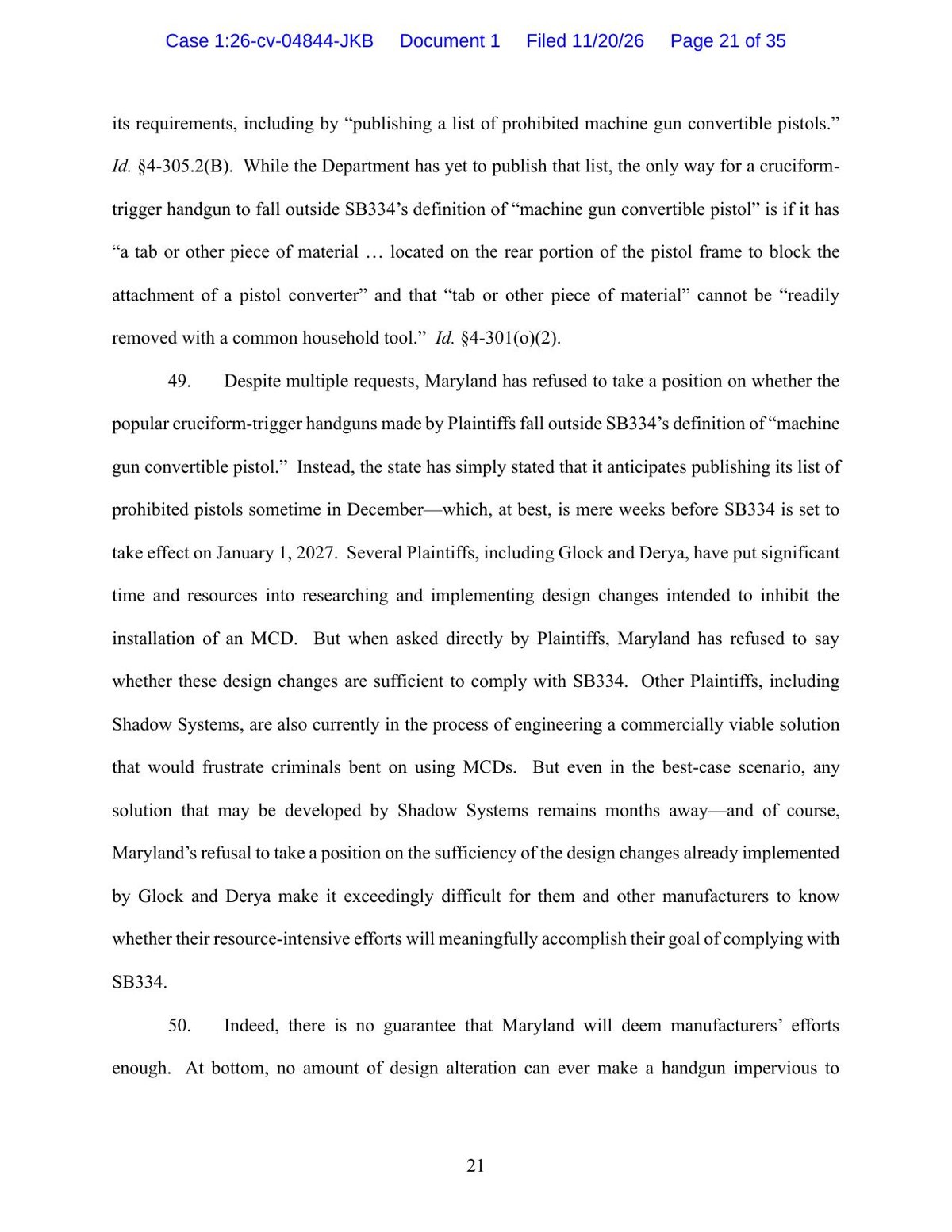
Read or download the full 35-page complaint (PDF) or the seven-page text of the law.
Who gets to keep buying them?
Police. The law's exemptions allow the sale, purchase and transfer of these pistols to anyone who is "currently a law enforcement official," and to officers retired in good standing from a federal, state or local agency, in Maryland or any other state, who carry a federal retired-officer credential. A retired cop from out of state can buy the gun a Maryland resident with a carry permit cannot.
Current owners are not touched. Brown's own office says the law "does not prohibit people from keeping" pistols they already own, and the text lets an owner pass one to a spouse, child, parent or sibling. So the Glock already in a Maryland nightstand stays legal. Only the next one is banned, unless the buyer wears a badge.
The penalty is up to three years in prison and a $5,000 fine. The complaint calls that a felony. The statute itself labels the violation a misdemeanor, though one carrying the same three-year maximum.
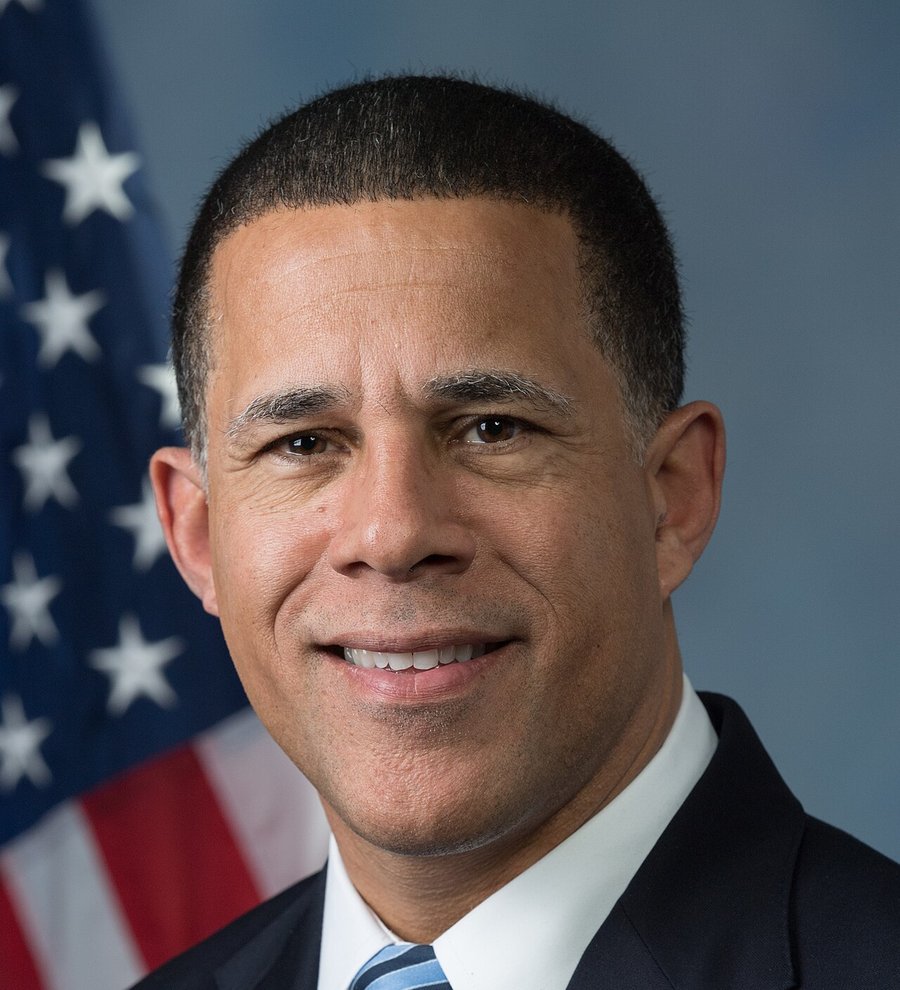
Anthony G. Brown, Maryland's attorney general and a named defendant, in his official portrait from his time in the U.S. House. U.S. House Office of Photography (public domain), via Wikimedia Commons.
Can the gun makers win before Jan. 1?
A different federal judge in Maryland has already said no to one challenge. In September, U.S. District Judge Richard D. Bennett refused to block the law in Bathras v. Moore, a separate suit. Brown called it "an important first step" and said Maryland "has the right to protect its communities from weapons that can be rapidly turned into machine guns," according to his Sept. 25 statement. The new complaint argues Bennett ignored the Supreme Court's 2026 ruling in Wolford v. Lopez that a law touching the Second Amendment's plain text is "presumptively unconstitutional."
In Connecticut, the industry won. On Sept. 30, U.S. District Judge Kari Dooley blocked Connecticut's version hours before it took effect, writing that "handguns with a cruciform trigger bar (in an unconverted state) are not only safe" and are popular for self-defense. The Daily Record also reports the Justice Department has sued California over its similar law, where a judge likewise declined to block it.
Shadow Systems already knows how this ends if the courts don't step in. After California's ban, the company pulled out of the state entirely and lost nearly $3.8 million a year, 11% of its business, its complaint says. Maryland gun owners have about five weeks to find out whether Judge Bredar sees it Connecticut's way, and whether the State Police ever tell them which guns are on the list.
Top photo: A Glock 17 Gen 5 pistol. Photo by Tony Webster, background removed by LeoPavouk, via Wikimedia Commons (CC BY 2.0), cropped.