

Lansing, Michigan put 140 Democrats and 71 Republicans to work at its Election Day polling places in August, and the Republican Party has now sued to force the city to even out its poll workers before Nov. 3. The timing is tight. Michigan law gives city election boards until 21 days before an election to make those appointments, and for the midterms that day is Tuesday, Oct. 13.
Republicans Say Lansing Ran a Two-to-One Primary
The Ingham County Republican Party, the Michigan Republican Party and the Republican National Committee filed suit Friday, Oct. 9, in Ingham County Circuit Court against the Election Commission of the City of Lansing. The three commissioners are named in their official roles: City Clerk Chris Swope, City Attorney Gregory Venker and City Assessor Stacey Bassi. The case is Ingham County Republican Party v. Election Commission of the City of Lansing, and the 37-page complaint is posted on Democracy Docket's case page.
Michigan calls its poll workers "election inspectors." They check in voters, run the e-poll books, process absentee envelopes and count ballots. Using the city's own assignment list for the Aug. 4 primary, the complaint counts about 203 Democrats and about 120 Republicans across every kind of assignment. At the Election Day polling places, the split was 140 to 71, almost exactly two to one.
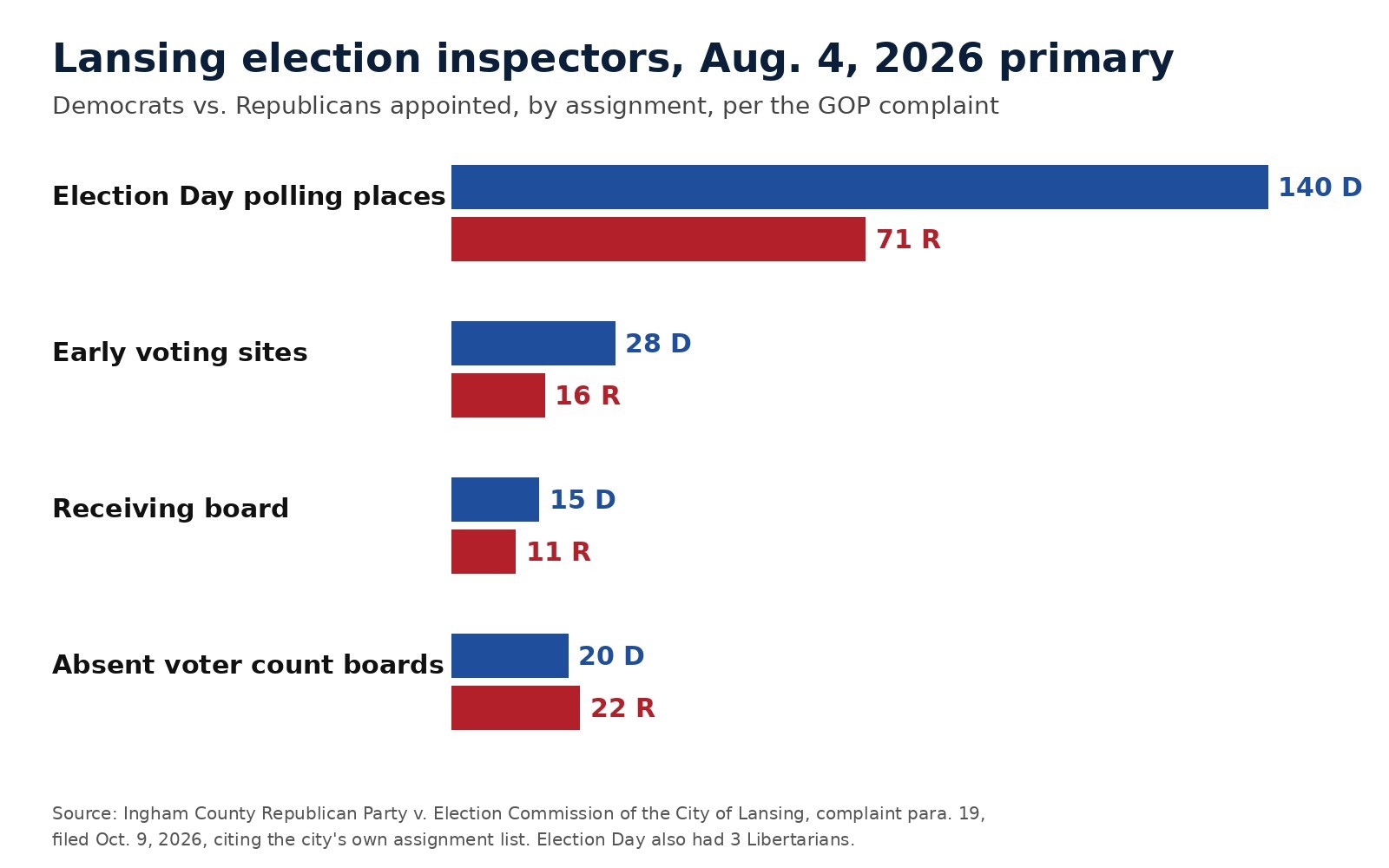
Lansing's election inspectors for the Aug. 4, 2026 primary, by party and assignment, as listed in paragraph 19 of the Republican complaint. Republicans outnumbered Democrats only on the absentee counting boards. (PatriotAddict chart from the complaint's figures)
What Michigan Law Actually Requires
The rule is in MCL 168.674. The board of election commissioners "shall appoint at least 1 election inspector from each major political party and shall appoint an equal number, as nearly as possible, of election inspectors in each election precinct from each major political party." The same section says the board must make its appointments "at least 21 days before each election."
Count back 21 days from Tuesday, Nov. 3, and you land on Tuesday, Oct. 13. That is the last day the statute allows Lansing to name its November inspectors. The Republicans filed four days before it, which explains why the complaint says "it is imperative that this issue be resolved before Election Day."
Within two business days of those appointments, the board must send each party's county chair the full roster, and the chair then has four business days to challenge an appointee. The GOP should see Lansing's November list within days.
Official record
Ingham County Republican Party, Michigan Republican Party and Republican National Committee v. Election Commission of the City of Lansing, Stacey Bassi, Gregory Venker and Chris Swope, Ingham County Circuit Court, complaint for declaratory and mandamus relief, filed Oct. 9, 2026. Page 7, paragraph 19.
"Indeed, based on the list of election inspector appointees for the August primary election provided by the City of Lansing, Ex. 1-B, the following ratio of Democrat to Republican appointees falls far short of the partisan parity required under Michigan law."
Complaint, para. 19
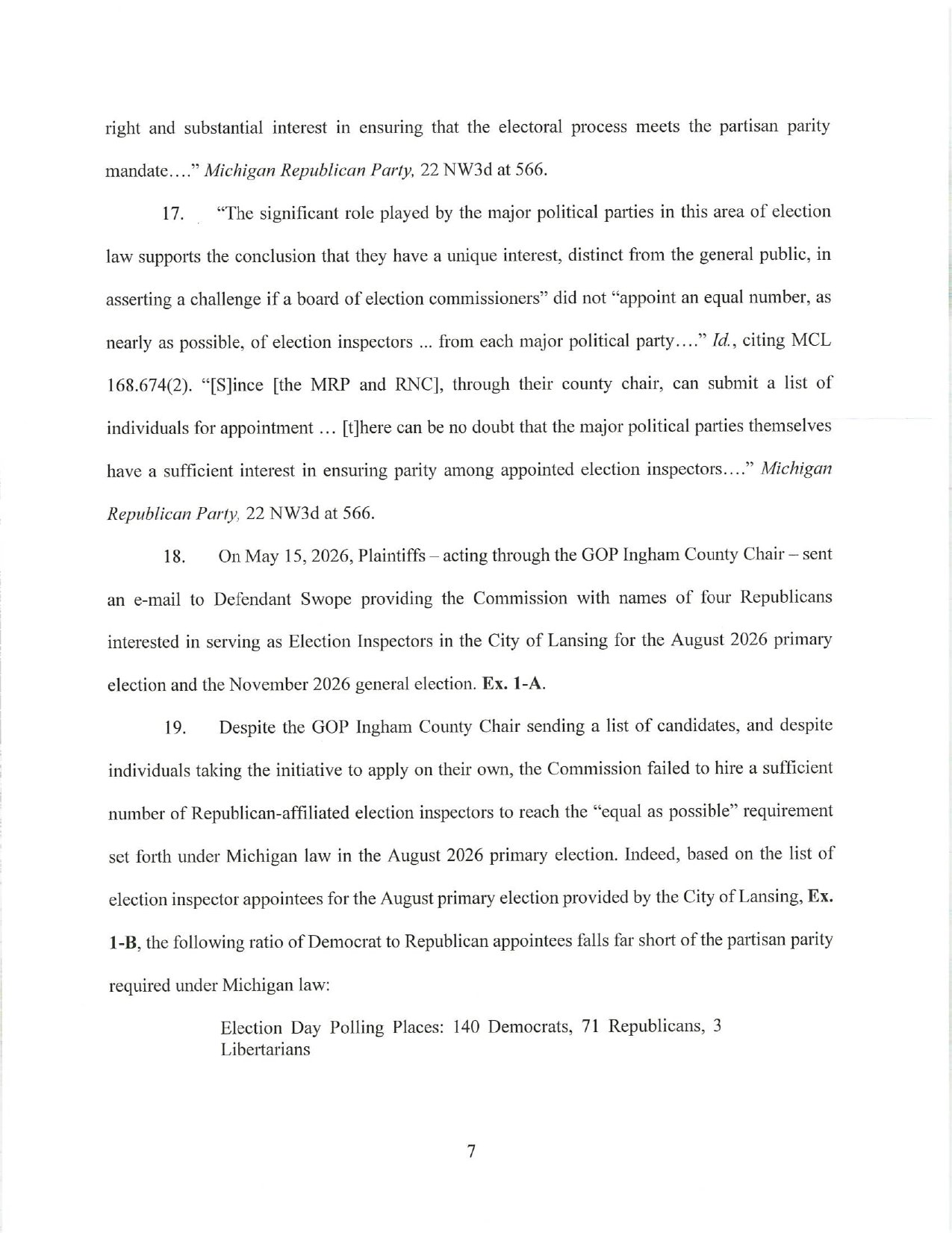
Read the full 37-page complaint with exhibits (PDF, hosted by Democracy Docket) · case page
Inside the City's Own List, Some Precincts Ran Three to One
The two-to-one figure is a citywide total. The statute asks for parity "in each election precinct," so we went through Exhibit 1-B, the 7-page assignment sheet the city gave the GOP, precinct by precinct. Each Election Day line lists a precinct and a party.
Some precincts were close. Others were not. Precinct 35, at the Letts Community Center on West Kalamazoo Street, had 7 Democrats and 2 Republicans working on primary day. Precinct 37, at 600 W. Maple St., had 6 Democrats and 2 Republicans. In both, the chairperson was a Democrat and the Republicans held one co-chair slot and one other post.
One honest note on that list. The plaintiffs' complaint also accuses the city of breaking the separate duty to appoint "at least 1" inspector from each party per precinct. We did not find a primary-day precinct on the city's sheet that was missing a Republican entirely. The stronger claim in this case is the "as nearly as possible" one, and the numbers back it up.
A Two-to-One Cap Was Proposed in Michigan and Never Passed
Part of the problem is that "as nearly as possible" has no number attached. In 2021, Sen. Rick Outman introduced Senate Bill 294, which would have barred a board from appointing "more than two election inspectors from a major political party for every one election inspector appointed from the other major political party for any election precinct." It also would have required clerks who missed parity to file a report with the Secretary of State listing what they did to recruit.
That cap is not in the law today. The statute's amendment history ends with two 2023 acts, and neither added a ratio. So the hard line Michigan Republicans tried to draw five years ago, two to one per precinct, is roughly where Lansing landed citywide, and precincts like 35 and 37 went past it.
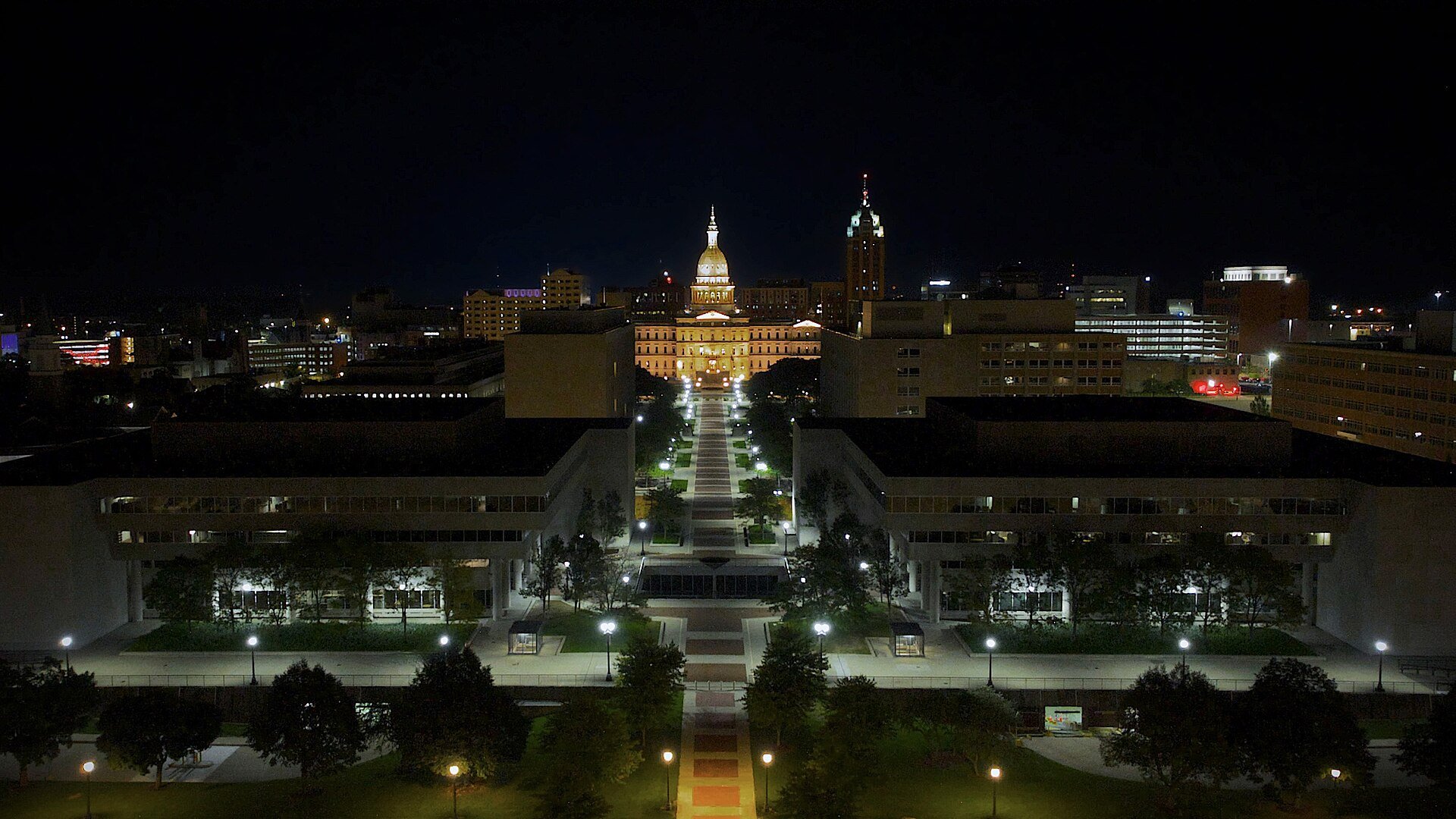
Downtown Lansing and the Michigan State Capitol at night, 2024. Lansing is the state's sixth-largest city, and Kamala Harris won 64% of the 2024 presidential vote in Ingham County. (WMrapids via Wikimedia Commons, CC0)
The GOP Says It Sent Names and Got Shut Out of the Files
Michigan lets a party's county chair hand the city a list of willing inspectors by May 15 each year. According to the complaint, Ingham County GOP Chair Mary Shinkle emailed Swope four names on exactly that date, May 15, 2026. The RNC's Sept. 28 letter to the commission adds a state list of 32 Ingham County Republicans who signed up through Democracy MVP, the Michigan Department of State's own poll worker recruiting site, and says Lansing never contacted them.
Then came the records fight. Thomas Nemcek, the Michigan GOP's deputy election integrity director, swore in an affidavit that he went to the Lansing Elections Department on Sept. 2 and asked to see the inspector applications from the primary. He says he was told the applications sat in a back-room file cabinet the public could not access. State law is plain on this point. Under MCL 168.677(2), as quoted in the complaint, the clerk "shall maintain a file of applications" and make them "available for public inspection at the clerk's office during normal business hours."
The affidavit also includes a detail the coverage so far has skipped. Nemcek says the clerk's staffer told him the city's "process is to have individuals fill out the application after they show up for and attend training."
Read that next to subsection (1) of the same statute. It says an inspector appointment "is void if a properly completed application for that election inspector is not on file in the clerk's office." It also requires appointments to come before the "schools of instruction," the state's term for inspector training. If applications only arrive after training, some appointments could be made before any application is on file. That account comes from one side's affidavit, and the city has not answered it yet. It is still a question Lansing should have to answer in court.
The Complaint Has Soft Spots, and Lansing Will Find Them
This is not a slam dunk, and readers deserve the full picture. The complaint's own figures show Republicans outnumbered Democrats on Lansing's absentee counting boards, 22 to 20. Those boards are where mail ballots actually get tabulated.
The four names the county chair sent did not all pan out either. According to Nemcek's own affidavit, the clerk's office said one of them worked the primary and three were invited to training but never responded. Even the RNC's demand letter tripped over itself. Dated Sept. 28, it asked for action "by 12:00pm on Friday, September 25," a date that had already passed, and the complaint concedes the error in a footnote. The letter also asked the city to "cease accepting prospective Democrat election inspectors," a request a judge is unlikely to order.
Lansing has a ready answer, too. Democracy Docket, which labels the suit an "anti-voting lawsuit," notes that lopsided cities often struggle to recruit equal numbers from each party. Lansing officials had not responded to its request for comment.
The Flint Case Already Settled Whether the GOP Can Sue
Lansing cannot easily get this thrown out on the threshold question. Republicans brought a similar case against Flint in 2022, saying the city had hired 562 Democratic inspectors and 120 Republicans. Lower courts tossed it for lack of standing. On July 14, 2025, the Michigan Supreme Court reversed and sent it back, ruling that the parties "have a unique interest, distinct from the general public," in enforcing the parity rule. Justice Brian Zahra, the court's lone conservative, joined the liberal majority, and Chief Justice Megan Cavanagh dissented without explanation, according to the Michigan Advance.
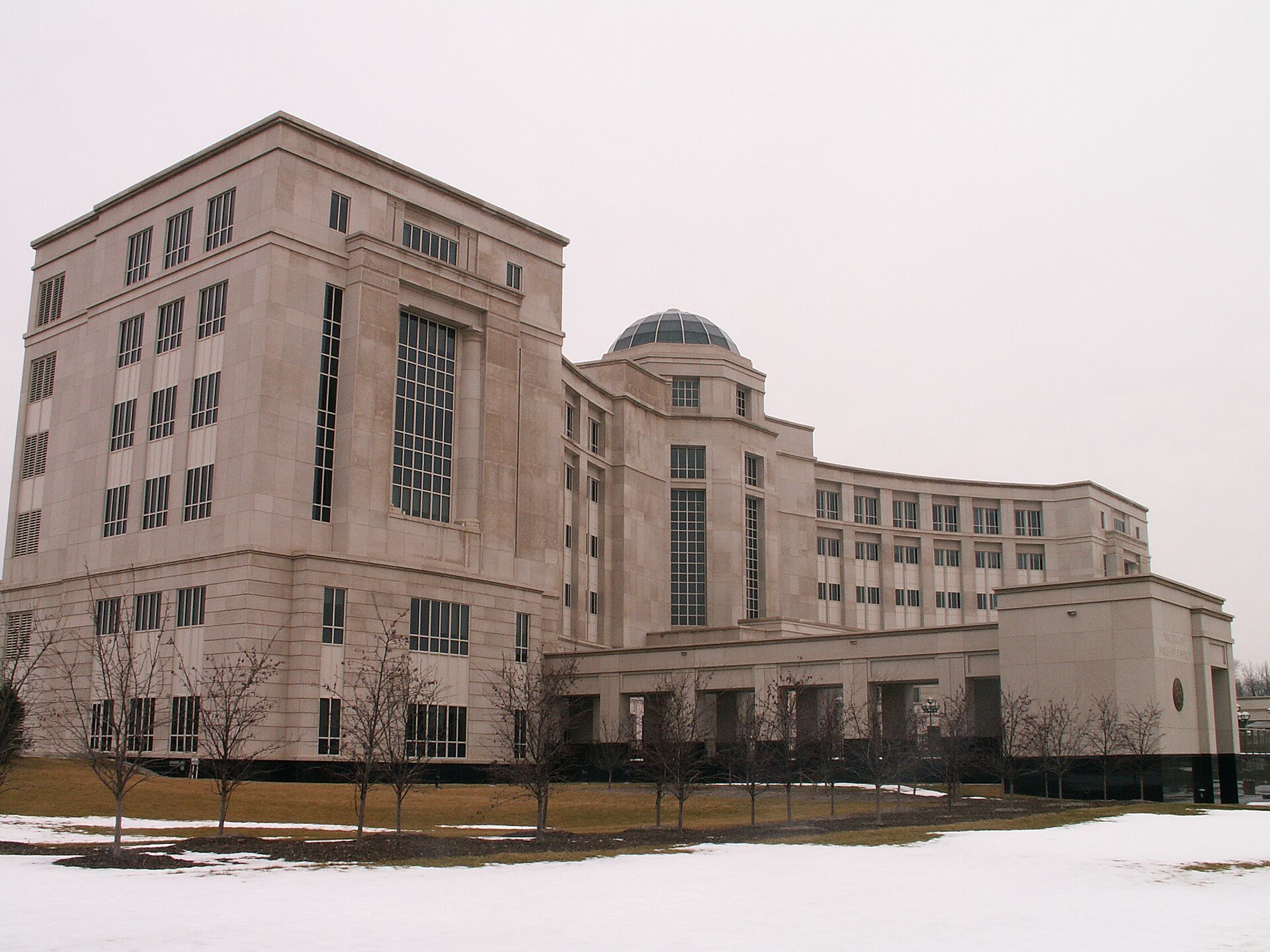
The Michigan Hall of Justice in Lansing, home of the Michigan Supreme Court, which ruled in July 2025 that the state and national Republican parties have standing to sue over poll worker parity. (Photo by Phillip Hofmeister, via Wikimedia Commons, CC BY-SA 3.0)
The Lansing complaint leans on that ruling from its first pages. It asks the judge for a declaration that the city broke the law and a writ of mandamus ordering specific fixes. The biggest ask is that Lansing keep adding inspectors from the underrepresented party until every precinct is within one of even. The GOP also wants the city to contact every name a party submits within 14 days and to state in writing why any applicant was turned down.
What Happens Next
Lansing is not new to scrutiny. Swope told FOX 47 News this summer that the Justice Department had notified him it would send federal election monitors to Lansing, East Lansing and Detroit. He disputed the department's claims about the city's 2024 practices and said, "I'm fine with observers coming to watch our elections."
If he is fine with observers, the inspector applications should not be locked in a back room either. We found no hearing date in the public record as of Tuesday morning. With the appointment deadline landing today and absentee voting under way, the real question is whether the court moves before the November roster is set. Michigan is electing a governor and a U.S. senator this fall, and the law already says both parties get a near-equal seat at every Lansing precinct table.
Top photo: Lansing City Hall at Michigan and Capitol avenues, where two of the three Lansing election commissioners have their offices, September 2024. (w_lemay via Wikimedia Commons, CC BY-SA 2.0)















